
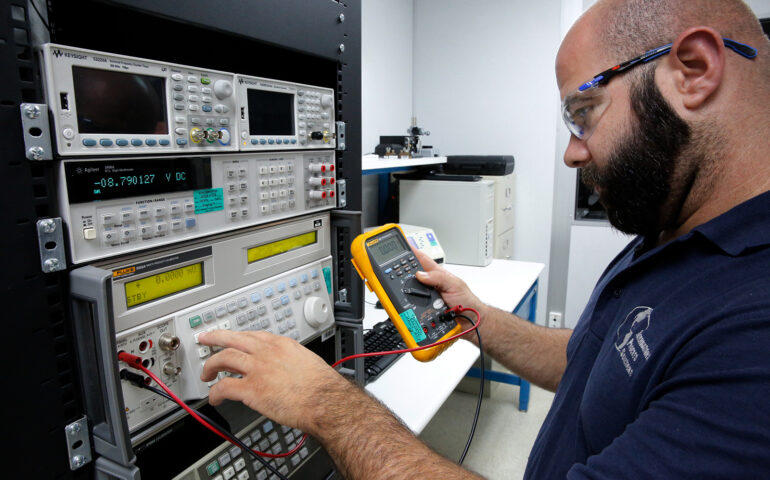
Featured Answer: How Can Calibration Reduce Measurement Errors? Calibration reduces measurement errors by comparing an instrument’s indication against a reference standard with established metrological traceability, determining the relationship between the indicated and reference values, and quantifying measurement uncertainty. When an instrument is found outside acceptable limits, the results can support decisions about adjustment, repair, or

Featured Answer: What Is Calibration Uncertainty? Calibration uncertainty is the quantified doubt associated with the result of a calibration. It expresses the range within which the true value of a measurement is reasonably expected to lie, based on identified sources of variation in the calibration process. Calibration uncertainty may account for the reference standard, instrument

In industries where measurement accuracy, process control, product quality, and regulatory compliance matter, the terms calibration, verification, and adjustment are often used together. Although they are closely related, they describe three different activities. Understanding the distinction is essential when managing measurement equipment, preparing for audits, maintaining quality systems, and determining whether an instrument is suitable

Featured Answer: How Is a Tensile Tester Calibrated? A tensile tester is calibrated by comparing its force-measurement system against traceable reference standards at multiple points throughout its operating range. During calibration, we evaluate the load cell and associated measurement system by applying known forces and comparing the tensile tester’s indicated readings with the reference values.
On-site calibration helps pharmaceutical and life sciences organizations maintain equipment accuracy, documentation, traceability, and operational continuity without unnecessary equipment transportation. [San Carlos, CA] — Pharmaceutical equipment companies and organizations operating in pharmaceutical manufacturing, laboratories, biotechnology, and life sciences can benefit from professional on-site calibration services provided by International Process Solutions (IPS). The company provides calibration

In pharmaceutical manufacturing, laboratory testing, research, and quality control, accurate measurement is essential to maintaining consistent processes and reliable results. Temperature, pressure, weight, volume, humidity, torque, flow, and other critical measurements can directly affect equipment performance, manufacturing processes, laboratory results, and product quality. At International Process Solutions (IPS), we provide pharmaceutical equipment calibration services designed

Calibration compliance depends on more than performing calibration on schedule. Organizations must maintain accurate, traceable records that demonstrate what was calibrated, when it was calibrated, how it was calibrated, what standards were used, and whether the equipment met its requirements. Well-maintained calibration records provide objective evidence that measuring equipment remains suitable for its intended use.

Featured Answer: What Is the Difference Between Adjustment and Calibration? Calibration determines how accurately an instrument measures by comparing its readings with a known reference standard, while adjustment changes the instrument to improve its performance or bring its readings closer to the desired value. Calibration identifies and documents measurement error; adjustment modifies the instrument. When

Featured Answer: Do Calibration Services Include Repairs? Calibration services may include adjustments or repairs, but calibration and repair are separate processes. Calibration determines how accurately an instrument performs compared with an appropriate reference standard. If an instrument is found outside its required tolerance, it may need adjustment, maintenance, or repair before it can meet its

Featured Answer: Do Torque Wrenches Need Calibration? Yes, torque wrenches need calibration to verify that they apply the correct amount of torque within an acceptable tolerance. Over time, repeated use, normal wear, improper storage, accidental drops, environmental conditions, and mechanical changes can affect torque wrench accuracy. Regular torque wrench calibration helps identify measurement error before



Recent Comments