Understanding Annual and Quarterly Calibration Schedules
Calibration is an essential component of maintaining accurate measurements, consistent equipment performance, and reliable quality control processes. Whether an organization operates a pharmaceutical laboratory, biotechnology facility, manufacturing plant, or research institution, establishing an appropriate calibration schedule helps ensure that instruments continue producing dependable results.
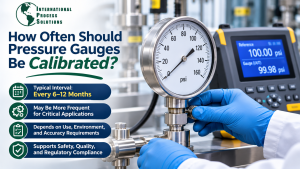
At International Process Solutions, we recognize that different instruments require different calibration frequencies. Some equipment may maintain acceptable measurement accuracy for an entire year, while other instruments require quarterly calibration to minimize measurement uncertainty and detect performance changes before they affect operations.
The appropriate calibration interval depends on several factors, including equipment specifications, historical calibration results, operating environments, and the consequences of inaccurate measurements.
We work with organizations to develop preventive calibration schedules that support operational efficiency while maintaining the measurement accuracy required for their applications.
What Is Annual Calibration?
Annual calibration involves having measuring instruments inspected, tested, and calibrated approximately once every 12 months.
This schedule is frequently used for instruments that demonstrate stable performance, operate in controlled environments, and have a documented history of remaining within acceptable tolerances.
During annual calibration, equipment is evaluated against appropriate measurement standards to determine whether its performance meets established specifications.
Which Instruments May Qualify for Annual Calibration?
Depending on manufacturer guidance, usage, calibration history, and risk assessment, equipment commonly considered for annual calibration includes:
-
Digital multimeters used under controlled conditions.
-
Pressure gauges with stable performance histories.
-
Temperature measuring instruments used in noncritical applications.
-
Torque wrenches with moderate usage and documented stability.
-
Laboratory balances with appropriate intermediate performance checks.
-
Electrical testing equipment that maintains acceptable accuracy.
-
Humidity measuring instruments used in stable environments.
-
Certain spectrophotometers with documented performance stability.
An annual interval should never be selected solely because it is convenient. Each instrument must be evaluated according to its intended use and measurement requirements.
For example, a digital multimeter used occasionally in a controlled laboratory may be suitable for annual calibration. However, the same instrument used continuously in demanding manufacturing conditions may require more frequent calibration.
Benefits of Annual Calibration
Annual calibration can provide several operational advantages when supported by equipment performance data.
Reduced calibration administration: Organizations can consolidate equipment servicing into predictable annual schedules.
Lower service frequency: Instruments that demonstrate long-term stability may not require quarterly calibration.
Simplified budgeting: Annual calibration allows organizations to forecast recurring equipment maintenance expenses.
Improved documentation: A consistent annual program helps maintain organized calibration records and equipment histories.
Reduced operational interruptions: Facilities can coordinate annual calibration services around planned maintenance periods.
At International Process Solutions, we help organizations determine whether annual calibration provides sufficient measurement assurance for their specific equipment.
What Is Quarterly Calibration?
Quarterly calibration involves calibrating equipment approximately every three months, resulting in four scheduled calibration events annually.
This frequency is often considered for instruments exposed to demanding operating conditions, intensive usage, or applications where measurement errors could significantly affect product quality, safety, or regulatory compliance.
Quarterly calibration can help identify instrument drift before it exceeds established tolerances.
Which Instruments May Require Quarterly Calibration?
Equipment that may benefit from quarterly calibration includes:
-
High-use laboratory pipettes involved in critical liquid handling.
-
Precision balances used in sensitive measurement applications.
-
Pressure gauges and transducers operating in demanding environments.
-
Torque wrenches used frequently in production and assembly.
-
Temperature sensors supporting critical manufacturing processes.
-
Humidity monitoring instruments used in controlled environments.
-
Critical process measurement equipment where small deviations have significant consequences.
-
Measuring instruments with documented calibration drift or previous out-of-tolerance results.
Quarterly calibration may also be appropriate when instruments experience frequent transportation, vibration, temperature fluctuations, or mechanical stress.
For example, a torque wrench used repeatedly in a high-volume manufacturing environment may experience performance changes more rapidly than one used occasionally.
Similarly, a pipette used throughout the day in a pharmaceutical laboratory may require a shorter calibration interval than a pipette used infrequently in a noncritical educational setting.
Annual vs. Quarterly Calibration: What Is the Difference?
The primary difference between annual and quarterly calibration is the frequency at which equipment undergoes formal calibration.
Both schedules can support reliable measurements when properly selected and supplemented with appropriate equipment monitoring.
| Calibration Factor | Annual Calibration | Quarterly Calibration |
|---|---|---|
| Frequency | Every 12 months | Every 3 months |
| Scheduled events | 1 per year | 4 per year |
| Typical applications | Stable, lower-risk instruments | High-use or critical instruments |
| Calibration administration | Less frequent | More frequent |
| Instrument drift detection | Longer interval between calibrations | Shorter interval between calibrations |
| Direct calibration costs | Generally lower | Generally higher |
| Best suited for | Documented long-term stability | Higher measurement risk or instability |
Quarterly calibration does not automatically guarantee better measurement accuracy. Its value depends on instrument stability, the suitability of the calibration method, measurement uncertainty, and the organization’s monitoring procedures.
A properly justified annual schedule may provide adequate confidence for one instrument, while another may require quarterly or even more frequent evaluation.
How Do We Determine the Correct Calibration Frequency?
At International Process Solutions, we emphasize an equipment-specific approach to calibration scheduling.
Several factors should be evaluated before establishing a calibration interval.
1. Manufacturer Calibration Recommendations
Equipment manufacturers frequently provide recommended calibration intervals based on instrument design, expected stability, and operating conditions.
These recommendations offer a useful starting point.
However, manufacturer recommendations should be evaluated alongside actual equipment usage and organizational requirements.
An instrument operating under harsher conditions than anticipated by the manufacturer may require more frequent calibration.
2. Frequency of Equipment Use
Equipment used continuously may experience greater wear or performance changes than equipment used occasionally.
High-use instruments should be evaluated to determine whether shorter calibration intervals are appropriate.
For example, a laboratory pipette used hundreds of times daily may require more frequent calibration and performance verification than one used only occasionally.
3. Historical Calibration Results
Previous calibration certificates provide valuable information about instrument stability.
We recommend reviewing:
-
Previous as-found measurement results.
-
Out-of-tolerance findings.
-
Measurement drift between calibration events.
-
Equipment adjustments and repairs.
-
Changes in measurement uncertainty.
-
Repeated performance trends.
If an instrument consistently demonstrates stable measurements over several calibration cycles, an organization may have sufficient evidence to consider extending its interval.
Conversely, repeated out-of-tolerance results may justify shortening the interval.
4. Environmental Operating Conditions
Temperature, humidity, vibration, dust, contamination, and mechanical stress can influence equipment performance.
Instruments operating in demanding industrial environments may require more frequent calibration than comparable instruments maintained in controlled laboratories.
5. Measurement Accuracy Requirements
Applications requiring tight measurement tolerances often demand closer monitoring.
A minor measurement deviation may be acceptable in a general maintenance application but unacceptable in pharmaceutical production or precision manufacturing.
Calibration frequency should reflect the relationship between equipment performance and the allowable measurement error.
6. Regulatory and Quality Management Requirements
Some organizations operate under regulations, quality standards, or customer agreements that establish specific calibration expectations.
These requirements must be reviewed before changing any calibration schedule.
Can Calibration Be Scheduled Every Six Months?
Yes. Semiannual calibration, performed approximately every six months, is another option for organizations seeking a balance between annual and quarterly calibration.
A six-month interval may be appropriate when equipment demonstrates moderate measurement risk, operates under demanding conditions, or has a history suggesting that annual calibration is insufficient.
For example, a pressure gauge used in an industrial process may benefit from semiannual calibration if previous results show gradual drift but do not justify quarterly servicing.
We can help organizations evaluate whether a six-month calibration interval is appropriate based on documented equipment performance.
Can Calibration Intervals Be Customized for Different Instruments?
Yes. A comprehensive calibration program does not require every instrument to follow the same schedule.
In fact, assigning a single interval to all equipment may result in unnecessary calibration expenses for stable instruments while providing insufficient monitoring for critical equipment.
At International Process Solutions, we support customized calibration programs based on instrument categories, applications, and measurement requirements.
A facility may establish the following schedule:
| Equipment Type | Example Calibration Interval |
|---|---|
| Digital multimeters | Annually |
| General-purpose pressure gauges | Annually or semiannually |
| High-use torque wrenches | Quarterly or semiannually |
| Critical laboratory pipettes | Quarterly or semiannually |
| Laboratory balances | Annually or semiannually |
| Humidity measuring instruments | Semiannually |
| Critical temperature sensors | Quarterly |
| Spectrophotometers | Annually, with interim performance checks |
These intervals are illustrative, not universal requirements. Actual schedules must be established using instrument performance, manufacturer guidance, applicable standards, and documented risk assessments.
By developing equipment-specific schedules, organizations can allocate calibration resources more effectively.
Why Is Scheduled Calibration Important for ISO/IEC 17025 Compliance?
ISO/IEC 17025 establishes requirements for the competence, impartiality, and consistent operation of testing and calibration laboratories.
The standard emphasizes equipment suitability, metrological traceability, measurement uncertainty, and appropriate calibration programs.
It does not impose a universal annual or quarterly calibration interval on every measuring instrument.
Instead, laboratories must establish and maintain calibration programs that support valid measurement results.
Key Calibration Documentation Requirements
A well-managed calibration program should maintain records such as:
-
Equipment identification and serial numbers.
-
Calibration dates and applicable due dates.
-
Calibration procedures and reference standards.
-
Measurement results and uncertainties, where applicable.
-
Traceability information.
-
Equipment condition and adjustments.
-
Acceptance criteria and conformity decisions.
-
Calibration certificates.
-
Records supporting calibration interval decisions.
At International Process Solutions, we understand the importance of accurate calibration documentation for laboratories operating under stringent quality management requirements.
Our calibration services help organizations maintain the records needed to support equipment control, quality assurance, and audit preparation.
How Do Annual and Quarterly Calibration Schedules Support FDA-Regulated Facilities?
Pharmaceutical and biotechnology organizations must maintain equipment in a condition suitable for its intended use.
Under applicable FDA current Good Manufacturing Practice requirements, instruments used in manufacturing, processing, packaging, and holding drug products must be appropriately calibrated, inspected, or checked according to written programs.
For example, 21 CFR 211.68 and 21 CFR 211.160(b)(4) address relevant equipment and laboratory instrument controls.
These requirements do not establish a single universal calibration interval for all equipment.
Instead, calibration frequency must be appropriate for the instrument and its application.
Calibration Scheduling for Pharmaceutical Laboratories
Pharmaceutical facilities may use a combination of annual, quarterly, semiannual, and more frequent calibration activities.
Critical equipment may require shorter intervals when inaccurate measurements could affect:
-
Product identity, strength, quality, or purity.
-
Manufacturing consistency.
-
Laboratory testing results.
-
Batch release decisions.
-
Environmental monitoring.
-
Process validation.
-
Quality control documentation.
We help organizations coordinate calibration services with their existing quality management and equipment maintenance programs.
Can Onsite Calibration Be Scheduled Annually or Quarterly?
Yes. Onsite calibration services can be scheduled annually, quarterly, semiannually, or at other appropriate intervals.
Onsite calibration allows eligible instruments to be calibrated at the customer’s facility rather than requiring equipment to be transported to an external calibration laboratory.
At International Process Solutions, we provide onsite calibration solutions for laboratories, manufacturing facilities, and other organizations seeking to minimize equipment downtime.
Advantages of Scheduled Onsite Calibration
Reduced equipment transportation: Instruments can remain at the facility when onsite calibration is technically suitable.
Improved scheduling efficiency: Multiple instruments can be serviced during coordinated visits.
Less disruption to operations: Calibration activities can be planned around production schedules and laboratory workloads.
Centralized equipment management: Facilities can organize calibration services across departments and instrument categories.
Consistent documentation: Scheduled service visits support systematic calibration recordkeeping.
For larger facilities, onsite calibration can be especially beneficial when numerous instruments require servicing throughout the year.
Can an Entire Laboratory Be Calibrated on a Scheduled Basis?
Yes. Organizations with extensive equipment inventories can establish recurring calibration programs covering multiple instruments, departments, and laboratory areas.
At International Process Solutions, we work with facilities that require coordinated calibration services for diverse laboratory equipment.
A comprehensive laboratory calibration program may include:
-
Pipette calibration.
-
Balance and scale calibration.
-
Pressure instrument calibration.
-
Temperature measurement calibration.
-
Humidity instrument calibration.
-
Electrical measurement equipment calibration.
-
Torque wrench calibration.
-
Spectrophotometer calibration.
-
Centrifuge calibration and performance verification.
Not every instrument requires the same service procedure or calibration frequency.
By grouping equipment according to its requirements, organizations can develop a practical schedule that supports consistent equipment performance.
What Happens If Equipment Fails Calibration?
An instrument may be considered out of tolerance when its measured performance exceeds the established acceptance limits.
When this occurs, the organization should evaluate whether the instrument remains suitable for use and whether previous measurements may have been affected.
Steps Following an Out-of-Tolerance Calibration Result
1. Identify the measurement deviation. The calibration results should document the instrument’s performance relative to its specified tolerances.
2. Remove or restrict affected equipment from service when necessary. Instruments that cannot meet required specifications should not continue being used for critical measurements without appropriate controls.
3. Evaluate previous measurement results. Organizations should determine whether the deviation may have affected products, processes, or laboratory testing conducted since the previous acceptable verification.
4. Perform adjustment or repair when appropriate. Equipment may require corrective action before being returned to service.
5. Recalibrate or verify the instrument. Following adjustment or repair, the equipment should be evaluated to confirm acceptable performance.
6. Reassess the calibration interval. Repeated out-of-tolerance findings may indicate that the existing calibration frequency is insufficient.
A documented investigation is particularly important in regulated environments where measurement errors could affect product quality or compliance.
Can Calibration Intervals Be Extended From Quarterly to Annually?
Yes, calibration intervals may be extended when supported by sufficient technical evidence and permitted by applicable requirements.
For example, an organization may initially calibrate a newly acquired instrument quarterly to establish its performance history.
If the instrument consistently demonstrates acceptable stability, the organization may evaluate whether a six-month or annual interval is appropriate.
However, extending an interval should involve a documented assessment rather than an automatic decision.
Relevant considerations include instrument drift, measurement uncertainty, manufacturer guidance, usage conditions, and the consequences of measurement errors.
Calibration intervals should be reviewed whenever significant equipment performance changes occur.
How Can Organizations Manage Recurring Calibration Schedules?
An effective calibration management program requires more than assigning due dates.
Organizations should maintain an accurate inventory of instruments and establish procedures for monitoring calibration status.
Recommended Calibration Management Practices
-
Maintain an equipment inventory. Record instrument descriptions, serial numbers, locations, and responsible departments.
-
Assign appropriate calibration intervals. Establish schedules using documented technical and operational criteria.
-
Track calibration due dates. Use a calibration management system or controlled tracking process.
-
Review historical results. Monitor measurement drift and recurring performance issues.
-
Coordinate scheduled service visits. Group equipment where practical to minimize disruptions.
-
Maintain calibration certificates. Retain documentation according to organizational and regulatory requirements.
-
Review the calibration program periodically. Adjust intervals when equipment performance or operational requirements change.
At International Process Solutions, we support organizations seeking dependable calibration services that integrate with their existing equipment management processes.
Is Quarterly Calibration More Expensive Than Annual Calibration?
Quarterly calibration generally involves more frequent service events and may result in higher direct calibration expenses.
However, the total cost of calibration should also account for operational risk.
An instrument that produces inaccurate measurements may create expenses associated with rejected products, repeated testing, manufacturing defects, process interruptions, or compliance investigations.
For critical applications, quarterly calibration may be justified when it reduces the likelihood or consequences of undetected measurement drift.
Conversely, instruments with demonstrated stability may not benefit significantly from additional calibration events.
We recommend evaluating calibration costs alongside equipment performance requirements rather than selecting intervals based solely on service frequency.
Which Industries Benefit From Annual and Quarterly Calibration Programs?
At International Process Solutions, we provide calibration services for organizations across multiple technical and industrial sectors.
Pharmaceutical and Biotechnology
Pharmaceutical and biotechnology facilities depend on accurate measurements for research, quality control, manufacturing, and laboratory testing.
Scheduled calibration helps maintain confidence in equipment performance and supports applicable GMP and GLP requirements.
Life Sciences and Research Laboratories
Research laboratories use measuring instruments for experiments, sample preparation, analysis, and data collection.
Appropriate calibration intervals help support reliable and reproducible measurement results.
Manufacturing and Industrial Facilities
Manufacturers rely on torque tools, pressure instruments, electrical measuring equipment, and other devices to maintain process consistency.
Annual and quarterly calibration programs can help identify performance changes that may affect product quality.
Educational and Institutional Laboratories
Universities, colleges, and research institutions benefit from organized calibration schedules that support laboratory operations and equipment reliability.
Water and Environmental Testing
Water testing and environmental laboratories require dependable instruments to perform analytical measurements and monitor operating conditions.
Scheduled calibration helps support the validity of measurement data.
Frequently Asked Questions About Annual and Quarterly Calibration
Can I Schedule Calibration Once a Year?
Yes. Annual calibration is appropriate for many instruments when supported by manufacturer recommendations, historical performance, operating conditions, and measurement risk assessments.
Is Quarterly Calibration Required for All Laboratory Equipment?
No. There is no universal requirement that all laboratory equipment be calibrated quarterly. Calibration frequency depends on the instrument, its intended use, and applicable regulatory or quality requirements.
Can Pipettes Be Calibrated Annually?
Yes. Some pipettes may be suitable for annual calibration, particularly when usage is limited and performance remains stable. High-use or critical pipettes may require shorter intervals and more frequent performance checks.
How Often Should Torque Wrenches Be Calibrated?
Torque wrench calibration intervals depend on usage, manufacturer recommendations, accuracy requirements, and operating conditions. Annual, semiannual, or quarterly schedules may be appropriate. Some applications require calibration based on operating cycles or following specific events.
Do Pressure Gauges Need Quarterly Calibration?
Not necessarily. Pressure gauges may follow annual, semiannual, quarterly, or other intervals depending on operating conditions, measurement requirements, and historical performance.
Can Calibration Be Performed During Production Hours?
Yes, when the procedure can be performed safely and without compromising production quality or measurement integrity. Onsite calibration can often be coordinated around operational requirements.
Can We Schedule Calibration for Multiple Instruments at Once?
Yes. International Process Solutions provides coordinated calibration services for organizations with multiple instruments requiring recurring calibration.
Does ISO/IEC 17025 Require Annual Calibration?
No. ISO/IEC 17025 does not establish a universal annual calibration requirement for all instruments. Calibration programs must be appropriate to equipment use and the laboratory’s measurement requirements.
Can Equipment Be Calibrated Before Its Due Date?
Yes. Calibration can be performed before an instrument’s scheduled due date to accommodate maintenance periods, audits, production schedules, or operational needs.
Should Equipment Be Calibrated After Repairs?
Equipment should be evaluated following repairs that could affect measurement performance. Calibration or verification may be necessary before the instrument returns to service.
Schedule Annual or Quarterly Calibration With International Process Solutions
At International Process Solutions (IPS), we provide professional calibration services designed to help laboratories, manufacturers, pharmaceutical facilities, biotechnology organizations, and research institutions maintain accurate and reliable measuring equipment.
We understand that equipment calibration requirements vary by instrument, industry, operating environment, and application.
Our services support organizations requiring:
-
Annual calibration services
-
Quarterly calibration services
-
Semiannual calibration programs
-
Customized recurring calibration schedules
-
Onsite laboratory equipment calibration
-
ISO/IEC 17025-accredited calibration services within our accredited scope
-
NIST-traceable calibration where applicable
-
Calibration documentation and certificates
-
Laboratory-wide calibration coordination
-
Emergency and on-demand calibration services
Whether an organization needs calibration for a single instrument or a comprehensive laboratory equipment inventory, we help coordinate services around its operational and measurement requirements.
Our calibration solutions serve customers throughout Southern California and Northern California, including Orange County, San Diego, and the San Francisco Bay Area.
Pre-Schedule Annual and Quarterly Calibration Services With International Process Solutions
At International Process Solutions (IPS), we make it convenient for laboratories, pharmaceutical facilities, biotechnology companies, and manufacturing organizations to pre-schedule calibration services throughout the year. Rather than waiting until equipment approaches its calibration due date, organizations can arrange recurring calibration appointments in advance to help maintain consistent equipment performance and avoid unnecessary scheduling delays.
Our pre-scheduled calibration services allow customers to plan annual, quarterly, semiannual, or customized calibration appointments according to their equipment requirements and operational schedules.
Benefits of Pre-Scheduling Calibration Services
By scheduling calibration services in advance with International Process Solutions, organizations can benefit from:
-
Predictable calibration appointments: Arrange recurring calibration services around established equipment due dates.
-
Reduced risk of overdue calibration: Plan service appointments before calibration certificates expire or equipment reaches its next scheduled calibration date.
-
Minimal operational disruption: Coordinate onsite calibration services around laboratory activities, production schedules, and planned maintenance.
-
Simplified equipment management: Organize calibration appointments for multiple instruments, departments, or laboratory locations.
-
Improved budget planning: Anticipate recurring calibration expenses throughout the year.
-
Consistent regulatory compliance support: Maintain an organized calibration schedule that aligns with applicable ISO/IEC 17025, GMP, GLP, and quality management requirements.
Schedule Your Calibration Services for the Entire Year
Organizations with recurring calibration needs can contact International Process Solutions to arrange multiple calibration appointments in advance, helping ensure that equipment receives attention at appropriate intervals.
Whether your facility requires quarterly pipette calibration, annual pressure gauge calibration, semiannual torque wrench calibration, or comprehensive onsite laboratory calibration, we can help coordinate a schedule tailored to your equipment inventory.
Pre-scheduling calibration services is especially beneficial for facilities managing large numbers of instruments, where missed calibration deadlines can interrupt laboratory testing, manufacturing operations, or quality control activities.
Contact International Process Solutions to Pre-Schedule Your Calibration
Avoid last-minute scheduling challenges by planning your calibration services ahead of time. At International Process Solutions, we work with customers throughout California to coordinate recurring calibration appointments that support reliable equipment performance and efficient laboratory operations.
Contact International Process Solutions today to pre-schedule your annual, quarterly, or customized calibration services.
Website: www.ips-us.com