Choosing a calibration provider requires more than finding a company capable of checking an instrument and issuing a certificate. Organizations operating in pharmaceutical, biotechnology, life sciences, manufacturing, research, water, oil and gas, and other quality-driven industries need calibration services supported by appropriate technical competence, documented procedures, measurement traceability, and reliable records.
At International Process Solutions (IPS), we understand that calibration documentation can become part of an organization’s quality system, audit records, equipment history, and regulatory compliance program. When evaluating a calibration provider, organizations should review standards and qualifications such as ISO/IEC 17025 accreditation, NIST-traceable measurement standards, documented measurement uncertainty, technician competency, quality procedures, and industry-specific requirements such as GMP.
Featured Answer: What Standards or Certifications Should a Calibration Provider Follow?
A qualified calibration provider should follow recognized calibration and quality requirements appropriate to the equipment and industry being served. ISO/IEC 17025 accreditation is one of the most important credentials for calibration laboratories because it addresses laboratory competence, calibration methods, measurement traceability, uncertainty, equipment, personnel, and reporting. Calibration providers should also maintain traceability to recognized measurement standards, such as those maintained by NIST in the United States, where applicable. Organizations operating under GMP, FDA-regulated, ISO-based, or other controlled quality systems should verify that the provider’s services and documentation meet their specific requirements.
Importantly, organizations should verify the scope of accreditation, not merely whether a calibration company states that it is accredited.
ISO/IEC 17025 Accreditation for Calibration Laboratories
ISO/IEC 17025 is an internationally recognized standard specifying general requirements for the competence, impartiality, and consistent operation of testing and calibration laboratories.
For organizations evaluating calibration providers, ISO/IEC 17025 accreditation provides an important indication that a laboratory’s technical capabilities and quality processes have been independently assessed by a recognized accreditation body.
The standard addresses areas such as:
- Personnel competence
- Calibration methods
- Equipment suitability
- Measurement traceability
- Measurement uncertainty
- Environmental conditions
- Handling of calibration items
- Technical records
- Reporting of results
- Control of data and information
- Management of nonconforming work
- Corrective actions
- Internal audits
- Management review
ISO/IEC 17025 accreditation should not be viewed simply as a certificate displayed on a calibration provider’s website. The specific scope of accreditation is critical.
Always Review the Calibration Provider’s Scope of Accreditation
One of the most important steps when selecting an accredited calibration provider is reviewing its accredited scope.
A calibration laboratory may be ISO/IEC 17025 accredited without every calibration service it offers being included within its accredited scope.
The scope generally identifies specific measurement disciplines, equipment types, ranges, and associated calibration and measurement capabilities.
Before requesting accredited calibration, we recommend verifying that the specific service required is covered by the provider’s current scope.
For example, accreditation for one type of laboratory measurement does not automatically establish accredited capability for every dimensional, electrical, temperature, pressure, torque, or mechanical calibration the company may offer.
At International Process Solutions, we maintain ISO/IEC 17025 accreditation for pipette calibration, providing customers with an accredited calibration option for pipettes where those requirements apply.
NIST Traceability and Calibration Services
Another term frequently encountered when selecting calibration services is NIST traceability.
NIST is the National Institute of Standards and Technology, the U.S. national metrology institute.
Measurement traceability establishes a documented chain of calibrations connecting a measurement result to an appropriate reference through a series of comparisons, with measurement uncertainty considered throughout that chain.
A calibration provider should be able to provide documentation supporting the traceability of the standards used to perform calibration.
Customers should avoid treating the phrase “NIST traceable” as a substitute for examining actual calibration documentation.
When traceability is required, calibration records should provide sufficient information to support the measurement result and establish the appropriate relationship between the instrument being calibrated and the reference standards used.
ISO/IEC 17025 Accreditation vs. NIST Traceability
ISO/IEC 17025 accreditation and NIST traceability are related concepts, but they are not interchangeable.
ISO/IEC 17025 accreditation addresses the competence and operation of a testing or calibration laboratory within its accredited scope.
Measurement traceability concerns the documented relationship of measurement results to recognized references through an unbroken, documented chain of calibrations.
An organization may require one or both depending on its procedures, customer contracts, industry, equipment, and regulatory environment.
When preparing a calibration program, organizations should clearly define whether each instrument requires:
Standard calibration, traceable calibration, accredited calibration, specific measurement uncertainty, as-found/as-left data, or other specialized documentation.
This prevents confusion when calibration services are scheduled.
Calibration and Measurement Uncertainty
A competent calibration provider should understand and appropriately evaluate measurement uncertainty.
No measurement is perfectly exact. Measurement uncertainty provides information about the range of values that can reasonably be associated with a measurement result based on identified contributors to uncertainty.
Depending on the calibration, these contributors can include the reference standard, calibration method, environmental conditions, resolution, repeatability, equipment characteristics, and other factors.
For organizations making tightly controlled acceptance decisions, measurement uncertainty can become particularly important.
When ISO/IEC 17025 accredited calibration is required, customers should verify that the provider’s accredited capabilities are suitable for the required measurement range and application.
Calibration Certificates and Documentation Standards
A calibration provider’s documentation should clearly identify the equipment calibrated and communicate the relevant results.
Depending on the calibration and customer requirements, a certificate may include:
- Customer information
- Equipment description
- Manufacturer
- Model number
- Serial number
- Asset or equipment ID
- Calibration date
- Calibration results
- Calibration method or procedure
- Reference standards used
- Environmental conditions when relevant
- Measurement uncertainty when applicable
- Traceability information
- As-found data
- As-left data
- Calibration status
- Technician or authorized approval information
Organizations should determine their documentation requirements before calibration is performed.
A certificate that does not contain information required by the customer’s quality system may create additional work during an audit.
As-Found and As-Left Calibration Data
Organizations operating controlled quality systems should understand whether they require as-found and as-left calibration results.
As-found data documents the condition of an instrument when it arrives for calibration or before adjustments are performed.
As-left data reflects its condition after calibration activities and any authorized adjustments have been completed.
As-found results can be especially important when an instrument is discovered outside tolerance.
If an instrument was being used to make critical measurements and is later found significantly out of tolerance, the organization may need to determine whether previously generated measurements, products, processes, or test results were affected.
Without appropriate as-found information, conducting that assessment can become more difficult.
GMP Calibration Requirements
Organizations operating under Good Manufacturing Practice (GMP) requirements should select calibration providers capable of supporting their documentation and quality-system expectations.
GMP-regulated operations commonly require measurement and control equipment to be appropriately maintained and calibrated according to written procedures and established schedules.
Calibration documentation may become part of equipment histories, batch-related investigations, validation records, deviation investigations, corrective actions, and regulatory inspections.
For these environments, organizations should clearly define:
Calibration intervals, acceptance tolerances, equipment identification requirements, required data, documentation retention, handling of failed equipment, and procedures for evaluating out-of-tolerance results.
International Process Solutions serves organizations operating in pharmaceutical, biotechnology, life sciences, and other GMP-related environments, where reliable calibration documentation is an essential part of equipment control.
FDA-Regulated Facilities and Calibration Providers
For organizations operating in FDA-regulated environments, calibration services should align with the facility’s applicable quality-system requirements.
The calibration provider does not replace the regulated organization’s responsibility for controlling its equipment.
Facilities should establish procedures defining how measuring equipment is selected, calibrated, maintained, identified, and removed from service when necessary.
When outsourcing calibration, organizations should also maintain appropriate controls over their service providers.
This can include supplier qualification, certificate review, accreditation verification when applicable, service-history monitoring, and periodic evaluation of provider performance.
Calibration Technician Competency
Standards and certificates are important, but calibration quality also depends on the people performing the work.
Calibration providers should maintain documented methods for determining and maintaining personnel competency.
Technicians may require training related to:
Calibration procedures, measurement principles, equipment operation, uncertainty, environmental controls, documentation requirements, safety procedures, data integrity, and handling of reference standards.
Organizations evaluating a calibration company may ask how technicians are trained, qualified, and authorized to perform particular calibration activities.
For highly specialized equipment, experience with the specific instrument category can be particularly valuable.
Calibration Procedures and Document Control
Calibration should be performed according to controlled methods and procedures appropriate to the instrument.
A professional calibration organization should have systems for maintaining current procedures and preventing obsolete instructions from being used unintentionally.
Controlled calibration procedures may define:
Required reference standards, calibration points, environmental requirements, stabilization periods, measurement sequences, tolerances, calculations, data-recording requirements, acceptance criteria, and reporting requirements.
Consistent procedures improve repeatability and help ensure calibration results can be reviewed and understood after the service has been completed.
Reference Standards Must Also Be Controlled
A calibration provider cannot establish dependable results if its own reference standards are not appropriately controlled.
Reference equipment should have defined calibration intervals and documented calibration histories.
The provider should maintain systems for preventing expired or unsuitable standards from being used for calibration activities.
Records should allow the provider to determine which reference standards were used for specific calibrations when required.
This becomes especially important if a reference standard is later found outside tolerance. The calibration provider may need to determine which customer instruments could potentially have been affected.
Environmental Controls for Calibration
Some calibration activities can be influenced significantly by environmental conditions.
Depending on the measurement discipline, factors such as temperature, humidity, vibration, cleanliness, air movement, electromagnetic interference, and stabilization time can affect results.
Calibration providers should identify environmental requirements applicable to their calibration activities and monitor those conditions when necessary.
For on-site calibration, the customer’s facility may also influence measurement conditions.
Before scheduling specialized on-site work, organizations should communicate environmental and operational conditions that could affect calibration.
Data Integrity and Calibration Records
Modern calibration programs frequently rely on electronic data.
A professional calibration provider should maintain appropriate controls for generating, reviewing, storing, and protecting calibration information.
Calibration records should be sufficiently detailed to support the reported results and allow appropriate technical review.
Organizations with strict regulatory requirements should establish their expectations for electronic records, certificate retention, corrections, approvals, and data availability before selecting a provider.
On-Site Calibration Standards and Quality Requirements
Many organizations prefer on-site calibration because instruments remain at the facility, reducing transportation risks and operational downtime.
However, on-site calibration should still be performed using appropriate standards, procedures, equipment, and documentation.
The provider must transport and protect reference standards properly and consider environmental conditions at the customer’s facility.
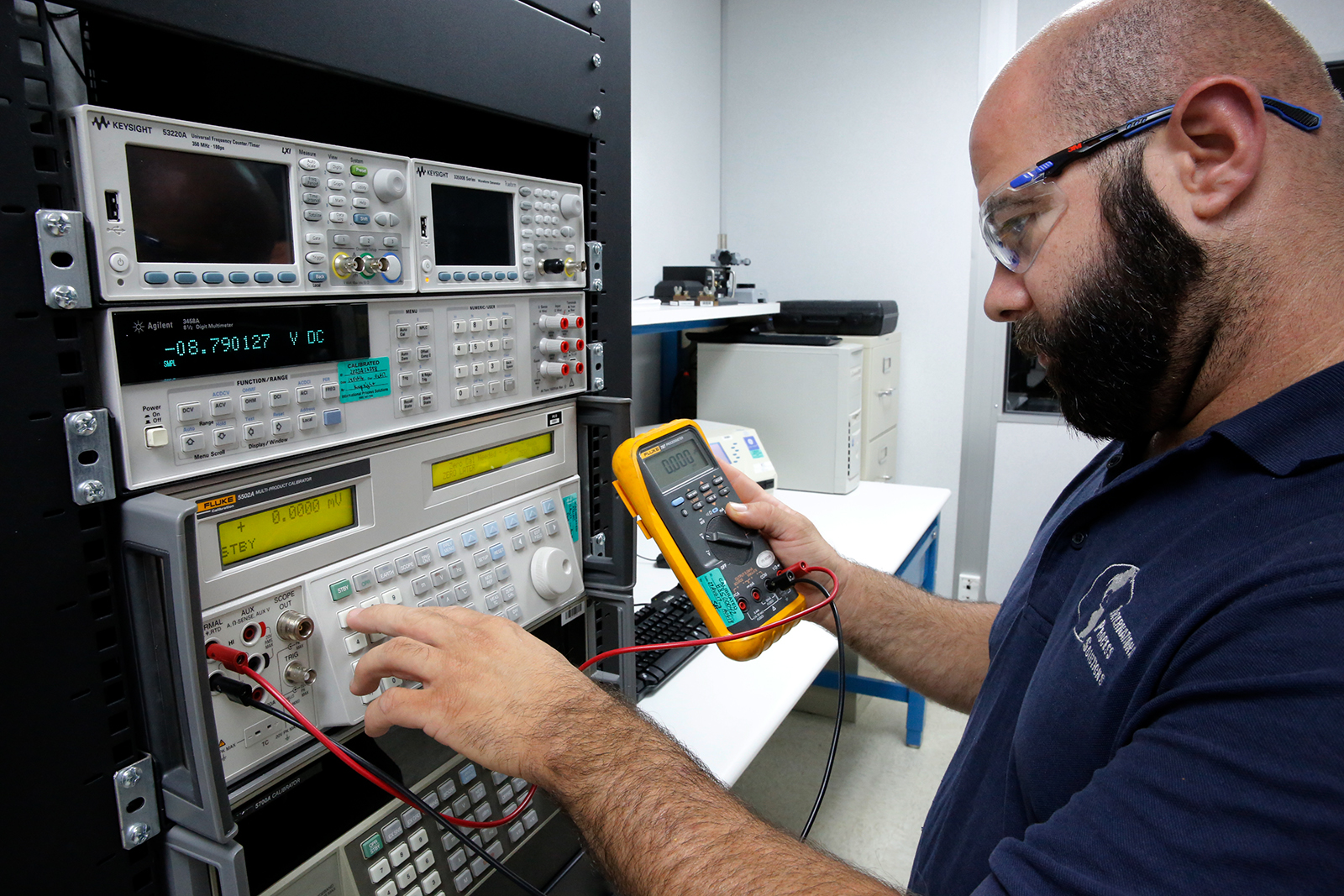
At International Process Solutions, we provide on-site calibration services with 24–72-hour service options, depending on equipment, location, scheduling, and service requirements.
On-site service can be particularly useful for facilities with large equipment inventories, critical instruments, or equipment that is difficult to remove from operation.
Laboratory Calibration Services
Laboratory calibration may be preferred when equipment requires controlled conditions, specialized calibration systems, or procedures better suited to a dedicated laboratory environment.
When evaluating laboratory calibration services, organizations should consider the provider’s:
Technical capabilities, turnaround time, handling procedures, documentation, measurement ranges, reference standards, accreditation status, and ability to meet required tolerances.
The appropriate choice between on-site and laboratory calibration depends on the instrument and the organization’s operational and quality requirements.
Industry-Specific Calibration Requirements
Calibration requirements can vary significantly between industries.
Pharmaceutical and Biotechnology
These facilities may operate under strict GMP requirements and need extensive equipment histories, traceability, documented procedures, and controlled calibration schedules.
Life Sciences and Research
Laboratories often depend on accurate pipettes, balances, temperature devices, and analytical equipment. Measurement consistency can directly affect experimental and analytical results.
Manufacturing
Manufacturers may rely on dimensional, torque, pressure, electrical, temperature, and mechanical measurements to verify processes and finished products.
Water Municipalities
Accurate measurement equipment may support testing, process control, maintenance, and regulatory activities.
Oil and Gas
Pressure, temperature, electrical, and process instrumentation may require regular calibration under demanding operational conditions.
The calibration provider should understand the measurement requirements associated with the customer’s equipment and intended application.
Questions to Ask Before Choosing a Calibration Provider
Before selecting a provider, we recommend asking:
- Are you ISO/IEC 17025 accredited?
- Is my specific calibration covered by your accredited scope?
- Can you provide your current scope of accreditation?
- How is measurement traceability established?
- What information appears on the calibration certificate?
- Are as-found and as-left results available?
- How is measurement uncertainty addressed?
- How are technicians trained and qualified?
- How are reference standards controlled?
- How are out-of-tolerance conditions reported?
- Do you provide on-site calibration?
- What turnaround times are available?
- Can your documentation support our GMP or quality-system requirements?
These questions provide considerably more information than simply asking how much calibration costs.
What to Look for on an ISO/IEC 17025 Calibration Certificate
When accredited calibration is requested, organizations should review the resulting documentation carefully.
Confirm that the certificate correctly identifies the instrument and contains the required calibration results.
The organization should also verify that the calibration performed corresponds with the accredited service requested.
Quality teams should establish a consistent certificate-review process so errors can be identified when documentation is received rather than months later during an audit.
Why Calibration Provider Qualifications Matter During Audits
Auditors may review both the organization’s calibration program and the external companies used to perform calibration.
They may request evidence showing that calibration suppliers are appropriately qualified for the work they perform.
Organizations should therefore maintain supplier records according to their internal quality procedures.
Documentation may include provider evaluations, accreditation certificates, applicable scopes of accreditation, calibration records, service agreements, corrective actions, and performance reviews.
Maintaining these records continuously can make audit preparation substantially easier.
International Process Solutions Calibration Services
At International Process Solutions, we support organizations throughout Southern and Northern California with professional calibration services designed for laboratory, industrial, research, manufacturing, and regulated environments.
Our capabilities include on-site calibration, laboratory calibration, documentation support, and ISO/IEC 17025 accredited pipette calibration.
We work with customers in industries including pharmaceuticals, biotechnology, life sciences, education, research, water municipalities, oil and gas, manufacturing, and GMP-regulated operations.
Our goal is to help customers maintain accurate instruments, dependable calibration records, and measurement systems capable of supporting daily operations as well as audits and inspections.
Choosing the Right Calibration Provider
A qualified calibration provider should be evaluated based on the requirements of the measurements being performed rather than a single certification or marketing claim.
Organizations should examine ISO/IEC 17025 accreditation, scope of accreditation, measurement traceability, uncertainty capabilities, technician competency, calibration procedures, reference-standard control, documentation practices, turnaround requirements, and industry experience.
When accredited calibration is required, confirm that the specific calibration falls within the provider’s current accredited scope.
When traceability is required, verify that the calibration documentation supports the required measurement chain.
When operating under GMP or another regulated quality system, ensure the calibration provider can supply documentation that aligns with your procedures.
By carefully qualifying calibration providers and defining calibration requirements before service begins, organizations can build a more reliable measurement program, reduce documentation problems, and remain better prepared for customer audits, quality audits, and regulatory inspections.
International Process Solutions provides professional calibration services throughout California, including ISO/IEC 17025 accredited pipette calibration, laboratory calibration, and convenient on-site calibration solutions for organizations that depend on accurate, traceable, and well-documented measurements.