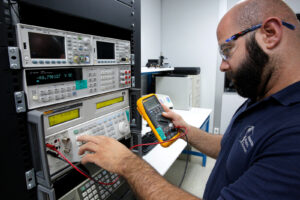
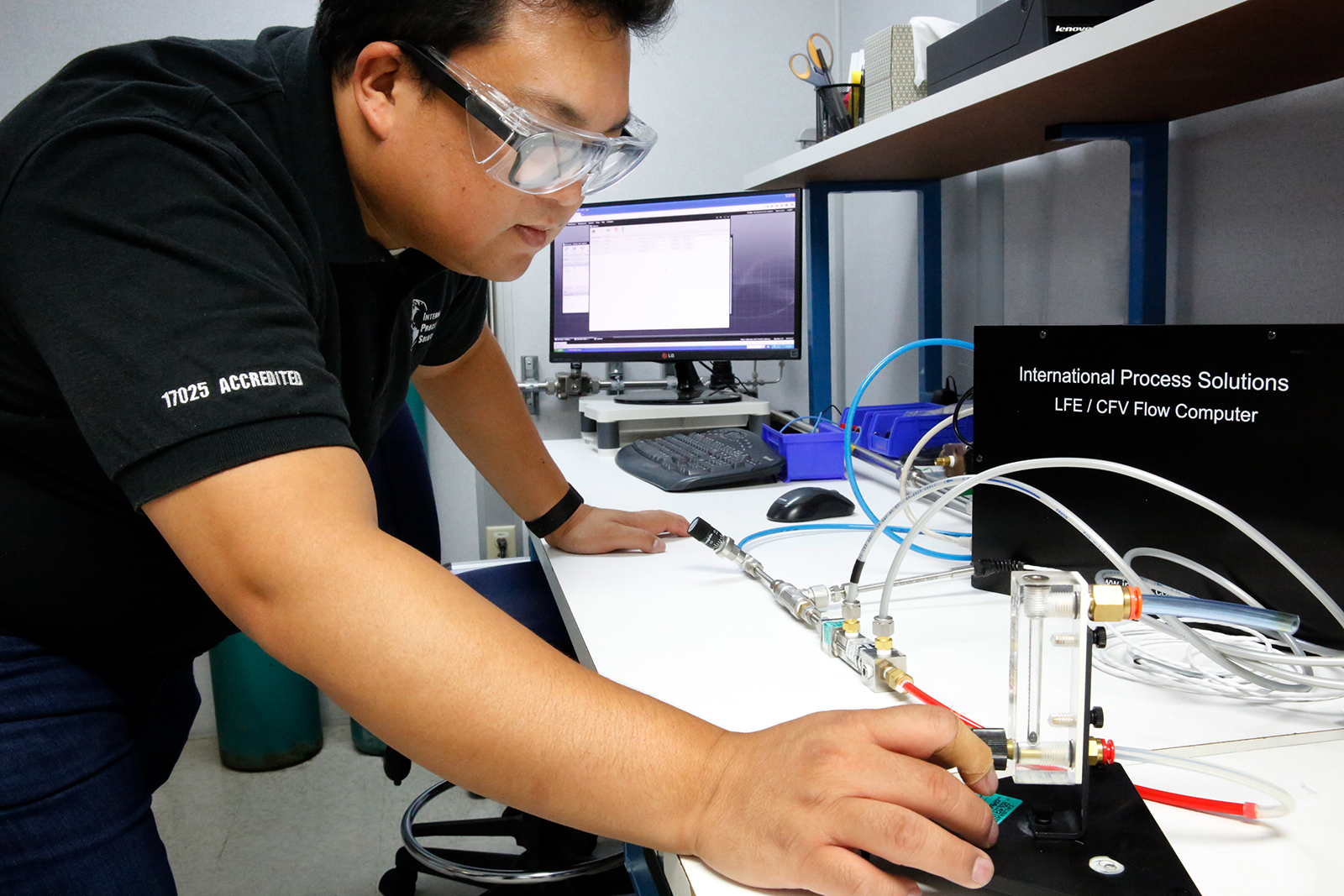
Centrifuges play a critical role in laboratories, pharmaceutical manufacturing facilities, biotechnology organizations, research institutions, healthcare environments, and industrial processing operations. These instruments are designed to separate substances of varying densities through high-speed rotational force, making them essential for countless scientific and production applications. To ensure reliable performance, regulatory compliance, and accurate results, centrifuge calibration is a vital maintenance procedure that should be performed regularly.
At International Process Solutions (IPS), we provide comprehensive centrifuge calibration services designed to verify performance, improve reliability, and support quality assurance programs across highly regulated industries.
Understanding Centrifuge Calibration
Centrifuge calibration is the process of verifying and adjusting a centrifuge’s operating parameters to ensure it performs within specified tolerances established by the manufacturer and applicable industry standards. Calibration confirms that critical operational measurements such as rotational speed, temperature, timer accuracy, and relative centrifugal force (RCF) are functioning correctly.
Because centrifuges are frequently used in applications involving sensitive biological samples, pharmaceutical products, chemical testing, and quality control procedures, even minor deviations can affect results. Regular calibration helps ensure consistency, repeatability, and confidence in laboratory and manufacturing processes.
Why Centrifuge Calibration Is Important
A centrifuge operating outside of specification can introduce significant risks to laboratory and production environments. Calibration helps identify performance issues before they affect product quality, test results, or regulatory compliance.
Key benefits include:
- Improved measurement accuracy
- Enhanced process consistency
- Reduced risk of sample contamination
- Compliance with regulatory requirements
- Increased equipment reliability
- Extended equipment lifespan
- Reduced downtime and costly repairs
- Improved product quality and data integrity
Organizations operating under GMP, GLP, ISO, FDA, USP, and other quality systems often require documented calibration records to support audits and inspections.
Critical Parameters Evaluated During Centrifuge Calibration
Professional centrifuge calibration involves evaluating multiple performance characteristics that directly affect instrument operation.
Rotational Speed Verification
One of the most important calibration parameters is rotor speed. Centrifuges must achieve and maintain precise revolutions per minute (RPM) to produce accurate separation results.
Using calibrated tachometers and specialized measurement equipment, technicians verify:
- Actual RPM performance
- Speed stability
- Acceleration rates
- Deceleration rates
- Speed control accuracy
Even small speed deviations can alter separation efficiency and impact analytical outcomes.
Temperature Calibration
Many laboratory centrifuges operate under controlled temperature conditions to protect temperature-sensitive samples.
Calibration verifies:
- Chamber temperature accuracy
- Temperature stability
- Uniform temperature distribution
- Cooling system performance
Temperature deviations can affect biological samples, pharmaceutical compounds, proteins, enzymes, and other critical materials.
Timer Accuracy Verification
Accurate run times are essential for repeatable centrifugation processes.
Calibration procedures evaluate:
- Timer accuracy
- Cycle consistency
- Countdown functionality
- Start and stop timing performance
Incorrect timing can result in incomplete separation or over-processing of samples.
Relative Centrifugal Force (RCF) Verification
RCF represents the actual force applied to samples during centrifugation. Since many laboratory procedures specify RCF rather than RPM, calibration may include verification calculations based on rotor dimensions and speed performance.
Accurate RCF ensures:
- Consistent sample processing
- Reliable separation results
- Method compliance
- Repeatable laboratory procedures
Industries That Require Centrifuge Calibration
Numerous industries rely on calibrated centrifuges to maintain product quality, testing accuracy, and regulatory compliance.
Pharmaceutical Manufacturing
Pharmaceutical facilities use centrifuges throughout production, quality control, research, and validation activities. Calibration supports compliance with FDA regulations and GMP requirements while helping ensure product integrity.
Biotechnology Laboratories
Biotechnology organizations process highly sensitive biological materials that require precise centrifuge performance. Calibration helps maintain consistency in research, development, and production environments.
Clinical and Medical Laboratories
Medical laboratories utilize centrifuges for blood processing, specimen preparation, diagnostic testing, and clinical research. Calibration helps support accurate patient testing and reliable diagnostic outcomes.
Research Institutions
Universities, government laboratories, and private research facilities depend on calibrated centrifuges for experimental accuracy and data integrity.
Food and Beverage Processing
Food manufacturers often use centrifuges for quality control testing and product processing applications where equipment accuracy directly impacts production quality.
Chemical Manufacturing
Chemical processing operations rely on centrifuges for separation, purification, and testing procedures. Calibration helps maintain process consistency and product specifications.
Signs a Centrifuge May Require Calibration
Although calibration should be performed according to a scheduled maintenance program, certain warning signs may indicate immediate attention is needed.
Common indicators include:
- Inconsistent separation results
- Unexpected sample variability
- Temperature fluctuations
- Excessive vibration
- Unusual operating noises
- Display errors
- Failed quality control checks
- Regulatory audit findings
- Recent repairs or component replacement
When these symptoms occur, calibration can help identify underlying performance issues before they escalate into more significant problems.
How Often Should Centrifuges Be Calibrated?
Calibration frequency depends on several factors including equipment usage, regulatory requirements, manufacturer recommendations, and organizational quality systems.
Many organizations schedule centrifuge calibration:
- Annually
- Semi-annually
- Quarterly for critical applications
- Following repairs
- After relocation
- Following major maintenance activities
- Before regulatory inspections
High-use equipment operating in regulated environments may require more frequent verification to maintain compliance and performance standards.
The Centrifuge Calibration Process
A professional centrifuge calibration service typically follows a structured procedure designed to ensure accurate and traceable results.
Initial Inspection
Technicians begin by evaluating the centrifuge’s overall condition, checking for:
- Physical damage
- Rotor condition
- Safety interlocks
- Display functionality
- Mechanical integrity
Performance Testing
Critical operating parameters are measured using calibrated reference standards.
Testing may include:
- RPM verification
- Temperature verification
- Timer testing
- Rotor inspection
- Safety feature validation
Adjustment and Correction
If performance falls outside acceptable tolerances, adjustments may be performed to restore proper operation.
Final Verification
Following adjustments, all critical parameters are retested to confirm compliance with specifications.
Documentation
Comprehensive calibration documentation is generated, including:
- As-found data
- As-left data
- Calibration standards utilized
- Measurement uncertainty information
- Traceability records
- Calibration certificates
These records support quality systems, audits, inspections, and regulatory compliance requirements.
NIST Traceable Centrifuge Calibration
Many regulated industries require NIST traceable calibration to establish confidence in measurement accuracy.
NIST traceability ensures calibration measurements can be linked through an unbroken chain of comparisons to recognized national standards. This traceability supports:
- Quality assurance programs
- Regulatory compliance
- Audit readiness
- Measurement confidence
- Data reliability
Organizations seeking ISO-compliant calibration programs often require NIST traceable services for critical laboratory and manufacturing equipment.
Preventive Maintenance and Calibration
Calibration works best when integrated into a broader preventive maintenance program.
Routine maintenance activities may include:
- Cleaning rotors and chambers
- Inspecting seals and gaskets
- Lubricating moving components
- Checking safety systems
- Verifying rotor integrity
- Inspecting electrical connections
Combining maintenance with calibration helps maximize equipment performance while reducing unexpected failures.
Choosing a Professional Centrifuge Calibration Provider
Selecting an experienced calibration company is essential for maintaining equipment reliability and compliance.
When evaluating providers, consider:
- Technical expertise
- Industry experience
- Regulatory knowledge
- NIST traceability capabilities
- On-site calibration availability
- Comprehensive documentation
- Fast turnaround times
- Preventive maintenance support
A qualified provider helps ensure centrifuges continue operating within required specifications while supporting organizational quality objectives.
Why Choose International Process Solutions for Centrifuge Calibration
At International Process Solutions (IPS), we provide professional centrifuge calibration services for laboratories, pharmaceutical manufacturers, biotechnology facilities, medical organizations, research institutions, and industrial operations throughout California and beyond.
Our services include:
- NIST traceable calibration
- On-site and laboratory calibration services
- Comprehensive documentation
- Regulatory compliance support
- Experienced calibration technicians
- Preventive maintenance solutions
- Rapid service response
- Multi-industry expertise
We understand the critical role centrifuges play in quality-driven environments and deliver precise calibration services designed to help organizations maintain accuracy, compliance, and operational excellence.
Conclusion
Centrifuge calibration is a fundamental component of laboratory quality assurance and industrial process control. By verifying speed accuracy, temperature performance, timer functionality, and overall instrument operation, calibration helps ensure reliable results, regulatory compliance, and long-term equipment performance.
Organizations that implement routine centrifuge calibration programs benefit from improved accuracy, enhanced process consistency, reduced risk, and increased confidence in their testing and manufacturing operations. Partnering with a trusted calibration provider such as International Process Solutions helps ensure your centrifuges continue to perform at the highest level while supporting critical quality and compliance objectives.