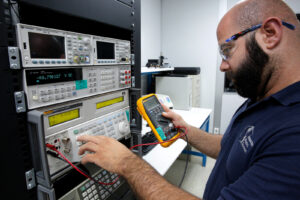

Biosafety cabinet calibration is the process of measuring and verifying critical operating parameters of a biological safety cabinet, including airflow performance and other measurable functions, using appropriate test instruments and procedures. In practice, laboratories often use the term biosafety cabinet calibration when referring to the broader process of biosafety cabinet testing and certification. Certification evaluates whether the cabinet is operating according to applicable performance requirements and standards.
At International Process Solutions (IPS), we understand the importance of accurate measurements and properly functioning laboratory equipment in pharmaceutical, biotechnology, life sciences, research, healthcare, education, and other controlled laboratory environments. Biosafety cabinets are especially important because their performance depends on carefully controlled airflow and filtration systems.
Regular testing, calibration, and certification help laboratories document cabinet performance and identify conditions that could affect personnel, product, or environmental protection.
Featured Answer: What Is Biosafety Cabinet Calibration?
Biosafety cabinet calibration involves measuring and verifying operating parameters such as inflow and downflow air velocities using calibrated test equipment. Biosafety cabinet certification is the more comprehensive process used to verify that the cabinet meets applicable performance requirements. Depending on the cabinet and certification requirements, testing may include airflow measurements, HEPA filter integrity testing, airflow smoke-pattern testing, alarm checks, and other performance tests. Class II biosafety cabinets are commonly evaluated using NSF/ANSI 49 requirements and other applicable standards or manufacturer specifications.
Because “calibration” and “certification” are sometimes used interchangeably in laboratory searches, facilities should determine exactly which service their cabinet requires.
Biosafety Cabinet Calibration vs. Certification
There is an important distinction between calibration and certification.
Calibration generally involves comparing a measurable parameter or instrument against an appropriate reference to establish measurement performance. In the context of a biosafety cabinet, technicians use calibrated instruments to measure operating conditions such as airflow velocity.
Biosafety cabinet certification, however, is a broader evaluation of the cabinet’s performance.
Certification can involve multiple tests designed to determine whether the cabinet operates within applicable requirements.
For this reason, a laboratory requesting “biosafety cabinet calibration” may actually require a complete biosafety cabinet certification service.
We recommend clearly defining the required service based on the cabinet type, laboratory procedures, applicable standards, manufacturer requirements, and the work performed inside the cabinet.
How Does a Biosafety Cabinet Work?
A biological safety cabinet uses controlled airflow and high-efficiency particulate air (HEPA) filtration to provide specific types of protection.
Depending on cabinet class and configuration, a BSC can be designed to help protect:
- Personnel
- Work materials or products
- The surrounding environment
Class II biosafety cabinets are widely used in biological and life-science laboratories.
Their performance depends heavily on maintaining specified airflow patterns. Air entering the front opening helps establish personnel protection, while filtered vertical downflow helps maintain the work area and cabinet performance.
If airflow changes substantially because of filter loading, blower problems, physical modifications, incorrect setup, or other conditions, the cabinet may no longer perform as intended.
This is why airflow measurement is an important part of BSC performance evaluation.
What Is Tested During Biosafety Cabinet Certification?
The exact testing required depends on the cabinet type, applicable standard, installation, manufacturer specifications, and laboratory requirements.
Common certification procedures for applicable cabinets can include several important performance tests.
Inflow Velocity Testing
Inflow is the air entering the cabinet through the front access opening.
This airflow is an important component of personnel protection.
A qualified technician measures the appropriate airflow parameters using calibrated test equipment and compares the results with applicable requirements.
Measurements must be performed according to the correct procedure because cabinet design and test methodology can affect how airflow is evaluated.
Downflow Velocity Testing
Class II biosafety cabinets use HEPA-filtered vertical downflow within the work area.
Downflow velocity testing evaluates this airflow at defined locations within the cabinet.
Rather than relying on a single measurement, testing can involve multiple readings used to evaluate airflow performance and uniformity across the work zone.
Abnormal downflow measurements can indicate a performance problem that requires additional evaluation.
HEPA Filter Integrity Testing
HEPA filters are fundamental components of many biosafety cabinets.
Certification can include a HEPA filter leak or integrity test designed to detect leaks in the filter media, filter frame, seals, or related components.
A cabinet can appear to operate normally while still having a filtration problem that cannot be identified through visual inspection alone.
Appropriate testing helps determine whether the filtration system is performing as required.
If a HEPA filter or its sealing system fails the applicable integrity test, the issue must be corrected before the cabinet can meet the relevant certification criteria.
Airflow Smoke-Pattern Testing
Smoke-pattern testing allows airflow behavior to be visually evaluated.
During testing, smoke or another appropriate visualization medium is introduced at specified locations so the technician can observe how air moves within and around the cabinet.
This can help identify undesirable airflow characteristics such as turbulence, reflux, escape from the cabinet, or interference at the front opening.
Airflow visualization is particularly valuable because airflow velocity measurements alone do not show every aspect of how air behaves inside the cabinet.
Biosafety Cabinet Alarm Testing
Depending on cabinet design and applicable certification requirements, technicians may evaluate alarms and related cabinet functions.
Modern biosafety cabinets may contain alarms associated with operating conditions such as airflow performance, sash position, or other monitored parameters.
An alarm that does not function correctly can prevent users from receiving an important warning when cabinet conditions are outside normal operating parameters.
Laboratories should never assume that an alarm is functioning simply because the cabinet powers on.
Additional Biosafety Cabinet Tests
Additional tests may be required depending on the cabinet, standard, manufacturer, or customer requirements.
These may involve applicable evaluations of:
Cabinet airflow, electrical safety functions, lighting, vibration, noise, exhaust systems, cabinet pressure relationships, or other performance characteristics.
Not every test applies to every cabinet or every certification situation.
The technician should determine the required testing based on the specific cabinet and applicable certification criteria.
What Standard Is Used for Biosafety Cabinet Certification?
One of the most important standards associated with Class II biosafety cabinets in the United States is NSF/ANSI 49.
NSF/ANSI 49 addresses Class II biosafety cabinet design, construction, performance, and field certification requirements.
Laboratories should also consider manufacturer specifications, institutional biosafety procedures, regulatory expectations, accreditation requirements, and other applicable guidance.
The correct requirements depend on the facility and cabinet.
This is why laboratories should identify the applicable standard before scheduling service rather than treating every biosafety cabinet as though it requires an identical test procedure.
How Often Should a Biosafety Cabinet Be Certified?
Biosafety cabinets are commonly certified at least annually, but certification may also be necessary when certain events occur.
A cabinet may require certification or recertification:
- After installation
- At least annually under commonly followed laboratory practices
- After being moved or relocated
- After certain repairs
- After HEPA filter replacement
- After changes that could affect airflow performance
- When required by the facility’s procedures or applicable standards
Facilities should follow their applicable standard, manufacturer recommendations, risk assessment, and internal quality procedures when establishing certification frequency.
A cabinet should not simply be assumed to remain within specification because it passed its previous certification.
Does a Biosafety Cabinet Need Certification After It Is Moved?
Relocating a biosafety cabinet can affect its installation and performance.
Moving a cabinet may influence airflow, cabinet leveling, exhaust connections, internal components, or other operating conditions.
For this reason, recertification is generally appropriate after relocation before the cabinet is returned to normal use.
Laboratories planning a move should include certification in the relocation process rather than waiting until the cabinet has already been placed back into service.
For facilities relocating laboratories, coordinating cabinet service with equipment relocation can help prevent unnecessary operational delays.
Does a Biosafety Cabinet Need Certification After HEPA Filter Replacement?
HEPA filter replacement directly affects a critical part of the cabinet’s containment and filtration system.
Following filter replacement or other service that could affect cabinet performance, appropriate testing should be completed before normal operation resumes.
This can include filter integrity testing, airflow measurements, and other applicable certification procedures.
The exact work required depends on the cabinet and the maintenance performed.
What Happens if a Biosafety Cabinet Fails Certification?
A failed certification indicates that one or more tested parameters did not meet the applicable acceptance criteria.
Possible problems can involve:
Incorrect airflow velocity, HEPA filter leakage, airflow-pattern problems, alarm issues, blower performance, damaged seals, filter loading, mechanical problems, or installation conditions.
The appropriate corrective action depends on the failure.
The cabinet may require adjustment, maintenance, repair, filter service, or additional troubleshooting. After the underlying problem has been corrected, affected tests should be repeated as required to verify acceptable performance.
A cabinet that does not meet required certification criteria should not simply receive a new certification label without the underlying condition being addressed.
What Causes a Biosafety Cabinet to Fail Certification?
Several conditions can contribute to certification problems.
Loaded HEPA Filters
Over time, particulate accumulation can increase resistance across a HEPA filter and influence airflow performance.
Blower Performance Problems
Changes in blower performance can affect airflow velocities and overall cabinet operation.
HEPA Filter or Seal Leakage
Damage or leakage around filtration components can result in a failed integrity test.
Improper Cabinet Setup
The location and installation of a cabinet can affect performance. Nearby doors, supply-air diffusers, traffic patterns, or other sources of disruptive airflow can interfere with the cabinet’s air barrier.
Mechanical Changes or Repairs
Maintenance or component replacement can alter cabinet operating conditions and create a need for testing or adjustment.
Improper Sash Position
The cabinet must be operated according to its designed configuration. Incorrect sash position can affect airflow performance.
Why Calibrated Test Equipment Matters
Biosafety cabinet performance testing depends on measurement equipment.
Airflow instruments and other devices used during certification should themselves be appropriately calibrated and maintained.
A measurement result is only useful when there is confidence in the equipment used to obtain it.
This is especially important for laboratories operating within GMP, pharmaceutical, biotechnology, life-science, research, and other quality-controlled environments where equipment records may later be examined during audits or inspections.
Biosafety Cabinet Certification Documentation
After successful certification, the laboratory should receive appropriate documentation describing the service performed and the results.
Depending on the service, records may identify:
Cabinet manufacturer, model, serial number, equipment or asset ID, cabinet location, certification date, tests performed, measurement results, applicable acceptance criteria, technician information, and certification status.
The cabinet may also receive a certification label indicating its certification status and date.
Facilities should maintain these records according to their internal document-retention and quality procedures.
Biosafety Cabinet Certification and Audit Readiness
Calibration and certification records can become important during internal quality audits, customer audits, regulatory inspections, and laboratory assessments.
Auditors may ask when a cabinet was last certified, whether required testing was completed, what standards were followed, and how failed equipment is handled.
Maintaining organized records allows a laboratory to demonstrate that critical equipment is being managed according to established procedures.
Facilities should be able to connect the physical cabinet with its equipment record and certification history.
Biosafety Cabinets in Pharmaceutical and Biotechnology Facilities
Biosafety cabinets are widely used throughout pharmaceutical, biotechnology, life sciences, microbiology, research, and laboratory operations.
In controlled environments, cabinet performance can become part of a broader equipment-management program.
The facility may maintain records covering:
Installation, qualification, certification, preventive maintenance, repairs, filter changes, relocation, decontamination, and equipment retirement.
Integrating biosafety cabinet certification into the facility’s equipment schedule can help prevent missed service dates and unexpected downtime.
Biosafety Cabinet Calibration and GMP Environments
Facilities operating under Good Manufacturing Practice (GMP) requirements generally maintain formal controls over equipment that can affect processes, testing, or product quality.
Where biosafety cabinets are used within these environments, organizations should establish appropriate procedures governing their maintenance, certification, and documentation.
Records should clearly identify the cabinet, service performed, results, date, and status.
If a cabinet fails required testing, the organization may also need to evaluate the potential impact according to its quality procedures.
Preparing for Biosafety Cabinet Certification
Laboratories can make the certification process more efficient by preparing the work area before service.
Before the technician arrives, facilities should:
- Confirm the cabinet’s manufacturer, model, and serial number
- Locate previous certification records
- Identify applicable facility requirements
- Provide access to the cabinet
- Remove unnecessary materials from the work area
- Follow facility procedures for cleaning or decontamination when required
- Inform the service provider of recent repairs or filter changes
- Identify any known alarms or performance problems
- Communicate facility access and safety requirements
Laboratories handling biological hazards should follow their established decontamination and safety procedures before allowing service personnel to perform work.
Biosafety Cabinet Calibration vs. Laminar Flow Hood Certification
A biosafety cabinet should not be confused with a laminar flow clean bench or laminar flow hood.
The equipment may look similar, but the intended protection differs.
A biosafety cabinet is designed to provide specific containment and protection characteristics based on cabinet class and type.
A clean bench generally provides HEPA-filtered air to protect the work or product but does not provide the same personnel protection as a biosafety cabinet.
Facilities should correctly identify their equipment before scheduling testing because the applicable procedures and acceptance requirements may differ.
How to Choose a Biosafety Cabinet Calibration and Certification Provider
When selecting a service provider, laboratories should evaluate technical capability rather than choosing solely on price.
Important considerations include:
Experience with biosafety cabinets, familiarity with applicable standards, appropriate test equipment, calibration status of measurement instruments, technician qualifications, documentation quality, service availability, and experience working in regulated laboratory environments.
Facilities should also determine whether the provider can coordinate biosafety cabinet service with other calibration requirements.
For laboratories with large equipment inventories, consolidating service schedules can reduce interruptions and simplify equipment-management activities.
Professional Calibration Services From International Process Solutions
At International Process Solutions, we support organizations throughout Southern and Northern California with professional calibration and laboratory equipment services.
We work with customers in pharmaceutical, biotechnology, life sciences, education, research, water municipalities, manufacturing, oil and gas, and GMP-regulated environments.
Our calibration capabilities include on-site calibration and laboratory calibration, allowing customers to develop service programs appropriate for their equipment and operations.
For facilities managing critical laboratory equipment, accurate measurements and dependable documentation are essential components of an effective equipment-control program.
Keeping Biosafety Cabinets Ready for Use
Biosafety cabinet performance should be treated as an ongoing equipment-management responsibility rather than something considered only when an annual certification date approaches.
Facilities should maintain a clear history of certification, maintenance, repairs, relocation, filter replacement, and performance issues.
Users should also report unusual airflow alarms, unexpected noises, damaged components, or changes in cabinet operation rather than waiting for the next scheduled certification.
When a cabinet is moved, repaired, modified, or otherwise subjected to conditions that could affect its performance, the facility should determine whether recertification is required before returning it to service.
Reliable Biosafety Cabinet Calibration and Certification Support
Understanding the distinction between biosafety cabinet calibration and biosafety cabinet certification is the first step toward establishing the correct service program.
Calibration supports accurate measurement of cabinet operating parameters, while certification provides a broader evaluation of cabinet performance against applicable requirements.
Regular performance testing can include inflow measurements, downflow measurements, HEPA filter integrity testing, smoke-pattern testing, alarm checks, and other applicable evaluations based on the cabinet and certification requirements.
At International Process Solutions, we help laboratories and regulated facilities maintain dependable equipment programs with professional calibration services, responsive on-site support, and documentation designed to support quality-controlled operations.
For laboratories that depend on biological safety cabinets, establishing a consistent certification schedule and maintaining complete service records helps ensure each cabinet’s performance is evaluated before it becomes a problem during critical laboratory work or an audit.