Featured Answer: How Do Calibration Services Help With GMP Compliance?
Calibration services help support Good Manufacturing Practice (GMP) compliance by verifying that instruments used to measure, monitor, control, or document critical processes are performing within established tolerances. A structured calibration program provides documented evidence of instrument accuracy, measurement traceability, calibration status, acceptance criteria, and corrective action when equipment is found outside acceptable limits. At International Process Solutions (IPS), we provide professional calibration services designed to help pharmaceutical, biotechnology, life science, manufacturing, and other regulated facilities maintain reliable measurement systems and the documentation required to support their quality programs.
For GMP-regulated operations, an instrument is more than a piece of equipment. Its measurements may influence product quality, process control, environmental conditions, batch acceptance, storage conditions, testing, and release decisions. An effective calibration program helps organizations demonstrate that these measurements can be relied upon throughout the manufacturing and quality process.
What Is GMP Calibration?
GMP calibration is the controlled process of comparing an instrument’s measurement performance against an appropriate reference standard to determine whether the instrument operates within established specifications.
Within a GMP environment, calibration generally involves more than obtaining a measurement and making an adjustment. The process should be performed according to established procedures and supported by appropriate records.
A controlled calibration program may include:
- Instrument identification
- Calibration frequency
- Calibration procedures
- Defined acceptance tolerances
- Appropriate reference standards
- As-found results
- As-left results
- Calibration dates
- Calibration status
- Technician information
- Equipment or standard identification
- Traceability information
- Out-of-tolerance documentation
- Next calibration due dates
These records create an auditable history demonstrating how measurement equipment is managed throughout its use.
Why Accurate Measurements Are Critical in GMP Environments
GMP manufacturing and laboratory processes depend heavily on measurement.
Facilities may need to measure and control temperature, humidity, pressure, weight, volume, flow, speed, time, conductivity, pH, torque, and numerous other process variables.
A measurement error can affect more than the instrument itself.
For example, an inaccurate temperature device could provide incorrect information about a controlled storage area. An inaccurate balance could affect material quantities. A pipette outside its established tolerance could influence laboratory testing. An inaccurate pressure gauge could provide misleading information about process conditions.
For this reason, calibration programs should be connected to the intended use and criticality of each instrument rather than treated as an isolated maintenance activity.
Calibration Provides Documented Evidence of Instrument Performance
One of the most important ways calibration services support GMP compliance is through documentation.
It is not sufficient for an organization to assume that an instrument is accurate because it appears to be operating normally.
A properly documented calibration provides evidence that the instrument was evaluated according to established requirements.
Calibration documentation can help establish:
What was calibrated: The specific instrument is identified so the calibration record can be associated with the correct asset.
When it was calibrated: Calibration dates establish the instrument’s maintenance history and help organizations monitor required intervals.
What standard was used: Reference standard information supports measurement traceability.
What results were obtained: Recorded results demonstrate the instrument’s condition during calibration.
Whether the instrument passed: Defined tolerances allow results to be evaluated against established acceptance criteria.
What happened when the instrument failed: Out-of-tolerance conditions can be documented and investigated according to the organization’s quality procedures.
This information becomes particularly important during internal quality reviews, customer audits, and regulatory inspections.
Traceable Calibration Strengthens GMP Measurement Control
Measurement traceability is an important component of a defensible calibration program.
Calibration results should be connected through an appropriate chain of measurement standards so organizations can understand the basis for the measurements being reported.
This is where working with an experienced calibration provider becomes especially valuable.
At International Process Solutions, we understand the importance of accurate documentation and traceable measurement practices for regulated facilities. Our calibration services support organizations that require dependable records for their quality systems and compliance activities.
Traceability provides confidence that measurements are not based on an arbitrary reference. Instead, the calibration process is connected to recognized standards through documented comparisons.
Calibration Helps Maintain Equipment Within Established Tolerances
Every instrument has an intended purpose.
The acceptable tolerance for that instrument should reflect the requirements of the process in which it is used.
A device does not necessarily need to provide unlimited precision. It needs to provide measurement performance appropriate for its application and established requirements.
During calibration, measurement results can be compared with the organization’s defined acceptance criteria.
The instrument can then be identified as acceptable, adjusted when appropriate, repaired, removed from service, or otherwise managed according to established procedures.
This systematic approach helps prevent instruments with unacceptable measurement performance from continuing to influence GMP-controlled processes without detection.
As-Found and As-Left Calibration Data Are Important for GMP Programs
As-found data represents the condition of the instrument when calibration begins, before adjustments are made.
As-left data represents its condition after calibration activities, including any applicable adjustments.
Both can provide valuable information.
If an instrument is found outside its established tolerance, the as-found condition helps determine the magnitude and direction of the error. That information may become important when evaluating whether measurements made since the previous acceptable calibration could have affected products, processes, testing, or records.
Simply adjusting an instrument without documenting its original condition can eliminate information that may be important to a quality investigation.
Detailed calibration records therefore contribute directly to a stronger equipment history.
Calibration Helps Identify Out-of-Tolerance Equipment
One of the most significant functions of a calibration program is identifying instruments that are out of tolerance.
An out-of-tolerance result should not automatically be viewed as an isolated maintenance issue.
Depending on the instrument’s role, the organization may need to determine:
- How far the instrument was outside tolerance
- Whether the error could have affected previous measurements
- When the instrument was last known to be within tolerance
- Which processes used the instrument
- Which batches or products could potentially be affected
- Whether laboratory data requires review
- Whether corrective action is necessary
- Whether the calibration interval should be reconsidered
Accurate as-found calibration data provides essential information for conducting this assessment.
Calibration Supports Data Integrity
GMP quality systems depend on reliable data.
If a measurement is generated using an instrument that is not appropriately controlled, questions can arise regarding the reliability of the resulting information.
Calibration supports data integrity by establishing confidence in the measurement equipment generating or supporting GMP records.
This can include instruments associated with:
- Production measurements
- Laboratory testing
- Environmental monitoring
- Storage monitoring
- Process verification
- Equipment qualification
- Cleaning processes
- Quality control
- Batch manufacturing
- Facility monitoring
When measurement systems are maintained within established specifications and supported by documented calibration records, organizations have stronger evidence supporting the reliability of their process and quality data.
What Types of Equipment Require Calibration for GMP Compliance?
The specific equipment requiring calibration depends on the facility, process, product, and intended use.
Common examples include:
Pipettes
Pipettes are frequently used in pharmaceutical, biotechnology, research, and quality-control laboratories. Calibration helps verify that delivered volumes remain within established specifications.
Balances and Scales
Balances may be used for raw materials, formulations, laboratory samples, and production activities. Reliable weighing measurements are essential when quantity directly affects a process or test.
Temperature Instruments
Thermometers, temperature probes, data loggers, sensors, and temperature-monitoring systems may be used throughout manufacturing, laboratories, refrigerators, freezers, incubators, and controlled storage environments.
Humidity Instruments
Humidity measurement may be important for environmental monitoring, storage areas, production environments, and processes sensitive to moisture.
Pressure Gauges
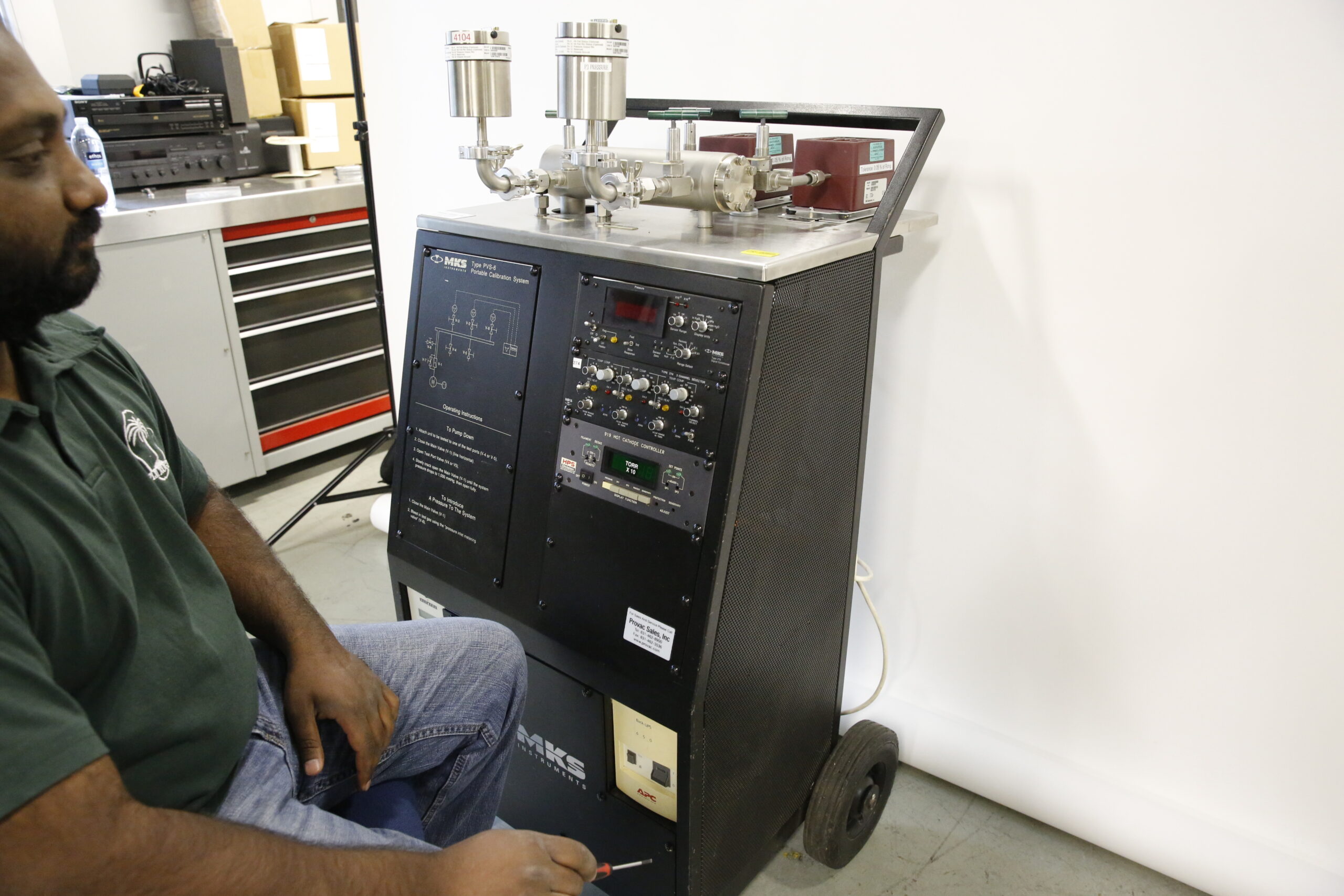
Pressure gauges are used throughout manufacturing and process systems. Calibration verifies measurement performance against an appropriate reference.
Torque Equipment
Torque tools may be used where controlled fastening requirements are part of production or equipment maintenance procedures.
Tachometers
Tachometers measure rotational speed and may be used with mixers, centrifuges, motors, and other equipment where RPM is an important process parameter.
Additional Laboratory and Process Instruments
Depending on the operation, calibration programs may also include equipment used to measure flow, conductivity, pH, electrical parameters, force, vacuum, dimensional characteristics, and other critical variables.
How Often Should GMP Equipment Be Calibrated?
There is no universal calibration interval appropriate for every instrument.
Calibration frequency should be established according to the instrument’s criticality, intended use, manufacturer information, historical performance, environmental conditions, frequency of use, quality requirements, and applicable procedures or regulations.
An instrument used continuously in a critical production process may require a different interval than an instrument used infrequently for a less critical measurement.
Historical calibration data can also provide useful information.
If an instrument repeatedly demonstrates stable performance, the organization may evaluate its interval according to its approved quality procedures. If a device frequently drifts toward or beyond acceptable limits, a shorter interval, repair, replacement, or additional investigation may be appropriate.
The key is maintaining a documented and justified calibration schedule rather than allowing calibration dates to be determined inconsistently.
Preventing Overdue Calibrations in GMP Facilities
An overdue calibration can create unnecessary compliance complications.
Facilities should maintain a system that identifies each calibration-controlled instrument and its next required calibration date.
Depending on the organization’s quality system, this may involve computerized asset-management software, calibration management systems, equipment labels, controlled spreadsheets, or other approved tracking methods.
The goal is straightforward: equipment should not unintentionally remain in GMP use beyond its established calibration interval.
Clear calibration status identification also helps personnel determine whether an instrument is approved for use.
How On-Site Calibration Supports GMP Operations
Sending critical instruments away for calibration is not always practical.
Production schedules, laboratory workloads, equipment availability, and downtime requirements can make on-site calibration services particularly valuable.
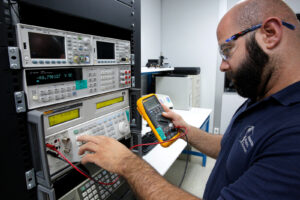
International Process Solutions provides on-site calibration capabilities that allow many instruments to be serviced at the customer’s facility.
On-site service can help organizations:
- Reduce equipment transportation
- Limit operational disruption
- Maintain tighter control of critical assets
- Coordinate multiple instrument calibrations
- Reduce equipment downtime
- Support planned maintenance periods
- Keep important instruments available to the facility
For regulated facilities operating on demanding production schedules, careful coordination of calibration activities can make maintaining compliance significantly more manageable.
Laboratory Calibration for GMP-Controlled Equipment
Some instruments are better suited for calibration within a controlled laboratory environment.
IPS provides both on-site and laboratory calibration services, allowing calibration strategies to be matched to the instrument and application.
Laboratory calibration can provide access to specialized standards, controlled environmental conditions, and equipment that may not be practical to transport to every customer location.
Organizations with diverse equipment inventories often benefit from using both on-site and laboratory calibration services as part of a comprehensive program.
ISO/IEC 17025 Accredited Calibration and GMP Quality Systems
GMP and ISO/IEC 17025 address different areas, but accredited calibration services can provide additional confidence in the technical processes supporting measurement results.
ISO/IEC 17025 accreditation addresses the competence of testing and calibration laboratories within the accredited scope.
International Process Solutions provides ISO/IEC 17025 accredited pipette calibration, supporting laboratories and regulated organizations requiring a high level of measurement control and documentation.
When selecting an accredited calibration provider, organizations should confirm that the specific calibration service required falls within the provider’s current accredited scope rather than assuming accreditation automatically covers every capability offered by the laboratory.
Calibration Documentation Helps Prepare for GMP Audits
Calibration records are commonly part of quality-system reviews.
A well-managed calibration program allows an organization to retrieve documentation efficiently and demonstrate how measurement equipment is controlled.
Rather than attempting to reconstruct information after an auditor requests it, facilities should maintain calibration records as part of routine operations.
A strong calibration file should allow authorized personnel to determine the instrument’s identity, calibration status, results, applicable tolerances, calibration history, and actions associated with any unacceptable results.
Organized documentation demonstrates that calibration is part of an established quality process rather than a reactive maintenance activity.
Calibration and Preventive Maintenance Are Not the Same
Calibration and preventive maintenance may be performed around the same time, but they serve different purposes.
Preventive maintenance focuses on maintaining the physical operation and condition of equipment.
Calibration focuses on measurement performance relative to an appropriate reference.
An instrument can appear mechanically sound while producing inaccurate measurements. Conversely, an instrument may measure correctly while having other maintenance requirements.
GMP equipment programs should clearly distinguish these activities and document each according to applicable procedures.
Calibration, Verification, and Certification Should Be Clearly Distinguished
These terms are sometimes used interchangeably, but they should not automatically be treated as identical.
Calibration establishes the relationship between an instrument’s indication and a reference value under defined conditions.
Verification confirms whether specified requirements have been satisfied.
Certification generally refers to formal documentation or confirmation that stated requirements have been met, depending on the context.
Understanding these distinctions helps organizations request the appropriate service and maintain accurate quality records.
Calibration Supports Consistent Manufacturing Processes
A well-managed calibration program supports more than regulatory documentation. It also contributes to process consistency.
When measurement instruments remain within defined tolerances, process decisions are based on more dependable information.
This is especially important in industries where relatively small changes in temperature, weight, pressure, volume, humidity, speed, or another parameter can influence the final result.
Consistent measurement supports consistent process control.
Calibration Services for Pharmaceutical and Biotechnology Facilities
Pharmaceutical and biotechnology facilities frequently operate extensive inventories of laboratory and process instrumentation.
Managing these assets requires scheduling, technical capability, traceability, documentation, and rapid response when equipment requires attention.
International Process Solutions works with organizations throughout pharmaceutical, biotechnology, life sciences, research, education, manufacturing, water, and other technical industries.
Our services are designed to support facilities that require dependable calibration along with the documentation necessary to maintain organized equipment records.
How to Choose a Calibration Provider for GMP Compliance
Selecting a calibration provider should involve more than comparing price.
Regulated organizations should evaluate whether the provider can support the technical and documentation requirements associated with their equipment.
Important considerations include:
- Calibration capabilities
- Applicable accreditation scope
- Measurement traceability
- Documentation quality
- On-site service availability
- Laboratory capabilities
- Turnaround requirements
- Response times
- Experience with regulated environments
- Ability to support multiple instrument types
- Handling of as-found and as-left data
- Procedures for out-of-tolerance conditions
The objective is to establish a calibration program that can be consistently maintained and documented.
Professional GMP Calibration Services From International Process Solutions
Calibration is a fundamental part of maintaining control over the instruments that support GMP-regulated manufacturing and laboratory activities.
An effective program helps organizations verify instrument performance, maintain measurement traceability, document calibration status, identify out-of-tolerance equipment, support investigations, protect data integrity, and maintain auditable equipment histories.
At International Process Solutions, we provide professional calibration services for pharmaceutical, biotechnology, life science, manufacturing, research, and other organizations throughout California.
Our capabilities include on-site calibration, laboratory calibration, ISO/IEC 17025 accredited pipette calibration, validation support, and calibration documentation. We understand that regulated facilities need more than a calibration sticker—they need accurate service supported by records that integrate effectively with their quality systems.
Whether a facility needs routine calibration of laboratory instruments, scheduled on-site calibration of production equipment, or support managing a diverse inventory of measurement devices, we work to provide responsive service while minimizing operational disruption.
Frequently Asked Questions About Calibration and GMP Compliance
Is Calibration Required for GMP Compliance?
GMP-controlled facilities are expected to appropriately control equipment and instruments used to measure or regulate conditions that can affect manufacturing and product quality. The exact calibration requirements depend on the equipment, its intended use, applicable regulations, and the organization’s approved quality procedures.
Why Is Calibration Documentation Important for GMP?
Calibration documentation provides evidence of instrument identity, calibration dates, results, acceptance criteria, traceability, calibration status, and actions taken when equipment does not meet requirements. These records help demonstrate that measurement equipment is being systematically controlled.
What Happens if an Instrument Fails Calibration?
When an instrument is found outside its established tolerance, the organization may need to evaluate the magnitude of the error and determine whether previous measurements, products, processes, or test results could have been affected. The required response depends on the instrument’s application and the organization’s quality procedures.
Should GMP Calibration Records Include As-Found Data?
As-found data can be particularly important because it documents the instrument’s condition before adjustment. If an instrument is outside tolerance, this information can support an evaluation of the potential effect on measurements made since its previous acceptable calibration.
Can GMP Calibration Be Performed On-Site?
Yes. Many instruments can be calibrated on-site when the required procedures, environmental conditions, standards, and technical capabilities allow it. On-site calibration can reduce equipment transportation and downtime while supporting facility calibration schedules.
Does ISO/IEC 17025 Accreditation Mean Every Calibration Is Accredited?
No. Accreditation applies to the calibration activities specifically included within a laboratory’s accredited scope. Organizations requiring accredited calibration should verify that the instrument and calibration capability they need are covered by the provider’s current scope.
Can Calibration Help During a GMP Audit?
A well-documented calibration program provides records demonstrating how measurement instruments are identified, scheduled, calibrated, evaluated, and controlled. This allows organizations to respond more efficiently when calibration documentation is reviewed during quality audits or inspections.
What Is the Main Benefit of Professional Calibration Services for GMP Facilities?
Professional calibration services provide documented evidence that critical measurement instruments have been evaluated against appropriate standards and established acceptance criteria. Combined with effective internal procedures, this supports reliable measurements, controlled processes, data integrity, and GMP quality-system requirements.