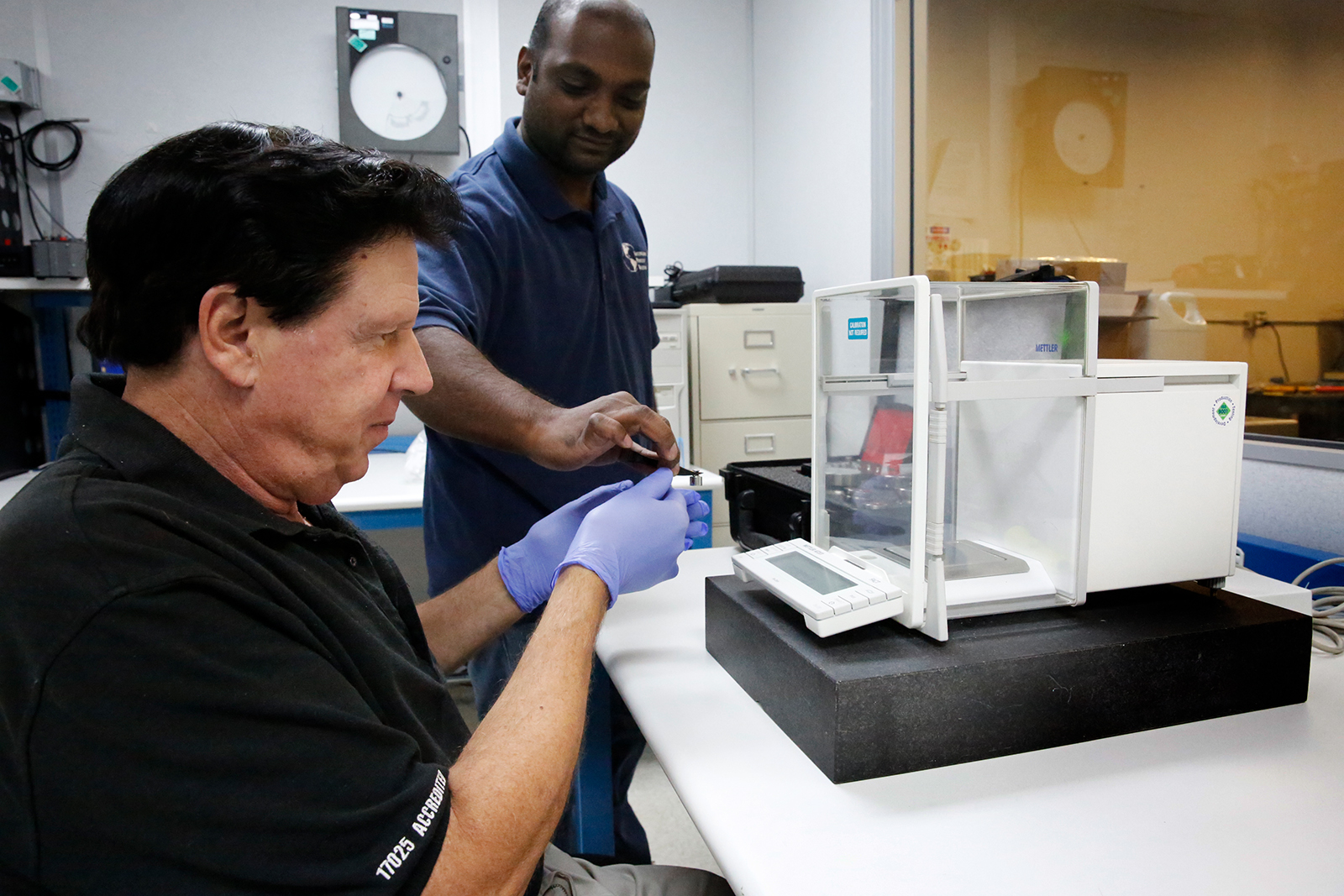
Choosing the right calibration laboratory is an important decision for any organization that depends on accurate measurements, reliable equipment, traceable documentation, and consistent quality standards. A calibration provider is not simply a company that adjusts instruments. The laboratory you select can directly affect equipment reliability, audit readiness, product quality, process consistency, and your ability to demonstrate that measurements are trustworthy.
At International Process Solutions (IPS), we understand that organizations in pharmaceutical, biotechnology, life sciences, manufacturing, research, education, water treatment, and other regulated or quality-driven industries need more than a calibration certificate. They need a calibration partner capable of supporting their equipment, documentation requirements, operating environment, and compliance expectations.
Before selecting a calibration company, we recommend asking detailed questions about accreditation, traceability, capabilities, turnaround times, documentation, on-site services, procedures, and technical support.
Featured Answer: What Should You Ask Before Hiring a Calibration Lab?
Before hiring a calibration lab, we recommend asking whether the laboratory is ISO/IEC 17025 accredited for the specific calibration services you require, whether its standards are traceable to recognized national or international standards, what equipment and measurement ranges it can support, how measurement uncertainty is reported, what documentation is provided, and how quickly calibrations can be completed.
Organizations should also ask about on-site calibration capabilities, technician qualifications, out-of-tolerance procedures, equipment handling, turnaround times, calibration intervals, and support during audits. The right calibration provider should be able to clearly explain its capabilities and provide documentation appropriate for your quality system.
1. Is the Calibration Lab ISO/IEC 17025 Accredited?
One of the first questions we recommend asking is whether the calibration laboratory holds ISO/IEC 17025 accreditation and, equally important, whether the specific calibration service you need falls within its accredited scope.
ISO/IEC 17025 addresses the competence of testing and calibration laboratories. Accreditation can provide additional confidence that a laboratory has established appropriate technical procedures, quality controls, measurement methods, equipment management practices, and competency requirements.
However, simply stating that a laboratory is “ISO accredited” is not enough.
We recommend requesting the laboratory’s current scope of accreditation and confirming that it covers the measurement discipline, equipment type, ranges, and capabilities relevant to your instruments.
At International Process Solutions, our capabilities include ISO/IEC 17025 accredited pipette calibration, along with calibration services supporting a broad range of laboratory and industrial equipment.
2. Are Your Calibration Standards Traceable?
Traceability is fundamental to reliable calibration.
We recommend asking a prospective calibration provider how its reference standards are maintained and how measurements are connected through a documented calibration chain to recognized standards.
A professional calibration program should maintain records identifying the standards used, their calibration status, calibration dates, applicable uncertainties, and traceability.
This creates a documented chain connecting the measurement performed on your instrument to higher-level reference standards.
For organizations operating under GMP, FDA-regulated quality systems, ISO programs, internal quality systems, or other controlled environments, traceable calibration records can become especially important during audits, inspections, investigations, and quality reviews.
3. What Types of Equipment Can You Calibrate?
Not every calibration laboratory supports every instrument.
Before establishing a relationship with a provider, we recommend creating a complete equipment list and determining how much of that inventory the calibration company can support.
Depending on the facility, calibration requirements may include equipment such as:
- Pipettes and liquid-handling equipment
- Balances and scales
- Thermometers and temperature instruments
- Pressure instruments
- Humidity measurement equipment
- Tachometers
- Torque equipment
- Laboratory instrumentation
- Process measurement devices
- Environmental monitoring instruments
Working with a calibration provider that can support multiple equipment categories can simplify scheduling, vendor management, documentation, purchase orders, service coordination, and calibration tracking.
4. Can You Provide On-Site Calibration Services?
For many facilities, transporting critical instruments to an outside laboratory is inconvenient or operationally disruptive.
We recommend asking whether the calibration company offers on-site calibration services and which instruments can be calibrated at your facility.
On-site calibration can be especially valuable when equipment is difficult to transport, permanently installed, used continuously, sensitive to movement, or essential to production and laboratory operations.
At International Process Solutions, we provide on-site calibration services and can respond to service needs within approximately 24 to 72 hours, depending on location, equipment, scheduling, and service requirements.
On-site service can also allow facilities to coordinate calibration activities around production schedules, laboratory workloads, maintenance windows, and equipment availability.
5. What Is Your Typical Calibration Turnaround Time?
Turnaround time should be discussed before equipment is removed from service.
Ask the calibration laboratory:
How long will the calibration take? When will the equipment be returned? Is expedited service available? What happens if the instrument fails calibration?
These questions become particularly important when a facility has limited backup equipment.
An instrument sitting at a calibration facility for several weeks may create significant operational problems even if the calibration itself is performed correctly.
We recommend evaluating turnaround time alongside technical competence rather than selecting a provider solely because it offers the lowest price.
6. What Information Is Included on the Calibration Certificate?
The calibration certificate is one of the most important deliverables you receive.
We recommend asking for a sample calibration certificate before selecting a provider.
Depending on the service performed and applicable requirements, useful calibration documentation may identify information such as the equipment calibrated, unique identification or serial number, calibration date, measurement results, reference standards used, calibration procedure, technician information, measurement uncertainty where applicable, environmental conditions when relevant, and calibration status.
Documentation should be clear, complete, consistent, and easy to retrieve.
A certificate that lacks critical information can create problems long after the physical calibration has been completed.
7. Does the Calibration Report Include As-Found and As-Left Data?
This is an especially important question for organizations operating controlled processes.
As-found data describes the instrument’s condition when it arrives for calibration or before adjustments are made. As-left data describes its condition after calibration and any necessary adjustment.
The distinction matters.
If an instrument is discovered outside acceptable tolerance, the organization may need to determine whether measurements previously taken with that instrument could have affected products, experiments, processes, inspections, or quality decisions.
Without appropriate as-found information, conducting that evaluation can become more difficult.
We recommend discussing reporting requirements before calibration begins rather than discovering afterward that the required data was not recorded.
8. How Do You Handle Out-of-Tolerance Equipment?
Every organization hiring a calibration laboratory should understand the provider’s out-of-tolerance procedure.
Ask what happens when an instrument fails to meet the required specification.
Does the laboratory document the condition immediately? Are adjustments made automatically? Is customer authorization required? Are both as-found and as-left results reported? How quickly will your organization be notified?
For regulated and quality-controlled operations, an out-of-tolerance condition may initiate an internal investigation or impact assessment.
We believe communication between the calibration provider and customer should therefore be clear and timely whenever an instrument does not meet its required tolerance.
9. How Is Measurement Uncertainty Determined and Reported?
Measurement uncertainty provides important context for interpreting calibration results.
A measurement result alone does not describe every factor influencing the measurement. Proper uncertainty evaluation considers relevant sources that can affect confidence in the reported result.
When comparing calibration providers, ask:
Do you calculate measurement uncertainty? Is uncertainty included on applicable certificates? What uncertainty can you achieve for the measurement range we require?
This becomes particularly important when equipment operates close to tolerance limits or when a process requires a high degree of measurement accuracy.
A laboratory’s ability to perform a calibration does not automatically mean its measurement capability is appropriate for every application.
10. What Calibration Procedures Do You Follow?
A reputable calibration laboratory should use established, controlled procedures.
We recommend asking whether procedures are based on manufacturer specifications, recognized standards, validated internal procedures, industry guidance, or customer-defined requirements, as applicable.
This question is particularly important for specialized instruments.
The calibration method should be appropriate for the equipment, measurement range, accuracy requirement, and intended application.
Organizations should also communicate any special acceptance criteria before service begins.
11. Can You Meet Our Specific Tolerance Requirements?
Never assume that the manufacturer’s standard tolerance is automatically appropriate for your facility.
Some organizations establish internal tolerances based on process requirements, risk assessments, product specifications, historical performance, or quality-system requirements.
We recommend providing the calibration laboratory with any customer-specific tolerances or acceptance limits before the work is performed.
This helps prevent situations where an instrument passes according to one specification but fails according to the customer’s internal requirements.
12. Are Your Calibration Technicians Qualified for Our Equipment?
Calibration equipment is only part of the equation. Technician competence matters as well.
Ask how technicians are trained, evaluated, and authorized to perform specific calibration activities.
Experienced calibration technicians should understand not only how to obtain measurements but also how to identify equipment problems, follow controlled procedures, recognize abnormal results, document findings, and properly use reference standards.
For facilities with specialized laboratory or process equipment, we recommend asking whether technicians regularly work with the specific instrument categories present at your facility.
13. Can Calibration Be Performed Without Interrupting Production?
For manufacturing, pharmaceutical, biotechnology, and other operational facilities, downtime can be expensive.
We recommend discussing scheduling before establishing a calibration program.
Depending on equipment and facility requirements, calibration activities may be coordinated around production schedules, laboratory workflows, maintenance periods, shutdowns, shift changes, or equipment availability.
International Process Solutions works with customers to develop calibration schedules that minimize unnecessary disruption while maintaining required calibration intervals.
14. Can You Help Determine Appropriate Calibration Intervals?
Calibration frequency should not always be treated as a universal fixed schedule.
Some equipment may require calibration every six months. Other instruments may be appropriate for annual calibration or another interval depending on the manufacturer’s recommendations, regulatory expectations, internal procedures, instrument stability, usage frequency, operating environment, historical calibration results, and measurement criticality.
We recommend reviewing calibration history rather than automatically assigning the same interval to every instrument.
Equipment that repeatedly remains stable may present a different risk profile from equipment that frequently drifts toward tolerance limits.
15. How Do You Protect Equipment During Transportation and Handling?
If instruments leave your facility, ask how they will be packaged, transported, stored, tracked, and protected.
Sensitive equipment can be affected by vibration, impact, contamination, moisture, temperature extremes, or improper handling.
This is particularly important for organizations shipping delicate laboratory instruments or high-value measurement equipment.
The calibration provider should have procedures designed to maintain equipment identification and protect instruments while they are under the provider’s control.
16. Can You Support Regulated and GMP Environments?
Pharmaceutical, biotechnology, life sciences, and other regulated facilities often require more extensive documentation and process control than general industrial operations.
We recommend asking whether the calibration company has experience supporting GMP environments, FDA-regulated facilities, controlled laboratories, research organizations, and formal quality systems.
A provider familiar with regulated environments should understand the importance of controlled documentation, traceability, equipment identification, deviation handling, data integrity, and audit readiness.
International Process Solutions supports customers across pharmaceutical, biotechnology, life sciences, education, research, water municipalities, oil and gas, manufacturing, and GMP environments.
17. Will Your Documentation Support an Audit or Inspection?
Calibration records frequently receive close attention during quality audits and regulatory inspections.
We recommend evaluating the documentation process before hiring a laboratory.
Ask whether certificates can be retrieved when needed, whether corrections are controlled, how records are maintained, how reference standards are identified, and whether the provider can assist when questions arise regarding previously completed calibrations.
A calibration certificate should not become difficult to interpret six months after the work was completed.
Reliable documentation should allow your quality team to understand what was calibrated, when it was calibrated, how it was evaluated, what standards were used, and what the results were.
18. Can You Support Multiple Facilities or Large Equipment Inventories?
Organizations with hundreds or thousands of instruments face different challenges than facilities with only a small equipment inventory.
We recommend asking whether the provider can coordinate large calibration programs, multiple departments, multiple locations, recurring schedules, and diverse equipment categories.
Vendor consolidation can simplify calibration management when one qualified provider can competently support a significant portion of the equipment inventory.
For organizations operating across California, geographic coverage and technician availability should also be considered.
International Process Solutions provides calibration support throughout Southern and Northern California, including customers in areas such as Orange County, San Diego, and San Carlos.
19. What Happens If We Need Emergency Calibration Service?
Unexpected equipment problems do not always occur conveniently before a scheduled calibration date.
A critical instrument may fail, become damaged, produce questionable measurements, or require verification following maintenance.
Ask whether the calibration provider offers rapid-response or emergency calibration services and how quickly technicians can be dispatched.
For facilities where measurement equipment directly affects production or laboratory operations, access to responsive technical support can be extremely valuable.
20. Can You Provide Additional Validation and Technical Services?
Calibration may be only one part of a facility’s equipment-management requirements.
We recommend asking prospective providers about related capabilities, particularly when your organization would benefit from reducing the number of vendors entering the facility.
International Process Solutions provides calibration and related technical services, including validation and documentation support. We also provide specialized support for laboratory relocations, including refrigerated transportation options for temperature-sensitive laboratory moves.
Working with a provider familiar with laboratory equipment and controlled environments can make complex projects easier to coordinate.
21. How Do You Manage Calibration Records and Equipment Identification?
Calibration documentation is most useful when records can be clearly matched to individual instruments.
Organizations should maintain unique equipment identification wherever practical. This may include serial numbers, asset numbers, equipment IDs, locations, departments, or other internal identifiers.
We recommend confirming that the calibration laboratory can incorporate your equipment identification requirements into its documentation.
Accurate identification reduces confusion when organizations own multiple instruments of the same make and model.
22. What Information Do You Need From Us Before Calibration Begins?
A strong calibration relationship involves communication from both sides.
Before service, we recommend providing information such as the equipment type, manufacturer, model, serial number, required calibration points, expected tolerances, operating range, service location, calibration interval, applicable procedures, and any special documentation requirements.
For on-site calibration, organizations should also discuss facility access, safety requirements, cleanroom procedures, gowning requirements, equipment availability, escort requirements, and production schedules when applicable.
Providing these details in advance allows the calibration provider to prepare the appropriate standards, procedures, personnel, and documentation.
23. Should Price Be the Main Factor When Choosing a Calibration Lab?
Price should be evaluated, but it should not be considered independently from technical capability.
A lower calibration price can become expensive if the service results in incomplete documentation, excessive downtime, repeat calibrations, limited technical support, or certificates that do not satisfy your quality requirements.
When comparing calibration quotations, we recommend evaluating the complete service:
Accreditation. Scope. Measurement capability. Turnaround time. On-site availability. Documentation. Traceability. Technician competence. Responsiveness. Equipment coverage.
Two calibration quotes that appear to cover the same instrument may represent very different levels of service.
24. What Are the Most Important Signs of a Reliable Calibration Company?
A reliable calibration provider should be able to clearly explain its capabilities without making the customer decipher technical ambiguity.
We recommend looking for a provider that demonstrates appropriate accreditation, documented traceability, experienced technicians, controlled calibration procedures, responsive communication, detailed certificates, appropriate measurement capability, and familiarity with your industry.
The provider should also be willing to discuss your equipment and requirements before the calibration is performed.
A calibration laboratory should function as a technical partner rather than simply processing instruments through a service department.
Calibration Lab Checklist: Questions to Ask Before You Hire
Before choosing a calibration laboratory, we recommend confirming the answers to these critical questions:
- Is the laboratory ISO/IEC 17025 accredited for the calibration service we need?
- Can we review its scope of accreditation?
- Are calibration standards properly traceable?
- Can the laboratory calibrate our specific equipment and measurement ranges?
- Does it provide on-site calibration?
- What is the expected turnaround time?
- What information appears on the calibration certificate?
- Are as-found and as-left results available when applicable?
- How are out-of-tolerance conditions handled?
- Is measurement uncertainty reported when applicable?
- Can the laboratory meet our specific tolerance requirements?
- Are technicians qualified for our equipment?
- Can calibration be coordinated around production schedules?
- Does the company understand GMP and regulated environments?
- Can documentation support audits and inspections?
- Can the provider support large equipment inventories or multiple facilities?
- Is rapid-response calibration service available?
- Can the company provide validation or related technical services?
- How are equipment records and identification managed?
- What support is available after the calibration is completed?
Why Companies Choose International Process Solutions for Calibration Services
At International Process Solutions, we provide calibration services designed around the technical and operational requirements of modern laboratories, manufacturing facilities, and regulated organizations.
We understand that calibration affects far more than the instrument being tested. Reliable measurement supports product quality, process control, laboratory accuracy, equipment performance, documentation, and regulatory compliance.
Our capabilities include on-site and laboratory calibration services, ISO/IEC 17025 accredited pipette calibration, validation, documentation support, and technical services for organizations throughout California.
We work with customers across pharmaceutical, biotechnology, life sciences, manufacturing, education, research, water municipalities, oil and gas, and GMP-regulated environments.
Our on-site capabilities can also help organizations reduce equipment downtime and coordinate calibration around active laboratory and production schedules.
Choosing the Right Calibration Lab for Your Facility
The best calibration laboratory for your organization should be selected based on its ability to meet your technical requirements, documentation standards, measurement ranges, operating schedules, and quality-system expectations.
Before signing a service agreement or sending equipment to a new provider, we recommend asking detailed questions and reviewing the answers carefully.
Confirm the laboratory’s accreditation and scope. Review a sample certificate. Discuss measurement uncertainty and traceability. Explain your tolerances. Ask about turnaround times. Determine how out-of-tolerance equipment is handled. Confirm whether on-site service is available.
Most importantly, choose a calibration provider capable of supporting your organization beyond a single calibration event.
At International Process Solutions, we help organizations build dependable calibration programs with the technical service, documentation, and responsive support necessary to keep critical equipment performing accurately.
When measurement matters, choosing the right calibration lab is the first step toward ensuring your instruments—and the decisions based on them—can be trusted.