In highly regulated industries, calibration is more than a routine maintenance activity—it is a critical component of product quality, process consistency, regulatory compliance, and operational efficiency. For pharmaceutical manufacturers, biotechnology facilities, medical device companies, and GMP-regulated laboratories, maintaining accurate and traceable measurement systems is essential to meeting strict quality standards.
One of the most common questions GMP facilities face is whether to utilize on-site calibration services or send instruments to a calibration laboratory. Both options offer unique advantages, and selecting the right approach can significantly impact downtime, compliance, production schedules, and overall operating costs.
At International Process Solutions (IPS), we provide both on-site and laboratory calibration services to help regulated organizations maintain compliance while maximizing operational efficiency. Understanding the strengths and limitations of each calibration method allows facilities to make informed decisions that support their quality objectives.
Understanding Calibration Requirements in GMP Environments
Good Manufacturing Practice (GMP) regulations require organizations to maintain equipment that performs accurately and consistently within established tolerances. Instruments used to monitor, measure, record, and control critical process parameters must be routinely calibrated using standards that are traceable to recognized references.
Calibration supports:
- Product quality assurance
- Process validation
- Regulatory compliance
- Equipment reliability
- Audit readiness
- Data integrity initiatives
- Risk reduction programs
Failure to maintain properly calibrated instruments can lead to inaccurate measurements, production deviations, failed audits, product recalls, and costly downtime.
Because calibration directly impacts compliance and product quality, selecting the appropriate service model is an important operational decision.
What Are On-Site Calibration Services?
On-site calibration involves qualified calibration technicians performing calibration procedures directly at the customer’s facility. Portable calibration standards and equipment are brought to the site, allowing instruments to be calibrated without being removed from service areas.
This approach is commonly used for:
- Process instrumentation
- Temperature sensors
- Pressure transmitters
- Flow meters
- Environmental monitoring systems
- Laboratory equipment
- Cleanroom instrumentation
- Manufacturing control systems
- Weighing systems
- HVAC monitoring devices
On-site calibration minimizes equipment movement while allowing technicians to verify performance under actual operating conditions.
Benefits of On-Site Calibration Services
Reduced Equipment Downtime
One of the most significant advantages of on-site calibration is minimizing operational interruptions. Equipment remains within the facility, eliminating shipping time, laboratory queue times, and transportation delays.
Production teams can often coordinate calibration activities around manufacturing schedules, reducing the impact on critical operations.
Ideal for Fixed and Large Equipment
Many GMP facilities utilize equipment that cannot easily be removed and transported.
Examples include:
- Autoclaves
- Environmental chambers
- Cleanroom monitoring systems
- Process skids
- Building management systems
- Manufacturing control equipment
- Large industrial scales
On-site calibration eliminates the risks and costs associated with dismantling or relocating these systems.
Calibration Under Actual Operating Conditions
Environmental factors such as temperature, humidity, vibration, and installation conditions can affect instrument performance.
Performing calibration within the operating environment allows technicians to evaluate equipment exactly as it functions during production. This provides valuable insight into real-world instrument performance and system accuracy.
Simplified Scheduling
Facilities with hundreds or even thousands of calibration assets often benefit from consolidated on-site service visits. Multiple instruments can be calibrated during a single scheduled event, reducing administrative burden and improving efficiency.
Improved Compliance Documentation
Professional on-site calibration providers generate calibration certificates, asset histories, and traceability records that support GMP compliance and audit readiness.
Comprehensive documentation helps organizations demonstrate control over critical measurement systems during inspections.
Limitations of On-Site Calibration Services
While on-site calibration offers many advantages, it may not be the optimal solution for every instrument.
Limited Environmental Control
Calibration laboratories maintain tightly controlled environmental conditions that can improve measurement uncertainty for highly sensitive instruments.
Field conditions may not always provide the same level of environmental stability.
Not Suitable for All Equipment Types
Certain instruments require specialized calibration systems that cannot be easily transported to a customer site.
Examples may include:
- High-precision analytical balances
- Advanced dimensional measurement equipment
- Specialized electrical standards
- Certain laboratory reference instruments
These devices often benefit from laboratory calibration.
Space Requirements
Calibration technicians may require designated workspace within the facility to perform testing, adjustments, and documentation activities.
Proper planning ensures efficient service execution.
What Are Laboratory Calibration Services?
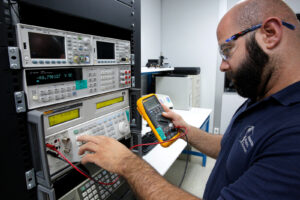
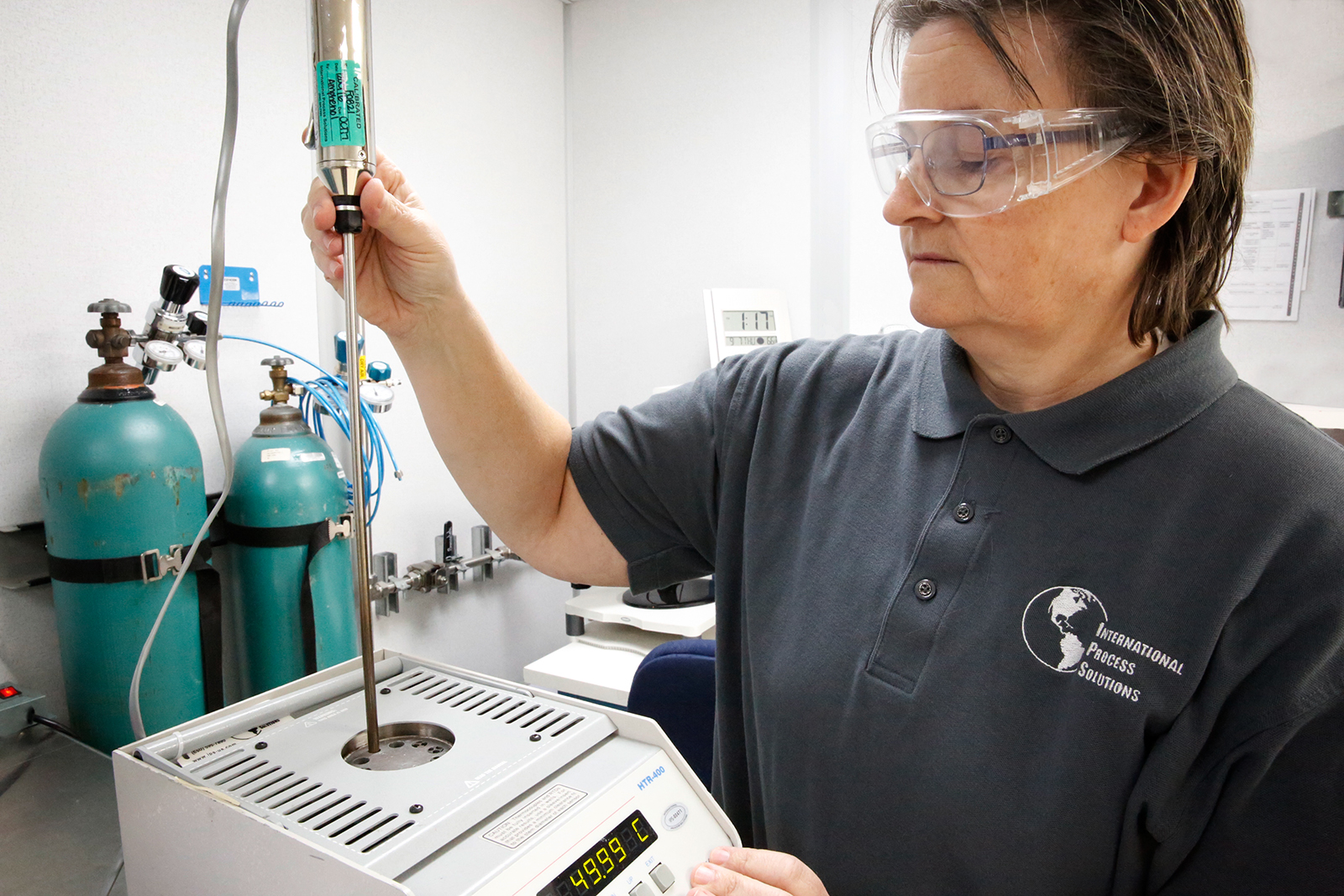
Laboratory calibration involves shipping instruments to an accredited calibration facility where testing is performed in a controlled environment using advanced calibration standards.
Laboratory calibration is frequently selected for instruments requiring extremely low measurement uncertainty or specialized testing procedures.
Common laboratory-calibrated equipment includes:
- Precision balances
- Pipettes
- Torque tools
- Digital multimeters
- Pressure gauges
- Data loggers
- Thermometers
- Electrical measurement devices
- Reference standards
Calibration laboratories maintain sophisticated equipment and environmental controls that support highly accurate measurements.
Benefits of Laboratory Calibration Services
Superior Environmental Control
Calibration laboratories are designed to maintain stable temperature, humidity, cleanliness, and environmental conditions.
This controlled environment reduces variables that could influence measurement accuracy and uncertainty.
Access to Advanced Calibration Standards
Laboratory facilities often utilize highly specialized reference standards that are impractical for field deployment.
These standards support precise measurements and expanded calibration capabilities across multiple disciplines.
Enhanced Measurement Accuracy
For critical applications requiring the highest levels of accuracy, laboratory calibration frequently delivers lower uncertainty values than field calibration.
This can be especially important for quality control laboratories, validation activities, and reference instruments.
Comprehensive Testing Capabilities
Laboratory technicians can perform extensive testing procedures that may not be practical during on-site visits.
Additional evaluations may include:
- Performance verification
- Linearity testing
- Repeatability studies
- Preventive maintenance inspections
- Adjustment services
- Functional diagnostics
These services help extend equipment lifespan while ensuring reliable performance.
Specialized Instrument Expertise
Laboratory calibration facilities often maintain dedicated experts for specific instrument categories, providing deeper technical knowledge and troubleshooting capabilities.
Limitations of Laboratory Calibration Services
Extended Turnaround Time
Shipping equipment to a laboratory introduces transportation and processing delays.
Depending on workload and service level requirements, turnaround times can range from several days to multiple weeks.
For production-critical equipment, this downtime may create operational challenges.
Shipping Risks
Sensitive instruments may be exposed to damage during packaging, transportation, and handling.
Proper shipping procedures help mitigate these risks, but they cannot be eliminated entirely.
Additional Logistics Management
Organizations must coordinate:
- Equipment removal
- Packaging
- Shipment tracking
- Return processing
- Reinstallation
- Verification activities
These additional steps can increase administrative workload.
Which Calibration Method Is Best for GMP Facilities?
The answer depends on the specific equipment, operational requirements, regulatory expectations, and production environment.
In many GMP facilities, the most effective strategy combines both approaches.
Choose On-Site Calibration When:
- Equipment is permanently installed
- Downtime must be minimized
- Multiple assets require calibration simultaneously
- Instruments operate within production environments
- Transportation poses significant risk
- Production schedules are highly sensitive
Choose Laboratory Calibration When:
- Extremely high accuracy is required
- Specialized standards are necessary
- Instruments are portable
- Environmental control is critical
- Advanced diagnostics are needed
- Reference standards require certification
A hybrid calibration program often delivers the best balance between compliance, efficiency, and cost control.
The Hybrid Calibration Approach for GMP Compliance
Leading pharmaceutical and biotechnology organizations frequently implement hybrid calibration programs.
Under this model:
- Process instrumentation is calibrated on-site.
- Portable laboratory equipment is calibrated in a controlled laboratory environment.
- Reference standards receive laboratory certification.
- Critical manufacturing systems are serviced at the facility.
This approach optimizes operational efficiency while maintaining regulatory compliance and measurement integrity.
By strategically selecting the appropriate calibration method for each asset class, facilities can reduce downtime, improve resource utilization, and strengthen audit readiness.
Why GMP Facilities Trust International Process Solutions
International Process Solutions provides comprehensive calibration services designed specifically for regulated industries. Our experienced technicians support pharmaceutical, biotechnology, medical device, life science, and manufacturing organizations throughout California and beyond.
Our capabilities include:
- On-site calibration services
- Laboratory calibration services
- NIST traceable calibration
- GMP-compliant documentation
- Temperature calibration
- Pressure calibration
- Flow calibration
- Humidity calibration
- Pipette calibration
- Torque wrench calibration
- Scale calibration
- Validation support services
We help organizations maintain compliance while minimizing disruption to critical operations.
Conclusion
For GMP-regulated environments, both on-site and laboratory calibration services play essential roles in maintaining quality, compliance, and operational performance. On-site calibration offers flexibility, reduced downtime, and convenience for installed equipment, while laboratory calibration provides enhanced precision, controlled conditions, and specialized testing capabilities.
The most effective calibration strategy often combines both service models, ensuring each instrument receives the appropriate level of calibration support based on its intended use, accuracy requirements, and regulatory impact. Partnering with an experienced calibration provider such as International Process Solutions helps GMP facilities maintain confidence in their measurement systems while supporting long-term compliance and operational excellence.