Are Inaccurate Pipettes Putting Your Research, Testing, or Production at Risk?
When you’re working in a laboratory, every microliter matters. A pipette that dispenses even a tiny amount more or less than intended can compromise an entire experiment, delay production, waste expensive reagents, or lead to failed quality control tests. In regulated industries such as pharmaceuticals, biotechnology, medical devices, and food testing, inaccurate pipettes can also result in compliance issues, failed audits, and costly rework.
Because pipettes are used daily and experience normal wear and tear, they gradually lose accuracy over time. Regular pipette calibration is essential for ensuring reliable measurements, maintaining compliance, and protecting the integrity of your work.
Whether you’re conducting research, manufacturing life-saving products, or performing quality assurance testing, professional pipette calibration helps ensure every measurement is as accurate and dependable as possible.
Featured Snippet: What Is Pipette Calibration and Why Is It Important?
Pipette calibration is the process of testing a pipette’s dispensing accuracy and precision by comparing its performance against certified standards. If necessary, adjustments are made to restore proper operation. Regular pipette calibration helps ensure accurate liquid measurements, improves laboratory results, supports regulatory compliance, reduces costly errors, and extends the life of the pipette.
What Is Pipette Calibration?
Pipettes are precision instruments designed to accurately measure and transfer small volumes of liquid. They are among the most frequently used tools in laboratories across countless industries, including pharmaceutical manufacturing, biotechnology, healthcare, environmental testing, chemical analysis, food production, and academic research.
Even though pipettes are built with high-quality components, they are mechanical devices that naturally experience wear. Internal seals, pistons, springs, and O-rings can gradually deteriorate, affecting the amount of liquid dispensed.
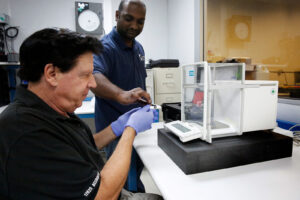
Pipette calibration verifies that the instrument delivers the correct volume within its specified tolerance. During calibration, technicians compare the pipette’s actual dispensing volume to certified reference standards using highly accurate analytical balances and gravimetric testing methods.
If the pipette falls outside acceptable limits, adjustments and maintenance are performed before the instrument is retested to confirm it meets specifications.
Regular calibration ensures consistent performance and confidence in every liquid transfer.
Why Pipette Calibration Matters
Many laboratory professionals assume that if a pipette appears to function normally, it must still be accurate. Unfortunately, that isn’t always the case.
A pipette can continue to aspirate and dispense liquid while gradually drifting out of calibration. These small inaccuracies often go unnoticed until inconsistent results begin affecting laboratory work.
Routine calibration provides several important benefits:
- Improves measurement accuracy
- Increases dispensing precision
- Reduces experimental variability
- Supports reproducible results
- Protects expensive samples
- Reduces reagent waste
- Helps maintain regulatory compliance
- Minimizes costly retesting
- Extends pipette lifespan
- Builds confidence in laboratory data
Simply put, accurate pipettes produce accurate results.
Industries That Depend on Accurate Pipettes
Pipette calibration plays a critical role across numerous industries where precise liquid handling is essential.
Pharmaceutical Manufacturing
Pharmaceutical companies use pipettes throughout:
- Drug formulation
- Quality control
- Research and development
- Stability studies
- Analytical testing
- Validation protocols
Accurate liquid measurements help ensure product consistency and compliance with FDA and GMP requirements.
Biotechnology
Biotechnology laboratories perform highly sensitive procedures involving:
- DNA extraction
- PCR testing
- Cell culture
- Protein analysis
- Molecular biology
- Genomic research
Small dispensing errors can significantly impact research outcomes.
Clinical Laboratories
Hospitals and diagnostic laboratories rely on calibrated pipettes for:
- Blood analysis
- Disease testing
- Diagnostic assays
- Patient sample preparation
- Clinical chemistry
Reliable measurements support accurate patient diagnoses.
Medical Device Manufacturing
Medical device companies use calibrated pipettes during product development, validation, testing, and quality assurance.
Maintaining precise liquid handling supports consistent manufacturing processes.
Food and Beverage Testing
Food laboratories perform liquid measurements during:
- Microbiological testing
- Contaminant analysis
- Nutritional testing
- Product quality verification
Calibration helps ensure consistent and reliable test results.
Environmental Laboratories
Environmental testing facilities depend on pipettes for:
- Water quality testing
- Soil analysis
- Chemical analysis
- Air quality monitoring
Measurement accuracy directly affects reporting confidence.
How Pipette Calibration Works
Professional pipette calibration follows a carefully controlled process designed to verify both accuracy and precision.
Initial Inspection
Technicians inspect the pipette for:
- Physical damage
- Contamination
- Loose components
- Worn seals
- Cracked housings
- Missing parts
Any visible issues are addressed before testing begins.
Cleaning and Preventive Maintenance
Many calibration providers also perform preventive maintenance that includes:
- Internal cleaning
- Lubrication
- Seal replacement
- O-ring inspection
- Piston maintenance
Routine maintenance often restores performance while extending instrument life.
Gravimetric Testing
The most common calibration method uses gravimetric testing.
This process measures the weight of dispensed distilled water using highly accurate analytical balances that are traceable to NIST standards.
Technicians calculate the actual liquid volume based on water density, temperature, humidity, and atmospheric pressure.
Testing is typically performed at:
- Minimum volume
- Mid-range volume
- Maximum volume
Multiple measurements are taken to evaluate both accuracy and repeatability.
Adjustment
If calibration results fall outside acceptable tolerances, technicians carefully adjust the pipette according to manufacturer specifications.
Following adjustment, the pipette is recalibrated to verify proper performance.
Final Documentation
After calibration, customers receive a detailed calibration certificate documenting:
- Pipette identification
- Calibration date
- Technician information
- Environmental conditions
- Test volumes
- Measurement results
- Accuracy
- Precision
- As-found data
- As-left data
- Traceability information
These records are essential during quality audits and regulatory inspections.
Common Causes of Pipette Inaccuracy
Several factors contribute to pipette drift over time.
These include:
Normal Mechanical Wear
Moving parts gradually wear with repeated daily use.
Improper Handling
Dropping a pipette or applying excessive force can damage internal components.
Chemical Exposure
Aggressive chemicals may damage seals and internal mechanisms.
Poor Storage
Improper storage positions can affect calibration and internal lubrication.
High Usage
Laboratories processing thousands of samples each month typically require more frequent calibration.
Operator Technique
Even perfectly calibrated pipettes require proper handling.
Training employees on correct pipetting techniques helps reduce measurement variability.
How Often Should Pipettes Be Calibrated?
Calibration frequency depends on several factors.
These include:
- Frequency of use
- Laboratory quality requirements
- Regulatory standards
- Manufacturer recommendations
- Previous calibration history
- Criticality of applications
Many organizations calibrate pipettes:
- Every 3 months
- Every 6 months
- Annually
- Before major research projects
- Following repairs
- After accidental drops
- Before regulatory inspections
High-volume laboratories often benefit from shorter calibration intervals.
Signs Your Pipette Needs Calibration
Watch for warning signs including:
- Inconsistent laboratory results
- Unexpected test failures
- Air bubbles during dispensing
- Sticky piston movement
- Liquid leakage
- Loose tip fit
- Unusual resistance
- Failed quality control tests
- Visible physical damage
- Extended time since last calibration
Ignoring these signs can compromise valuable laboratory work.
Benefits of Professional Pipette Calibration
Working with an experienced calibration provider offers advantages beyond simple testing.
Improved Accuracy
Professional calibration restores measurement confidence.
Better Precision
Repeatable liquid transfers improve laboratory consistency.
Regulatory Compliance
Professional calibration supports compliance with:
- FDA regulations
- GMP requirements
- GLP standards
- ISO 9001
- ISO/IEC 17025
- CAP accreditation
- CLIA requirements
Reduced Laboratory Costs
Accurate pipettes reduce:
- Sample waste
- Reagent waste
- Retesting
- Failed experiments
- Product recalls
Longer Equipment Life
Routine maintenance extends the service life of valuable laboratory equipment.
Increased Confidence
Researchers and laboratory personnel can trust every measurement.
Why Choose International Process Solutions for Pipette Calibration?
Choosing a qualified calibration provider is essential for maintaining laboratory quality and compliance.
International Process Solutions (IPS) provides professional pipette calibration services for pharmaceutical manufacturers, biotechnology companies, medical device facilities, research laboratories, food manufacturers, environmental testing laboratories, and numerous other industries.
IPS offers:
- Experienced calibration specialists
- NIST-traceable calibration standards
- Advanced gravimetric testing
- Preventive maintenance services
- Fast turnaround times
- Comprehensive calibration documentation
- On-site and laboratory calibration options
- Calibration program management
- Support for regulated industries
Whether you have a small laboratory or a large manufacturing facility, IPS helps ensure your pipettes continue delivering reliable, repeatable results.
Best Practices for Maintaining Pipette Accuracy
Calibration is only one component of proper pipette management.
Organizations should also:
Store Pipettes Properly
Always store pipettes upright using approved holders.
Use Quality Pipette Tips
Properly fitting tips improve dispensing accuracy.
Train Laboratory Personnel
Proper pipetting techniques reduce operator-induced errors.
Perform Routine Inspections
Regular visual inspections help identify problems before they affect measurements.
Follow a Preventive Maintenance Schedule
Routine maintenance keeps pipettes operating at peak performance.
Maintain Complete Calibration Records
Accurate documentation simplifies audits and equipment management.
The Bottom Line
Pipette calibration is essential for laboratories and manufacturing facilities that rely on precise liquid measurements. Even minor inaccuracies can affect research results, compromise product quality, increase operating costs, and create compliance challenges. Regular calibration ensures your pipettes continue to deliver accurate, repeatable performance while supporting the quality standards required in regulated industries.
Professional pipette calibration also helps extend the life of your equipment, reduce waste, improve laboratory efficiency, and provide confidence in every sample, assay, and production process. Whether your organization operates in pharmaceuticals, biotechnology, healthcare, food testing, environmental analysis, or scientific research, maintaining properly calibrated pipettes is a critical part of any quality management program.
By partnering with an experienced calibration provider, you can protect your investment in laboratory equipment while ensuring your measurements remain accurate and traceable.
Ready to Improve the Accuracy of Your Laboratory Equipment?
Don’t let an out-of-calibration pipette compromise your research, testing, or production processes. International Process Solutions provides expert pipette calibration services using NIST-traceable standards, advanced gravimetric testing, and comprehensive documentation to help your laboratory maintain precision and regulatory compliance.
Whether you need on-site calibration, laboratory calibration, preventive maintenance, or a complete calibration management program, the experienced team at International Process Solutions is ready to help. Contact us today to schedule your pipette calibration services and ensure every measurement supports accurate, reliable, and repeatable results.