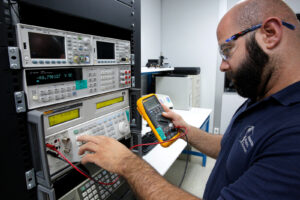

Introduction: The Importance of Selecting the Right Calibration Partner
In today’s highly regulated and precision-driven industrial landscape, the choice of a calibration partner plays a critical role in ensuring operational accuracy, compliance, and long-term reliability of measurement systems. At International Process Solutions, we understand that organizations depend on precise instrumentation to maintain safety, product quality, and efficiency across every stage of production.
Selecting between on-site calibration and off-site calibration capabilities is not merely a logistical decision—it is a strategic one. Each approach offers distinct advantages depending on operational requirements, equipment sensitivity, downtime constraints, and regulatory expectations. Our goal is to provide clarity and direction so organizations can make informed decisions that strengthen performance and reduce risk.
Understanding Calibration Requirements in Modern Industry
Every industrial environment relies on instruments that must remain within strict tolerances. Over time, factors such as wear, environmental exposure, and mechanical stress can cause measurement drift. Calibration services ensure these instruments continue to deliver accurate readings aligned with national and international standards.
We work with organizations across multiple sectors where precision is non-negotiable, including:
- Pharmaceutical manufacturing
- Food and beverage production
- Aerospace and defense systems
- Energy and utilities
- Chemical processing
- Medical device manufacturing
In each of these environments, even minor deviations in measurement can lead to costly inefficiencies or compliance failures. This is why selecting the right calibration strategy is essential.
On-site Calibration Capabilities: Precision Without Disruption
Minimizing Operational Downtime
One of the primary advantages of on-site calibration services is the ability to maintain operational continuity. Equipment does not need to be removed from production lines, significantly reducing downtime and avoiding disruptions to critical workflows.
At International Process Solutions, our field technicians bring fully equipped calibration systems directly to the client’s facility. This ensures instruments are tested and adjusted in their actual operating environment.
Real-World Operating Conditions
On-site calibration allows instruments to be evaluated under real-world conditions. Temperature variations, vibration levels, humidity, and electrical conditions are all preserved, providing a more accurate reflection of performance in daily use.
This is especially beneficial for:
- Large fixed equipment
- Integrated production systems
- Sensitive process control instruments
- Systems difficult to transport
Immediate Feedback and Adjustments
Another key advantage of on-site calibration is the ability to deliver instant results and corrections. Engineers and technicians can collaborate directly with facility staff, addressing issues immediately and minimizing delays in production resumption.
This collaborative environment enhances troubleshooting efficiency and ensures faster resolution of potential measurement deviations.
Reduced Handling Risk
Transporting sensitive instruments always introduces risk. On-site calibration eliminates the need for shipping, reducing the chance of:
- Mechanical damage
- Environmental exposure
- Misalignment during transit
- Extended equipment downtime
For high-value or delicate instruments, this benefit alone can significantly influence the decision-making process.
Off-site Calibration Capabilities: Controlled Precision in Specialized Facilities
Access to Advanced Calibration Laboratories
Off-site calibration provides access to fully controlled laboratory environments equipped with advanced measurement standards and reference instruments. At International Process Solutions, our calibration laboratories are designed to deliver the highest levels of precision under strictly controlled conditions.
These environments allow for:
- Ultra-stable temperature control
- Isolated vibration-free setups
- High-precision reference standards
- Advanced diagnostic equipment
Higher Level of Measurement Accuracy
Because laboratory conditions are tightly regulated, off-site calibration often achieves the highest possible accuracy levels. This is particularly important for instruments requiring fine-tuned adjustments or certification under stringent regulatory standards.
Industries that rely heavily on laboratory-grade precision often prefer off-site calibration for this reason.
Comprehensive Diagnostic Capability
Off-site facilities allow for deeper diagnostic analysis. Technicians can perform extensive testing beyond standard calibration procedures, including:
- Full performance verification
- Component-level diagnostics
- Long-term stability analysis
- Repair and refurbishment services
This makes off-site calibration ideal for instruments requiring detailed evaluation or corrective maintenance.
Extended Service Options
When equipment is sent off-site, it can be fully inspected, serviced, and recalibrated in one cycle. This reduces the need for multiple service visits and allows organizations to consolidate maintenance activities efficiently.
On-site vs. Off-site Calibration: A Strategic Comparison
Choosing between on-site and off-site calibration depends on balancing operational needs with precision requirements.
Operational Efficiency
- On-site: Best for minimizing downtime and maintaining continuous production
- Off-site: Requires removal from service but allows deeper inspection
Accuracy and Control
- On-site: Highly accurate within field conditions
- Off-site: Maximum precision due to controlled laboratory environment
Equipment Type
- On-site: Large, fixed, or integrated systems
- Off-site: Portable, sensitive, or high-precision instruments
Turnaround Time
- On-site: Faster for basic calibration tasks
- Off-site: May take longer but offers more comprehensive evaluation
Risk Management
- On-site: Reduced handling and transportation risk
- Off-site: Controlled environment reduces measurement uncertainty
Key Factors in Selecting the Right Calibration Partner
When evaluating a calibration provider, organizations must consider more than just service type. At International Process Solutions, we emphasize a holistic approach that includes:
Technical Expertise
A qualified calibration partner must have deep technical knowledge across multiple instrumentation categories. This ensures accurate adjustments and reliable certification.
Accreditation and Compliance
Calibration must align with recognized industry standards. A strong partner maintains compliance with ISO requirements and other relevant regulatory frameworks.
Flexibility of Service Delivery
The ability to offer both on-site and off-site calibration solutions provides operational flexibility and ensures services can be tailored to specific needs.
Turnaround Efficiency
Timely calibration is essential for maintaining production schedules. A capable partner prioritizes efficient workflows without compromising accuracy.
Documentation and Traceability
Proper documentation is essential for audits and compliance. Every calibration must include detailed records, traceable measurements, and certification data.
Why Choose International Process Solutions as Your Calibration Partner
At International Process Solutions, we specialize in delivering comprehensive calibration services designed to meet the evolving demands of modern industry. Our dual capability approach ensures that clients benefit from both field-based convenience and laboratory-grade precision.
We bring together:
- Highly trained calibration engineers
- Advanced measurement technologies
- Fully equipped mobile calibration units
- State-of-the-art laboratory facilities
- Industry-specific calibration expertise
Our commitment is to ensure that every instrument we service performs with maximum accuracy, reliability, and compliance readiness.
We understand that no two operations are the same. That is why we tailor every calibration solution to the unique requirements of each client, whether that involves on-site servicing for minimal disruption or off-site calibration for maximum precision assurance.
Industries We Support with Calibration Excellence
Our services are designed to support industries where precision is critical to safety, efficiency, and product integrity. These include:
- Manufacturing and production facilities requiring continuous uptime
- Pharmaceutical companies with strict regulatory compliance needs
- Food processing plants focused on safety and consistency
- Energy providers managing complex measurement systems
- Aerospace manufacturers requiring extreme accuracy standards
- Medical device companies where precision directly impacts patient safety
In every case, we ensure instruments remain reliable, traceable, and fully compliant with industry expectations.
Best Practices for Maintaining Calibration Performance
To maximize the value of calibration programs, we recommend organizations adopt a structured approach that includes:
- Establishing regular calibration schedules
- Maintaining detailed equipment histories
- Conducting periodic performance reviews
- Partnering with a single trusted calibration provider
- Ensuring proper handling and storage of instruments
These practices help maintain measurement consistency and reduce the risk of unexpected equipment failures.
Conclusion: Building Confidence Through Precision Calibration
Choosing between on-site and off-site calibration capabilities is a critical decision that directly impacts operational efficiency, compliance readiness, and measurement reliability. At International Process Solutions, we provide both service models to ensure organizations never have to compromise between convenience and precision.
By aligning calibration strategies with operational requirements, companies can achieve greater stability, improved performance, and long-term confidence in every measurement they rely on.