
A biosafety cabinet (BSC) must maintain appropriate airflow patterns, filtration performance, and containment conditions to function as intended. When airflow measurements are inaccurate or critical components operate outside established specifications, the cabinet may fail to provide the level of protection required for laboratory operations.
At International Process Solutions (IPS), we understand the importance of accurate measurement, equipment qualification, and laboratory compliance. Our calibration and laboratory equipment services support pharmaceutical companies, biotechnology facilities, research laboratories, and other organizations throughout California.
Proper biosafety cabinet calibration, combined with routine performance testing and certification, helps laboratories maintain dependable equipment, identify potential problems, and support consistent laboratory operations.
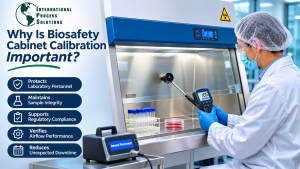
Featured Answer: Why Is Biosafety Cabinet Calibration Important?
Biosafety cabinet calibration is important because accurate airflow measurements and properly functioning monitoring instruments help laboratories verify that biosafety cabinets operate within established performance specifications. Calibration supports reliable testing, helps identify measurement errors, and contributes to personnel, product, and environmental protection. When combined with biosafety cabinet certification, airflow testing, HEPA filter integrity testing, and preventive maintenance, calibration helps laboratories maintain safe working conditions and meet applicable laboratory quality and regulatory requirements.
For laboratories handling biological materials, regular calibration and certification are essential components of an effective equipment maintenance and contamination control program.
What Is Biosafety Cabinet Calibration?
Biosafety cabinet calibration involves verifying and, when necessary, adjusting the measurement accuracy of instruments or sensors used to evaluate cabinet performance.
Depending on the cabinet design and service requirements, calibration may involve airflow measurement instruments, pressure sensors, monitoring devices, or other components associated with cabinet operation.
The purpose is to establish confidence that measurements used to evaluate the equipment are accurate and traceable to appropriate measurement standards.
Biosafety Cabinet Calibration vs. Certification
Although the terms are sometimes used interchangeably, biosafety cabinet calibration and biosafety cabinet certification are not the same procedure.
Calibration evaluates the accuracy of measuring instruments or sensors against established references.
Certification evaluates whether the complete biosafety cabinet meets applicable performance requirements.
A biosafety cabinet certification service may include airflow measurements, HEPA filter leak testing, airflow visualization, and other tests appropriate to the cabinet type and applicable standard.
Calibration supports certification by helping ensure that the instruments used during testing provide reliable measurements.
At International Process Solutions, we recognize the importance of both accurate instrumentation and comprehensive equipment performance verification.
1. Biosafety Cabinet Calibration Supports Laboratory Personnel Safety
One of the primary purposes of a biosafety cabinet is to reduce laboratory personnel exposure to potentially hazardous biological aerosols.
Class II biosafety cabinets use carefully controlled airflow patterns to help contain airborne particles generated during laboratory procedures.
If the airflow system does not operate correctly, containment performance may be compromised.
Maintaining Proper Inflow Air Velocity
Inflow air enters the cabinet through the front access opening and helps prevent contaminated air from escaping into the laboratory.
The required inflow performance depends on the cabinet design, manufacturer specifications, and applicable certification requirements.
Inaccurate airflow measurements can make it difficult to determine whether the cabinet meets those requirements.
Properly calibrated measurement equipment helps technicians evaluate inflow performance with greater confidence.
Supporting Effective Airflow Containment
Airflow disturbances can affect the cabinet’s ability to contain aerosols.
Potential contributing factors include:
-
Incorrect airflow settings
-
Blocked intake or exhaust grilles
-
Improper sash positioning
-
Changes in laboratory ventilation
-
Mechanical component deterioration
-
Incorrect sensor readings
-
Obstructed work surfaces
Routine performance testing helps identify conditions that may affect containment.
Calibration supports reliable measurements, but it does not independently establish that a biosafety cabinet provides adequate containment. Complete performance verification remains necessary.
2. Calibration Helps Protect Sensitive Laboratory Samples
In addition to protecting personnel, Class II biosafety cabinets are designed to provide product protection through HEPA-filtered downflow air.
This is particularly important in laboratories working with cell cultures, microbiological samples, pharmaceutical research materials, and other contamination-sensitive products.
Maintaining Appropriate Downflow Air Velocity
Downflow air moves through the cabinet’s work area to help provide a controlled environment.
If airflow is too low, too high, or unevenly distributed, the intended protective airflow pattern may be disrupted.
Accurate measurement is necessary to determine whether downflow conditions satisfy the cabinet’s specifications.
Reducing the Risk of Cross-Contamination
Improper airflow patterns may increase the risk of contamination between materials handled inside the cabinet.
This can affect laboratory procedures involving:
-
Cell culture preparation
-
Microbiological testing
-
Biological sample processing
-
Pharmaceutical research
-
Molecular biology applications
-
Quality control testing
Accurate instrumentation and routine certification help laboratories detect performance issues before they affect critical work.
Supporting Consistent Research Conditions
Research reliability depends on controlling variables that can influence experimental results.
A biosafety cabinet operating outside its intended conditions may introduce contamination risks or procedural inconsistencies.
Routine equipment verification helps laboratories maintain more consistent working environments.
3. Biosafety Cabinet Calibration Supports Regulatory Compliance
Pharmaceutical, biotechnology, and research laboratories may operate under regulatory frameworks and quality systems that require equipment to be suitable for its intended use.
Depending on the facility and application, relevant requirements may include Good Manufacturing Practice (GMP), Good Laboratory Practice (GLP), institutional biosafety policies, and applicable equipment performance standards.
Supporting GMP Laboratory Operations
GMP environments require appropriate controls over equipment that can affect product quality.
When biosafety cabinets are used in regulated operations, laboratories may need documented evidence that the equipment is suitable for its intended purpose.
Calibration records, certification reports, maintenance documentation, and equipment qualification activities can contribute to this evidence.
Supporting GLP Quality Systems
GLP environments emphasize equipment suitability, maintenance, calibration where appropriate, and documentation.
Reliable measurement records help laboratories demonstrate that critical equipment is being monitored and maintained.
NSF/ANSI 49 Biosafety Cabinet Certification
NSF/ANSI 49 is an important standard for Class II laminar flow biosafety cabinetry.
It establishes requirements relating to cabinet design, construction, performance, and field certification.
Applicable certification procedures depend on the cabinet type and relevant standard provisions.
Accurate test instruments are necessary to obtain reliable results during certification.
ISO/IEC 17025 and Measurement Traceability
ISO/IEC 17025 establishes requirements for the competence, impartiality, and consistent operation of testing and calibration laboratories.
For measurement equipment used during biosafety cabinet testing, calibration performed by a competent provider can support confidence in measurement accuracy and traceability.
However, ISO/IEC 17025 calibration accreditation does not automatically mean that biosafety cabinet certification itself is accredited. Accreditation applies to specifically defined activities within a provider’s scope.
At International Process Solutions, we emphasize the importance of accurate, traceable measurements and documented quality procedures.
4. Calibration Helps Identify Airflow Performance Problems
Biosafety cabinet airflow conditions may change over time because of normal equipment wear, maintenance activities, filter loading, or changes in the surrounding laboratory environment.
These changes are not always immediately visible to laboratory personnel.
Detecting Airflow Measurement Errors
A cabinet’s airflow monitoring system may display values that do not accurately reflect actual operating conditions.
Calibration or verification of the monitoring system can help identify discrepancies.
Identifying Changes in Equipment Performance
Routine performance testing can reveal unexpected changes in inflow or downflow measurements.
These changes may indicate problems with fans, filters, airflow controls, or other components.
Supporting Corrective Maintenance
When testing identifies unacceptable performance, technicians can investigate the cause and recommend appropriate corrective action.
After adjustments or repairs, the cabinet may require additional testing or recertification before being returned to service.
5. Accurate Calibration Supports HEPA Filtration Performance Testing
High-efficiency particulate air (HEPA) filters are essential components of many biosafety cabinet designs.
These filters remove airborne particles from designated airflow streams and help support the cabinet’s protective functions.
However, airflow calibration and HEPA filter integrity testing address different performance characteristics.
HEPA Filter Integrity Testing
HEPA filter leak testing evaluates whether installed filters and their seals exhibit unacceptable leakage.
The procedure generally involves introducing an appropriate challenge aerosol and measuring penetration using suitable test equipment.
Why Accurate Testing Equipment Matters
Instruments used during filter integrity testing must operate accurately and within their required specifications.
Unreliable test instruments can produce misleading results.
Calibration Does Not Replace Filter Testing
Even when airflow measurement equipment is properly calibrated, the cabinet may still have a damaged or improperly seated HEPA filter.
Comprehensive certification is necessary to evaluate relevant performance requirements.
6. Biosafety Cabinet Calibration Helps Reduce Laboratory Downtime
Unexpected biosafety cabinet failures can interrupt laboratory operations and delay important work.
In pharmaceutical and biotechnology facilities, equipment downtime may affect production schedules, research activities, sample processing, and quality control operations.
Identifying Problems Before Major Failures
Routine maintenance and performance testing can reveal developing issues before they cause more significant disruptions.
Supporting Planned Maintenance
Scheduling calibration and certification as part of a preventive maintenance program allows laboratories to coordinate equipment servicing with operational requirements.
Reducing Unexpected Interruptions
Although calibration cannot prevent every equipment failure, reliable monitoring and timely corrective action can reduce the likelihood of undetected performance problems.
At International Process Solutions, we understand the importance of minimizing interruptions to laboratory operations while maintaining appropriate quality and safety standards.
7. How Often Should Biosafety Cabinets Be Calibrated and Certified?
Biosafety cabinet calibration frequency depends on the equipment, manufacturer recommendations, measurement components, and laboratory quality requirements.
Certification frequency is a separate consideration.
Class II biosafety cabinets are generally certified at least annually under NSF/ANSI 49-based practices, with additional certification required or recommended after certain events that may affect performance.
These events may include:
-
Initial installation
-
Relocation of the cabinet
-
Major repairs
-
HEPA filter replacement
-
Significant airflow system adjustments
-
Changes that could affect containment performance
Some laboratories establish more frequent certification intervals based on risk assessments, institutional policies, or regulatory expectations.
Annual Biosafety Cabinet Certification
Annual certification helps laboratories verify that the cabinet continues to meet applicable performance requirements.
Calibration of Monitoring Instruments
Built-in sensors and monitoring devices should be evaluated according to manufacturer instructions and the laboratory’s maintenance program.
Certification After Relocation
Moving a biosafety cabinet can affect its installation conditions, airflow, and mechanical components.
Recertification should be completed before the relocated cabinet is returned to service.
Certification After Repairs
Repairs involving critical airflow or filtration components may require performance testing and recertification.
The necessary tests depend on the work performed and the applicable standard.
8. What Tests Are Performed During Biosafety Cabinet Certification?
A comprehensive biosafety cabinet certification may include several tests designed to evaluate different aspects of performance.
The specific procedures depend on cabinet classification, manufacturer requirements, and applicable standards.
| Certification test | Primary purpose |
|---|---|
| Inflow velocity testing | Evaluates airflow entering the cabinet |
| Downflow velocity testing | Evaluates airflow within the work area |
| HEPA filter leak testing | Checks installed filters and seals for unacceptable leakage |
| Airflow smoke pattern testing | Visualizes airflow behavior and containment-related patterns |
| Cabinet alarm testing | Evaluates applicable warning functions |
| Sash position verification | Confirms proper operating configuration |
| Site installation assessment | Identifies conditions that may affect cabinet performance |
Not every test applies to every cabinet configuration.
Properly calibrated testing instruments help ensure that quantitative measurements are dependable.
9. What Happens if a Biosafety Cabinet Fails Calibration or Certification?
A failed calibration or certification result should be investigated before the cabinet is relied upon for work requiring its protective functions.
Identify the Failed Measurement or Test
The first step is determining which requirement was not satisfied.
Examples include inaccurate monitoring sensors, unacceptable airflow measurements, or HEPA filter leakage.
Investigate the Underlying Cause
Possible causes may include equipment deterioration, incorrect settings, sensor problems, damaged filters, or installation-related airflow disturbances.
Perform Necessary Repairs or Adjustments
Qualified personnel should perform appropriate corrective maintenance.
Repeat Applicable Tests
After corrective action, the affected performance characteristics must be verified.
A cabinet that fails required certification tests should not be returned to service for hazardous procedures until the necessary corrective action and performance verification have been completed.
10. Why Onsite Biosafety Cabinet Calibration and Certification Matter
Many laboratories operate multiple biosafety cabinets across research, production, and quality control departments.
Transporting large cabinets to offsite facilities is generally impractical and can introduce additional risks.
Onsite services allow technicians to evaluate equipment in its installed operating environment.
Testing Under Actual Laboratory Conditions
Room airflow, ventilation systems, cabinet placement, and nearby equipment can influence biosafety cabinet performance.
Onsite certification evaluates the cabinet under conditions relevant to normal operation.
Supporting Multi-Cabinet Laboratories
Facilities with numerous biosafety cabinets may benefit from coordinated service scheduling.
This helps reduce administrative complexity and allows laboratories to maintain organized equipment records.
Supporting Laboratory Quality Documentation
Onsite service reports can contribute to equipment histories, maintenance files, and audit preparation.
At International Process Solutions, we support laboratories with onsite calibration and equipment service solutions throughout California.
11. Biosafety Cabinet Calibration for Pharmaceutical and Biotechnology Laboratories
Pharmaceutical and biotechnology facilities often depend on controlled laboratory environments to support research, development, manufacturing, and quality control.
Biosafety cabinets may be used for procedures involving biological materials, cell cultures, and contamination-sensitive operations.
Pharmaceutical Research Laboratories
Accurate equipment measurements support controlled research activities and reliable laboratory procedures.
Biotechnology Facilities
Biotechnology laboratories frequently use biosafety cabinets for cell culture and biological sample handling.
Routine certification helps verify that protective airflow conditions remain within applicable requirements.
Life Science Research Laboratories
Research institutions rely on properly functioning biosafety cabinets to support personnel safety and sample protection.
Quality Control Laboratories
Quality control activities require dependable equipment and documented operating conditions.
Calibration and certification records can support laboratory quality management systems.
12. How Biosafety Cabinet Calibration Supports Laboratory Audits
Laboratory audits may include a review of equipment maintenance, calibration records, certification reports, and corrective action documentation.
Organized records help demonstrate that critical equipment is managed systematically.
Important Documentation May Include
-
Equipment identification and location
-
Manufacturer and model information
-
Calibration certificates for applicable instruments
-
Biosafety cabinet certification reports
-
Dates of testing and maintenance
-
Test methods and acceptance criteria
-
Measured results and pass/fail determinations
-
Corrective action records
-
Service technician identification
-
Next scheduled certification date
Documentation requirements vary by facility, applicable standard, and regulatory framework.
Accurate and complete records help laboratories demonstrate consistent equipment oversight.
13. Choosing a Qualified Biosafety Cabinet Calibration and Certification Provider
Selecting a qualified service provider is important because biosafety cabinet testing requires specialized knowledge, appropriate instruments, and familiarity with relevant standards.
Laboratories should evaluate several factors before scheduling service.
Technical Competence
Technicians should have appropriate training and experience with the specific biosafety cabinet types being serviced.
Knowledge of Applicable Standards
Service providers should understand relevant NSF/ANSI 49 requirements and manufacturer-specific procedures.
Calibrated Testing Equipment
Measurement instruments should have appropriate calibration status and traceability.
Comprehensive Documentation
Certification reports should clearly identify the equipment tested, procedures performed, acceptance criteria, results, and any deficiencies.
Onsite Service Capabilities
For facilities operating multiple cabinets, onsite service can improve scheduling efficiency and reduce disruption.
Experience With Regulated Laboratories
Providers familiar with pharmaceutical, biotechnology, and research environments can better understand the documentation and operational requirements of these facilities.
Frequently Asked Questions About Biosafety Cabinet Calibration
Is biosafety cabinet calibration required every year?
Calibration intervals depend on the specific measuring instruments, manufacturer recommendations, and laboratory requirements. Class II biosafety cabinet certification is generally performed at least annually, but calibration and certification are distinct activities.
What is the difference between biosafety cabinet calibration and certification?
Calibration verifies measurement accuracy, while certification evaluates the cabinet’s overall performance against applicable requirements. Certification typically includes airflow and filtration-related testing.
Why is airflow calibration important in a biosafety cabinet?
Accurate airflow measurements help determine whether the cabinet is operating within specified performance limits. Unreliable measurements may prevent technicians from identifying unsafe or unacceptable operating conditions.
What happens if biosafety cabinet airflow is too low?
Insufficient airflow can compromise the intended containment or product protection performance, depending on the affected airflow parameter and cabinet design. The cabinet should be evaluated by qualified personnel.
Can a biosafety cabinet operate without current certification?
A cabinet without current certification should not be assumed to provide verified protection. Laboratories should follow applicable safety policies and obtain required certification before using it for procedures that depend on its protective performance.
Does HEPA filter replacement require biosafety cabinet recertification?
Yes. HEPA filter replacement can affect filtration integrity and airflow performance. Applicable certification testing should be completed before the cabinet is returned to service.
How long does biosafety cabinet certification take?
Service duration depends on the cabinet type, number of required tests, accessibility, equipment condition, and whether repairs or adjustments are necessary. Multiple cabinets may be scheduled together to improve efficiency.
Is biosafety cabinet certification the same as cleanroom certification?
No. Biosafety cabinet certification evaluates the performance of an individual containment device. Cleanroom certification evaluates controlled environmental conditions and applicable room performance requirements.
Can biosafety cabinet calibration be performed onsite?
Many relevant calibration, verification, and certification activities can be performed onsite using suitable equipment and procedures. The available services depend on the cabinet design and service provider’s capabilities.
Why is traceability important for biosafety cabinet testing instruments?
Measurement traceability provides a documented relationship between test results and recognized measurement references through an unbroken chain of calibrations, each contributing to measurement uncertainty. This supports confidence in quantitative test results.
Biosafety Cabinet Calibration and Laboratory Services in California
At International Process Solutions, we understand that accurate measurement and dependable equipment performance are essential to laboratory quality systems.
We support pharmaceutical, biotechnology, life science, manufacturing, and research facilities with professional calibration and laboratory equipment services.
Our service capabilities include laboratory instrument calibration, onsite calibration support, and biosafety cabinet-related services.
We serve laboratory organizations throughout Southern and Northern California, including Orange County, San Diego, and the San Francisco Bay Area.
For laboratories managing multiple instruments and critical equipment, coordinated calibration and maintenance services can help simplify scheduling, improve documentation, and support operational consistency.
Schedule Biosafety Cabinet Calibration and Certification Services With International Process Solutions
Biosafety cabinet calibration is an important part of maintaining reliable laboratory equipment measurements and supporting effective biosafety cabinet performance verification.
Accurate airflow measurements, appropriate certification procedures, HEPA filter testing, and documented preventive maintenance help laboratories maintain equipment suitable for its intended use.
At International Process Solutions, we provide laboratory calibration and equipment service solutions designed to support quality, accuracy, and operational reliability.
Whether your facility needs biosafety cabinet-related services, onsite laboratory calibration, equipment maintenance, or assistance coordinating critical instrument service, our team can help you evaluate your requirements.
Contact International Process Solutions today to discuss your laboratory equipment calibration and biosafety cabinet service needs.