Modern manufacturing, pharmaceutical, biotechnology, laboratory, and industrial facilities often operate under demanding production schedules where extended equipment shutdowns are difficult or costly. As a result, one of the most important questions when planning instrument maintenance is whether calibration services can be performed during production hours.
Featured Answer: Can Calibration Services Be Performed During Production Hours?
Yes, many calibration services can be performed during normal production hours, provided the work can be completed safely and without compromising the production process, product quality, equipment operation, or calibration requirements. Depending on the instrument and application, calibration may be performed on-site while surrounding operations continue, during a planned production window, or by temporarily removing individual instruments from service. However, some equipment must be isolated, shut down, depressurized, disconnected, or otherwise placed into a suitable condition before accurate and safe calibration can be performed.
At International Process Solutions, we work with facilities to coordinate calibration services around operational requirements whenever practical. Careful scheduling, instrument prioritization, communication with facility personnel, and efficient on-site calibration can help minimize disruption while maintaining the documentation and measurement reliability required by the facility’s quality system.
How On-Site Calibration Works During Production Hours
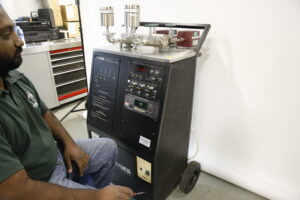
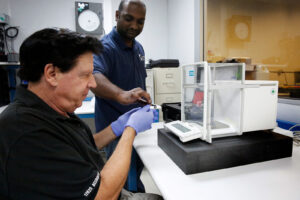
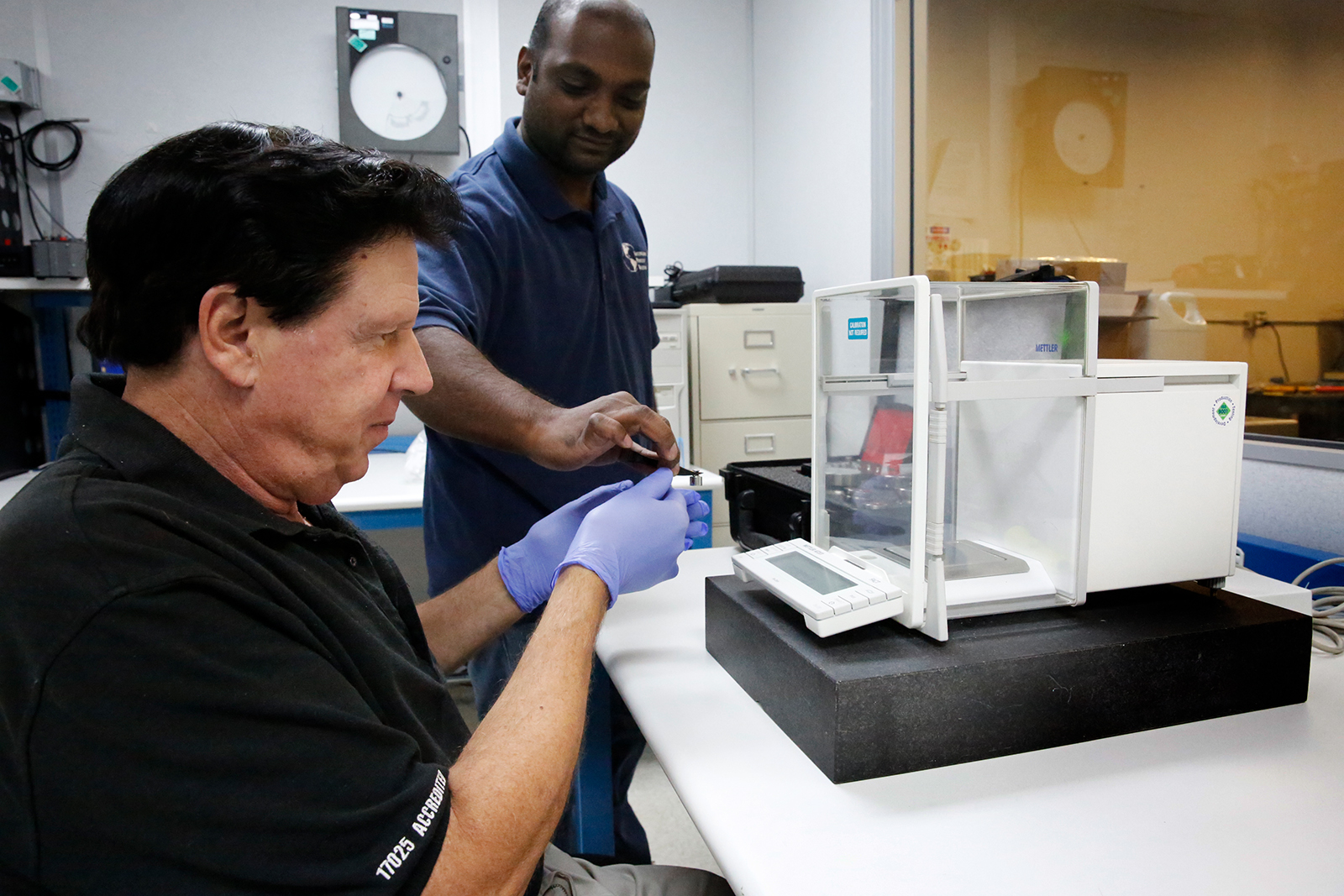
On-site calibration services allow qualified calibration technicians to perform applicable calibration work at the customer’s facility rather than requiring every instrument to be shipped to an outside laboratory.
This can be particularly valuable for organizations operating large quantities of equipment, instruments that are difficult to transport, or production systems where removing equipment creates unnecessary downtime.
Depending on the equipment and process, technicians may work through a predetermined equipment list while other areas of the facility continue operating normally.
Rather than shutting down an entire operation, instruments can potentially be serviced individually, by department, by production line, or in carefully scheduled groups.
For example, one instrument may be taken temporarily out of service for calibration while another portion of the production process remains operational. Once calibration is completed and the equipment is released according to facility procedures, technicians can proceed to the next instrument.
This creates a structured approach to calibration during production hours without assuming that the entire facility must stop operating.
Does Equipment Have to Be Shut Down for Calibration?
Whether equipment must be shut down depends on the instrument, process, calibration method, safety requirements, and facility procedures.
Some standalone instruments can be calibrated with relatively little disruption. Other instruments are integrated directly into production equipment or critical systems and cannot be properly calibrated while the process is operating normally.
Examples may include instruments associated with:
- Temperature measurement
- Pressure measurement
- Humidity monitoring
- Flow measurement
- Electrical measurement
- Dimensional measurement
- Torque measurement
- Laboratory equipment
- Balances and scales
- Pipettes
- Process instrumentation
- Environmental monitoring
- Manufacturing equipment
Certain instruments may require temporary removal from service. Others may need isolation from the process or specific operating conditions before calibration begins.
For this reason, calibration scheduling should be based on the actual equipment list and process requirements, rather than assuming that every instrument can or cannot be serviced during production.
How On-Site Calibration Can Reduce Production Downtime
One of the major advantages of on-site calibration is the ability to reduce the logistical downtime associated with sending equipment to an external calibration laboratory.
Traditional off-site calibration may involve removing the instrument, packaging it, arranging transportation, waiting for service, receiving it back, and reinstalling it.
For some instruments, that approach is appropriate or necessary. For others, performing calibration at the facility can substantially simplify the process.
On-site calibration can help facilities:
- Reduce equipment transportation
- Avoid unnecessary shipping delays
- Coordinate service around production schedules
- Keep critical instruments at the facility
- Service multiple instruments during one scheduled visit
- Reduce administrative handling
- Minimize disruption to laboratory and production personnel
- Coordinate calibration across multiple departments
For facilities managing hundreds or thousands of instruments, these efficiencies can become especially important.
Planning Calibration Around Active Production
Successful calibration during operating hours requires careful planning before technicians begin working.
We recommend establishing an accurate equipment list that identifies instruments requiring calibration and their operational importance.
Important information can include:
- Equipment identification number
- Manufacturer
- Model
- Serial number
- Instrument location
- Calibration range
- Required calibration points
- Accuracy or tolerance requirements
- Calibration due date
- Production status
- Accessibility
- Safety requirements
- Required documentation
- Whether shutdown or isolation is necessary
With this information available in advance, calibration work can be organized according to the facility’s operating schedule.
Equipment that can be serviced without affecting production can be prioritized during active production hours, while equipment requiring shutdown can be reserved for planned breaks, maintenance windows, shift changes, or scheduled production downtime.
Calibration During Production in Pharmaceutical Facilities
Pharmaceutical calibration services require careful coordination because instruments may support manufacturing, environmental monitoring, laboratory testing, storage, quality control, and other controlled processes.
A calibration activity should never compromise product quality or interfere with established procedures simply for the purpose of keeping production running.
Instead, facilities should identify instruments that can be safely and appropriately calibrated while surrounding operations continue.
For example, certain standalone laboratory instruments may be temporarily removed from use without affecting an entire manufacturing operation. Other instruments integrated into a critical production process may require a planned maintenance window.
Calibration activities should be coordinated with applicable facility procedures and appropriate personnel, including departments such as:
- Quality assurance
- Quality control
- Engineering
- Maintenance
- Metrology
- Laboratory management
- Manufacturing
- Validation
- Facilities
This coordinated approach helps maintain both production efficiency and calibration control.
Calibration During Production in Biotechnology and Life Science Facilities
Biotechnology and life science facilities often contain extensive inventories of laboratory and process equipment distributed across multiple departments.
Equipment may include pipettes, balances, temperature devices, pressure instruments, centrifuges, incubators, environmental monitoring instruments, and numerous other measurement devices.
Stopping every laboratory operation simultaneously would often be unnecessary.
Instead, calibration can frequently be scheduled by room, department, instrument category, or priority.
For example, one set of pipettes may be calibrated while another set remains available to laboratory personnel. Standalone instruments may be serviced sequentially so that essential operations can continue.
The exact approach should reflect the facility’s procedures, available backup equipment, workload, and calibration requirements.
Can Laboratory Equipment Be Calibrated While the Laboratory Is Operating?
In many situations, laboratory calibration services can be performed while the laboratory remains operational.
This does not necessarily mean that the specific instrument being calibrated can continue to be used during calibration.
The instrument may need to be temporarily designated unavailable while the calibration procedure is performed. However, surrounding laboratory operations may continue if they do not interfere with the calibration or create safety or contamination concerns.
Scheduling is especially important when laboratories have limited quantities of critical instruments.
Rather than removing every instrument from service simultaneously, calibration can potentially be staggered so laboratory personnel retain access to equipment needed for ongoing work.
When Calibration Should Be Scheduled During Planned Downtime
Although many calibration services can be coordinated around active operations, some instruments are better serviced during planned production downtime.
This may be appropriate when calibration requires:
- Complete equipment shutdown
- Process interruption
- Electrical isolation
- Pressure isolation
- Disassembly
- Removal of protective guarding
- Access to restricted areas
- Significant equipment stabilization
- Extended testing
- Production-line access
- Conditions incompatible with active manufacturing
In these circumstances, scheduling calibration during planned maintenance periods can reduce operational conflict.
Facilities can also combine calibration with preventive maintenance, validation activities, equipment inspection, or other scheduled service when appropriate.
Calibration During Shift Changes and Production Breaks
A full facility shutdown is not always required when a short calibration window is sufficient.
Facilities operating multiple shifts may be able to schedule calibration activities during:
- Shift changes
- Lunch periods
- Cleaning cycles
- Product changeovers
- Batch transitions
- Sanitation periods
- Preventive maintenance windows
- Planned line stops
- Low-production periods
These windows can be especially useful for instruments requiring temporary process interruption but not extensive downtime.
A well-organized calibration schedule can identify these opportunities before technicians arrive at the facility.
Can Calibration Be Performed Without Interrupting an Entire Production Line?
In some applications, yes.
If individual instruments can be isolated or temporarily removed without affecting the entire system, calibration may be performed instrument by instrument.
Whether this is possible depends on the process design and facility procedures.
Redundant instrumentation can also influence scheduling. When facilities have properly configured backup equipment or multiple instruments supporting similar functions, individual units may sometimes be taken out of service without stopping the broader operation.
However, production continuity should never be prioritized over required safety procedures, instrument integrity, or valid calibration conditions.
Why Environmental Conditions Matter During On-Site Calibration
Calibration performed during production hours must still meet the conditions required for a valid measurement.
Active manufacturing environments can introduce factors such as:
- Temperature fluctuations
- Air movement
- Vibration
- Electrical interference
- Humidity changes
- Dust
- Process noise
- Equipment movement
Depending on the instrument and required measurement uncertainty, these conditions may affect the suitability of performing calibration directly in the production environment.
For sensitive calibration work, technicians may require a more controlled location within the facility or recommend laboratory calibration instead.
The objective is not simply to perform calibration wherever the instrument happens to be located. The calibration environment must be appropriate for the measurement being performed.
On-Site Calibration vs. Laboratory Calibration
Not every instrument should automatically receive on-site calibration.
The choice between on-site and laboratory calibration depends on factors such as instrument type, required accuracy, measurement uncertainty, equipment portability, environmental requirements, calibration standards, and operational needs.
On-Site Calibration
On-site service may be preferable when:
- Equipment is difficult to transport
- Shipping would create excessive downtime
- Large quantities of instruments require service
- Calibration can be performed appropriately at the facility
- The instrument is integrated into facility operations
- Production scheduling requires rapid equipment availability
Laboratory Calibration
Laboratory calibration may be preferable when:
- Greater environmental control is necessary
- Specialized calibration systems are required
- The instrument requires extensive repair
- On-site conditions are unsuitable
- Required measurement capabilities are only available in the calibration laboratory
An effective calibration program may use a combination of both approaches.
How to Prepare for Calibration During Production Hours
Preparation can significantly reduce the amount of time equipment remains unavailable.
Before scheduled calibration begins, facilities should confirm that equipment is accessible and that appropriate personnel know which instruments will be serviced.
Where applicable, preparation may include:
- Confirming the calibration equipment list
- Verifying equipment identification numbers
- Identifying calibration locations
- Establishing access requirements
- Coordinating with production supervisors
- Notifying affected departments
- Identifying equipment requiring shutdown
- Planning temporary equipment substitutions
- Reviewing safety procedures
- Confirming calibration specifications
- Making previous calibration records available
- Establishing documentation requirements
This preparation allows technicians to spend more time performing calibration and less time locating equipment or resolving scheduling conflicts.
Calibration Documentation During Active Production
Calibration performed during production hours should receive the same level of appropriate documentation as calibration performed during a scheduled shutdown.
Calibration records may include information such as:
- Instrument identification
- Manufacturer and model
- Serial number
- Calibration date
- Calibration procedure
- Measurement results
- Calibration standards used
- As-found condition
- As-left condition
- Adjustments, when applicable
- Acceptance criteria
- Calibration status
- Technician information
- Measurement traceability
- Measurement uncertainty, where applicable
For regulated and quality-controlled operations, complete documentation is essential regardless of when calibration occurs.
What Happens If Equipment Is Found Out of Tolerance During Production?
An out-of-tolerance calibration result can require immediate attention, particularly when the affected instrument supports a critical process.
The facility’s established procedures should determine the appropriate response.
Depending on the instrument and application, this may include removing the equipment from service, adjusting or repairing the instrument, performing additional calibration, notifying appropriate personnel, and evaluating whether previous measurements or production activities may have been affected.
This is another reason calibration during production should be carefully coordinated.
Facility personnel responsible for equipment disposition should be available or accessible when critical instruments are being calibrated so that unexpected results can be addressed efficiently.
Can Calibration Be Performed Outside Normal Business Hours?
Facilities with continuous operations or particularly sensitive production schedules may need calibration activities coordinated outside their busiest operating periods.
Depending on service availability and project requirements, calibration may be scheduled around production cycles to reduce interference with normal operations.
The best schedule depends on factors including:
- Number of instruments
- Production schedule
- Equipment availability
- Calibration scope
- Required shutdown time
- Facility access
- Technician access
- Safety requirements
- Project deadlines
Planning these requirements before service begins allows the calibration provider and facility to develop a more efficient service schedule.
How Frequently Should Production Equipment Be Calibrated?
Calibration frequency should be established according to applicable requirements and the needs of the individual instrument and process.
Factors used to establish calibration intervals can include:
- Manufacturer recommendations
- Equipment usage
- Historical calibration results
- Instrument stability
- Process criticality
- Environmental conditions
- Quality-system requirements
- Regulatory requirements
- Risk associated with measurement error
Some instruments may require annual calibration, while critical or heavily used equipment may require more frequent service.
Production schedules should be designed to accommodate required calibration intervals rather than allowing equipment to remain in service beyond its established calibration due date simply because the facility is busy.
Industries That Benefit From On-Site Calibration Services
The ability to coordinate calibration with active operations can benefit organizations across numerous industries.
At International Process Solutions, calibration services support organizations operating in industries such as:
- Pharmaceutical manufacturing
- Biotechnology
- Life sciences
- Research laboratories
- Educational laboratories
- Manufacturing
- Oil and gas
- Water and municipal operations
- Industrial facilities
- Quality-control laboratories
Each environment has different operational demands, which is why calibration scheduling should be tailored to the facility rather than treated as a one-size-fits-all process.
Frequently Asked Questions About Calibration During Production Hours
Can Calibration Be Done While Equipment Is Running?
It depends on the equipment and calibration procedure. Some instruments can be evaluated under operating conditions, while others must be isolated, stopped, disconnected, or removed from service.
Does an Entire Production Line Need to Stop for Calibration?
Not necessarily. Some calibration work can be performed on individual instruments without shutting down an entire production line. The process design, safety requirements, and calibration procedure determine whether this is possible.
Can On-Site Calibration Reduce Downtime?
Yes. When appropriate for the instrument, on-site calibration can eliminate transportation time and allow calibration activities to be coordinated with facility operations.
Can Laboratory Calibration Be Performed During Normal Working Hours?
Many laboratory instruments can be calibrated while the surrounding laboratory remains operational. The individual instrument being serviced may need to remain unavailable until calibration is completed.
Should Calibration Be Scheduled During Preventive Maintenance?
Calibration can sometimes be coordinated with planned preventive maintenance or equipment shutdowns. This can be particularly useful for instruments that cannot be calibrated while the associated equipment is operating.
What If an Instrument Fails Calibration During Production?
The instrument should be handled according to the facility’s established out-of-tolerance and quality procedures. Depending on the circumstances, this may involve removing the equipment from service and evaluating potentially affected measurements or processes.
Professional On-Site Calibration Services from International Process Solutions
Calibration services can often be performed during production hours, but successful execution depends on proper planning, communication, equipment accessibility, safety requirements, calibration conditions, and the nature of the production process.
At International Process Solutions, we understand that manufacturing facilities, laboratories, pharmaceutical companies, biotechnology organizations, and industrial operations cannot always accommodate lengthy or unnecessary shutdowns.
We work with customers to organize calibration activities efficiently while maintaining the integrity of the calibration process.
When possible, instruments can be serviced individually or in carefully planned groups while surrounding operations continue. Equipment requiring shutdown can be identified in advance and coordinated with maintenance windows, shift changes, production breaks, or other suitable periods.
The result is a more efficient approach to on-site calibration services that considers both measurement requirements and the operational realities of modern facilities.
For organizations managing large equipment inventories, the most effective strategy is to plan calibration before instruments become due, identify equipment that can be serviced during active production, reserve shutdown-dependent instruments for appropriate maintenance windows, and maintain accurate documentation throughout the process.
With careful coordination and an experienced calibration provider, facilities can maintain required calibration schedules while minimizing unnecessary production downtime and keeping critical operations moving whenever conditions allow.