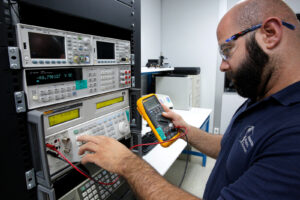
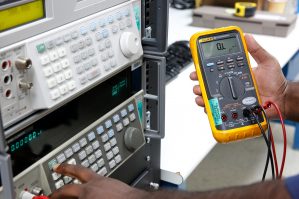
Pharmaceutical facilities depend on accurate, repeatable, and traceable measurements throughout research, manufacturing, quality control, storage, packaging, and distribution. Instruments that measure, monitor, record, or control a parameter that can affect product quality, process performance, safety, or regulatory compliance generally need to be included in an established calibration program.
At International Process Solutions (IPS), we understand that pharmaceutical calibration extends far beyond a few laboratory instruments. A modern pharmaceutical facility may contain hundreds or thousands of measuring devices across laboratories, production suites, cleanrooms, warehouses, utilities, and supporting systems. Maintaining an organized calibration program helps ensure that these instruments continue operating within their established specifications and tolerances.
Featured Answer: What Instruments Need Calibration in a Pharmaceutical Facility?
In a pharmaceutical facility, instruments requiring calibration commonly include temperature sensors, thermometers, pressure gauges, pressure transmitters, balances, scales, pipettes, flow meters, pH meters, conductivity meters, humidity sensors, data loggers, timers, tachometers, centrifuges, torque instruments, environmental monitoring devices, and process control instrumentation.
In general, any instrument whose measurement can influence pharmaceutical product quality, process control, laboratory results, environmental conditions, or GMP documentation should be evaluated for inclusion in the facility’s calibration program.
The exact calibration requirements depend on the instrument’s intended use, manufacturer specifications, process requirements, established tolerances, historical performance, risk classification, and applicable quality procedures.
Temperature Measurement Instruments
Temperature is one of the most widely monitored parameters in pharmaceutical operations. Even relatively small temperature deviations can affect manufacturing processes, analytical procedures, stability programs, storage conditions, and sensitive pharmaceutical materials.
Common temperature instruments requiring calibration include:
- Digital thermometers
- Liquid-in-glass thermometers
- RTDs
- Thermocouples
- Temperature probes
- Temperature transmitters
- Infrared thermometers
- Temperature controllers
- Temperature switches
- Data loggers
- Chart recorders
- Temperature sensors incorporated into equipment
Temperature calibration may be required throughout pharmaceutical manufacturing areas, laboratories, warehouses, refrigerators, freezers, incubators, stability chambers, environmental chambers, ovens, autoclaves, and other temperature-controlled equipment.
When temperature readings are used to demonstrate that a process or storage environment remained within established limits, measurement accuracy becomes especially important.
Pressure Gauges and Pressure Measurement Instruments
Pressure measurements are frequently used in pharmaceutical manufacturing processes, cleanrooms, filtration systems, utilities, sterilization processes, and controlled environments.
Pharmaceutical facilities may need to calibrate:
- Pressure gauges
- Digital pressure indicators
- Pressure transmitters
- Differential pressure gauges
- Differential pressure transmitters
- Vacuum gauges
- Pressure switches
- Pressure controllers
- Manometers
Differential pressure instrumentation is particularly important in facilities where pressure relationships are used to maintain controlled environments.
For example, pharmaceutical cleanrooms may maintain pressure differentials between adjacent spaces to help control airflow and reduce contamination risks. Instruments monitoring these conditions must provide dependable measurements.
Balances and Pharmaceutical Laboratory Scales
Balances are essential throughout pharmaceutical laboratories and manufacturing operations. They may be used to measure active ingredients, excipients, analytical samples, reference materials, formulation components, and production materials.
Common weighing instruments include:
- Analytical balances
- Precision balances
- Top-loading balances
- Microbalances
- Bench scales
- Floor scales
- Platform scales
- Production weighing systems
A weighing error can directly affect a formulation, analytical result, or manufacturing batch.
Calibration programs should therefore address the required operating range and tolerances of the balance or scale rather than considering only its maximum capacity.
Facilities may also perform routine balance checks between formal calibration intervals using appropriate reference weights according to established procedures.
Pipettes and Liquid-Handling Equipment
Pipettes are among the most frequently used measuring instruments in pharmaceutical, biotechnology, research, and quality-control laboratories.
Equipment requiring calibration can include:
- Single-channel pipettes
- Multichannel pipettes
- Adjustable-volume pipettes
- Fixed-volume pipettes
- Electronic pipettes
- Repeating pipettes
- Bottle-top dispensers
- Other precision liquid-handling devices
Small volumetric errors can significantly influence analytical results, particularly when working with low-volume samples or sensitive assays.
At International Process Solutions, pipette calibration is an important part of our calibration capabilities, supporting laboratories that require accurate and documented liquid-volume measurements.
pH Meters and Electrochemical Instruments
Pharmaceutical laboratories and manufacturing processes frequently rely on electrochemical measurements.
Common instruments include:
- pH meters
- pH electrodes
- Conductivity meters
- Conductivity probes
- Dissolved oxygen meters
- Ion-selective measurement systems
- ORP meters
A pH measurement may influence formulation development, raw-material testing, water-system monitoring, manufacturing processes, cleaning procedures, and finished-product testing.
Conductivity instruments are also commonly used within pharmaceutical water systems and laboratory environments.
These devices should be maintained and calibrated according to their intended applications and established quality procedures.
Flow Meters and Flow Measurement Devices
Flow measurements can be critical in pharmaceutical manufacturing, utilities, process equipment, water systems, gas systems, and laboratory applications.
Common flow instruments include:
- Liquid flow meters
- Gas flow meters
- Mass flow meters
- Rotameters
- Flow transmitters
- Flow controllers
- Airflow measurement devices
Where flow rate influences a validated or controlled process, the accuracy of the measuring instrument becomes particularly important.
Calibration requirements should reflect the actual operating range of the instrument and the tolerance required by the process.
Humidity and Environmental Monitoring Instruments
Pharmaceutical products, ingredients, laboratory materials, and packaging components may be sensitive to environmental conditions.
Facilities may therefore use calibrated instruments to monitor:
- Relative humidity
- Temperature
- Differential pressure
- Airflow
- Other controlled environmental parameters
Typical instruments include:
- Hygrometers
- Humidity transmitters
- Humidity data loggers
- Temperature and humidity recorders
- Environmental monitoring systems
- Combination temperature/RH sensors
These devices may be installed throughout warehouses, laboratories, cleanrooms, stability chambers, manufacturing areas, and controlled storage spaces.
Refrigerators, Freezers, Incubators, and Stability Chambers
Temperature-controlled equipment may contain several individual components that require calibration or verification.
Examples include:
- Refrigerator temperature sensors
- Freezer probes
- Ultra-low-temperature freezer sensors
- Incubator controllers
- Stability chamber sensors
- Environmental chamber controllers
- Independent monitoring probes
- Alarm sensors
- Temperature recorders
The equipment itself may also require additional qualification, validation, or temperature mapping depending on its application.
Calibration specifically addresses the measurement accuracy of the instrumentation associated with the equipment.
Autoclave and Sterilization Instrumentation
Sterilization processes can rely on multiple critical measurements.
Instrumentation associated with autoclaves and sterilization equipment may include:
- Temperature sensors
- Pressure sensors
- Timers
- Recorders
- Controllers
- Transmitters
- Data acquisition systems
Because sterilization processes operate according to defined parameters, the accuracy of the instruments measuring those parameters is critical to maintaining reliable process records.
Timers, Stopwatches, and Time Measurement Devices
Time is a measurable process parameter and should not be overlooked in pharmaceutical calibration programs.
Calibrated time-measurement devices may include:
- Laboratory timers
- Digital stopwatches
- Process timers
- Equipment timers
- Controller-based timing systems
Timers may be used for mixing, reactions, incubations, analytical procedures, sterilization processes, manufacturing steps, and other time-dependent activities.
Where a specified duration affects the outcome of a procedure, accurate time measurement is important.
Centrifuges and Rotational Speed Instruments
Centrifuges are widely used in pharmaceutical, biotechnology, and research laboratories.
Parameters requiring calibration or verification can include:
- Rotational speed
- Time
- Temperature
Related measuring instruments may include:
- Tachometers
- RPM indicators
- Centrifuge timers
- Temperature sensors
The appropriate calibration approach depends on the centrifuge’s application and the parameters considered critical to the laboratory procedure.
Torque Wrenches and Torque Measurement Equipment
Torque-controlled fastening may be used in pharmaceutical production, maintenance, equipment assembly, packaging operations, and engineering applications.
Instruments can include:
- Torque wrenches
- Torque screwdrivers
- Torque analyzers
- Torque transducers
- Digital torque instruments
An inaccurate torque instrument can result in components being tightened above or below established specifications.
For processes where torque values are documented or controlled, periodic calibration helps establish confidence in the recorded measurements.
Pharmaceutical Water-System Instrumentation
Pharmaceutical water systems can contain numerous measurement and monitoring instruments.
Depending on the system, these may include:
- Conductivity meters
- Temperature sensors
- Pressure gauges
- Flow meters
- pH instruments
- Level transmitters
- Pressure transmitters
- Process controllers
Because water systems may support manufacturing, laboratory, cleaning, and processing operations, instrumentation associated with these systems should be evaluated as part of the facility’s calibration program.
Cleanroom Monitoring and HVAC Instrumentation
Controlled pharmaceutical environments rely on instrumentation to maintain established operating conditions.
Calibration may be required for:
- Differential pressure gauges
- Pressure transmitters
- Temperature sensors
- Humidity sensors
- Air velocity instruments
- Airflow measurement devices
- Environmental data loggers
- Monitoring-system sensors
Cleanroom instrumentation should provide measurements sufficiently accurate for the environmental specifications established by the facility.
Manufacturing Process Instrumentation
Pharmaceutical manufacturing equipment frequently contains integrated instruments that may be less visible than standalone laboratory devices but are equally important.
Examples include:
- Temperature transmitters
- Pressure transmitters
- Flow transmitters
- Level sensors
- Load cells
- Controllers
- Digital indicators
- Recorders
- Process probes
- Speed sensors
- RPM measurement devices
A pharmaceutical calibration program should therefore evaluate the entire process rather than limiting its instrument inventory to portable devices.
Integrated instrumentation can directly control manufacturing conditions and generate electronic or printed records used for batch documentation.
Packaging Equipment and Measurement Devices
Pharmaceutical packaging operations can also contain instruments requiring calibration.
Examples may include:
- Checkweighers
- Scales
- Torque testers
- Pressure gauges
- Temperature controllers
- Timers
- Speed indicators
- Sensors used for controlled packaging processes
The criticality of a packaging instrument depends on how its measurement affects product quality, package integrity, or established production specifications.
Laboratory Reference and Test Equipment
Quality-control and research laboratories may use numerous additional instruments that require calibration.
Depending on the laboratory, the calibration inventory can include:
- Thermometers
- Balances
- Pipettes
- Timers
- Tachometers
- Pressure instruments
- Temperature data loggers
- Humidity meters
- Conductivity meters
- pH meters
- Reference measurement equipment
Laboratories should maintain an accurate inventory so instruments do not unintentionally remain in service beyond their established calibration due dates.
Data Loggers and Digital Monitoring Systems
Data loggers have become increasingly important throughout pharmaceutical operations.
They can continuously record parameters such as:
- Temperature
- Relative humidity
- Pressure
- Differential pressure
- Other process measurements
Data loggers may be used during storage, equipment studies, validation activities, transportation, warehouse monitoring, refrigerator monitoring, freezer monitoring, and environmental studies.
Because large numbers of decisions can be based on recorded logger data, the accuracy of the underlying sensors must be established.
Which Pharmaceutical Instruments Are Considered Critical?
Not every instrument carries the same level of risk.
Facilities commonly classify instruments according to their impact on:
Product quality: Does the measurement directly affect the identity, strength, quality, purity, or other established characteristics of a pharmaceutical product?
Manufacturing processes: Is the instrument used to control or document a critical process parameter?
Laboratory results: Could an inaccurate reading affect analytical data or the acceptance or rejection of a material or product?
Environmental control: Does the instrument monitor conditions required for a controlled area, cleanroom, laboratory, or storage environment?
Documentation: Is the instrument’s output incorporated into controlled manufacturing, laboratory, validation, or quality records?
Instruments with a direct impact on critical processes generally require particularly well-defined calibration requirements and tolerances.
How Often Should Pharmaceutical Instruments Be Calibrated?
There is no single calibration interval appropriate for every pharmaceutical instrument.
Calibration frequencies can be established based on:
- Manufacturer recommendations
- Instrument stability
- Frequency of use
- Operating environment
- Measurement criticality
- Required accuracy
- Historical calibration results
- Previous out-of-tolerance conditions
- Facility procedures
- Process risk
- Quality-system requirements
Common intervals may include monthly, quarterly, semiannual, or annual calibration, but the appropriate schedule should be established for each instrument or instrument class.
A heavily used critical instrument may require more frequent attention than a stable instrument operating under controlled conditions.
What Is an Out-of-Tolerance Calibration Result?
An instrument is considered out of tolerance when its measured performance falls outside the established acceptance limits.
In pharmaceutical environments, an out-of-tolerance condition may require an assessment of the instrument and potentially the measurements generated since its previous acceptable calibration.
This makes accurate calibration records particularly important.
Calibration documentation should clearly identify the instrument, calibration date, measurement results, applicable standards, acceptance criteria, and calibration status according to the facility’s procedures.
Traceability in Pharmaceutical Calibration
Measurement traceability provides a documented connection between an instrument’s calibration results and recognized measurement standards through an appropriate chain of calibrations.
A strong calibration program should provide documentation that allows the facility to understand:
- What instrument was calibrated
- When calibration was performed
- Which measurement points were tested
- What results were obtained
- What reference standards were used
- Whether the instrument met its specified tolerances
- When the next calibration is due
Complete records are particularly valuable during internal quality reviews, customer audits, investigations, and regulatory inspections.
Creating a Pharmaceutical Calibration Instrument Inventory
A comprehensive calibration program begins with an accurate equipment and instrument inventory.
A pharmaceutical facility’s calibration database or equipment management system may track information such as:
- Unique instrument identification number
- Instrument description
- Manufacturer
- Model
- Serial number
- Physical location
- Measurement range
- Required tolerance
- Calibration procedure
- Calibration frequency
- Last calibration date
- Next calibration due date
- Calibration status
- Criticality classification
A structured inventory reduces the likelihood of instruments being overlooked as equipment is installed, relocated, replaced, or removed from service.
On-Site Calibration for Pharmaceutical Facilities
Large pharmaceutical facilities can contain extensive instrument inventories distributed throughout production areas, laboratories, utility spaces, cleanrooms, warehouses, and controlled environments.
On-site calibration can reduce the need to remove critical instruments from the facility and may minimize equipment downtime.
International Process Solutions provides calibration services designed to support pharmaceutical, biotechnology, life-science, research, and other highly controlled environments.
Depending on instrument type and service requirements, calibration can be coordinated around operational schedules to reduce disruption to ongoing facility activities.
Laboratory Calibration Services
Some instruments are better suited for calibration within a controlled calibration laboratory.
Laboratory calibration may be appropriate for portable equipment, precision devices, pipettes, reference instruments, and equipment requiring specialized standards or environmental conditions.
Combining on-site and laboratory calibration services can provide pharmaceutical facilities with a more complete solution for managing diverse instrument inventories.
Pharmaceutical Calibration Services from International Process Solutions
At International Process Solutions, we provide professional calibration services for organizations requiring dependable measurement performance and detailed calibration documentation.
We support pharmaceutical, biotechnology, life-science, laboratory, research, manufacturing, and other regulated environments with calibration capabilities covering a broad range of instrumentation.
Our services can help facilities manage equipment such as:
- Temperature instrumentation
- Pressure instrumentation
- Pipettes
- Balances and scales
- Flow measurement equipment
- Humidity instruments
- Timers
- Tachometers
- Torque equipment
- Laboratory instrumentation
- Process measurement devices
- Environmental monitoring equipment
We understand that pharmaceutical calibration is not simply a matter of checking whether an instrument produces a number. The measurement must be appropriate for the range, tolerance, application, and criticality of the process in which the instrument is used.
Maintaining Calibration Readiness in Pharmaceutical Facilities
A pharmaceutical facility should be able to identify which instruments require calibration, when each calibration is due, what acceptance limits apply, and whether the equipment is currently approved for use.
Effective calibration management includes maintaining instrument inventories, establishing appropriate intervals, reviewing calibration results, controlling instrument status, investigating significant out-of-tolerance conditions, and retaining appropriate documentation.
When new equipment is installed, its measurement instruments should also be evaluated before being incorporated into the facility’s calibration program.
Likewise, when equipment is relocated, repaired, modified, or exposed to conditions that could affect measurement accuracy, additional calibration may be appropriate before returning it to service.
Frequently Asked Questions About Pharmaceutical Instrument Calibration
Do All Instruments in a Pharmaceutical Facility Need Calibration?
No. Instruments should be evaluated according to their intended use and impact. Devices used to measure, monitor, control, or document parameters that can affect product quality, laboratory results, manufacturing processes, environmental conditions, or regulated records are strong candidates for calibration control.
Do Pharmaceutical Thermometers Need Calibration?
Yes, thermometers used for controlled pharmaceutical measurements commonly require calibration. This can include thermometers and probes associated with laboratories, refrigerators, freezers, incubators, manufacturing equipment, storage areas, and environmental monitoring systems.
Do Pharmaceutical Pipettes Need Calibration?
Pipettes used for quantitative laboratory measurements should be included in an appropriate calibration and maintenance program. Accurate pipette performance is particularly important when small liquid volumes can significantly affect analytical results.
Do Pressure Gauges Need Calibration in Pharmaceutical Facilities?
Pressure gauges used to monitor or control critical equipment, utilities, cleanroom pressure relationships, or manufacturing processes may require calibration according to established facility procedures.
Do Pharmaceutical Balances Need Calibration?
Balances and scales used for quantitative measurements should be appropriately calibrated and maintained. This includes analytical balances, precision balances, production scales, and other weighing systems used for laboratory or manufacturing activities.
Do Data Loggers Need Calibration?
Data loggers used to generate controlled temperature, humidity, pressure, or other environmental records should be evaluated for calibration. The accuracy of a data logger is especially important when its recorded data is used to demonstrate that specified conditions were maintained.
Who Performs Pharmaceutical Instrument Calibration?
Pharmaceutical facilities may use trained internal personnel, qualified external calibration providers, or a combination of both depending on their equipment, procedures, resources, and quality requirements.
Working with an experienced calibration provider can be particularly valuable when a facility manages numerous instrument types across multiple measurement disciplines.
Schedule Pharmaceutical Calibration Services with International Process Solutions
Pharmaceutical facilities rely on thousands of measurements to maintain consistent laboratory operations, manufacturing processes, storage environments, utilities, and quality systems. Temperature sensors, pressure gauges, pipettes, balances, flow meters, pH meters, humidity sensors, torque instruments, timers, data loggers, and process instrumentation are among the devices that may require regular calibration.
At International Process Solutions, we work with pharmaceutical and life-science organizations to provide reliable calibration services supported by professional documentation and experienced technical service.
Whether a facility needs on-site calibration, laboratory calibration, pipette calibration, process instrumentation support, or assistance managing a diverse calibration workload, we can provide services tailored to the instruments and operational requirements involved.
A well-managed calibration program gives pharmaceutical facilities greater confidence that critical measurements are accurate, traceable, documented, and suitable for their intended use.
Contact International Process Solutions to discuss pharmaceutical calibration services and develop a calibration approach appropriate for your facility’s instrumentation and operational requirements.