Are Inaccurate Flow Meter Readings Costing Your Business More Than You Realize?
A flow meter that is even slightly out of calibration can create significant problems throughout your operation. Whether you’re measuring water, chemicals, gases, pharmaceuticals, or fuel, inaccurate flow readings can lead to product waste, failed quality inspections, regulatory violations, increased operating costs, and dissatisfied customers.
Many companies don’t realize that flow meters gradually drift out of specification due to normal wear, environmental conditions, contamination, vibration, and continuous use. The result is measurement errors that can affect every process downstream.
The good news is that professional flow meter calibration helps restore measurement accuracy, improve process efficiency, maintain compliance, and extend the life of your equipment. At International Process Solutions (IPS), certified calibration experts provide precise flow meter calibration services that help businesses maintain confidence in every measurement.
Featured Snippet: What Is Flow Meter Calibration?
Flow meter calibration is the process of comparing a flow meter’s measurements against a highly accurate, traceable calibration standard to verify its accuracy. If measurement errors are found, adjustments are made so the instrument provides accurate and reliable flow readings. Regular flow meter calibration helps improve product quality, maintain regulatory compliance, reduce waste, and ensure consistent process performance.
Understanding Flow Meter Calibration
Flow meters are essential instruments used to measure the movement of liquids, gases, and steam throughout industrial systems. They provide the data operators rely on to control manufacturing processes, monitor production, ensure safety, and maintain product quality.
Over time, however, no flow meter remains perfectly accurate forever.
Factors such as:
- Mechanical wear
- Pressure fluctuations
- Temperature changes
- Chemical exposure
- Contamination
- Electronic component aging
- Vibration
- Process buildup
can all gradually affect measurement accuracy.
Flow meter calibration identifies these deviations before they become costly problems.
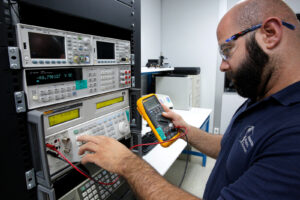
During calibration, technicians compare the readings from the flow meter against a certified reference standard that is significantly more accurate than the device being tested. Any differences are documented, and adjustments are made when necessary.
The result is a flow meter that continues providing dependable measurements you can trust.
Why Is Flow Meter Calibration Important?
Many businesses assume their flow meters remain accurate simply because they continue operating.
Unfortunately, functioning does not always mean accurate.
A flow meter that is only 2–3% out of calibration may not seem like much, but over thousands of gallons, liters, or cubic feet of product, those errors quickly become expensive.
Professional calibration helps organizations:
- Improve measurement accuracy
- Reduce production waste
- Protect product quality
- Maintain customer confidence
- Meet ISO requirements
- Satisfy FDA regulations
- Comply with GMP standards
- Support internal quality systems
- Reduce unnecessary downtime
- Increase equipment reliability
Instead of reacting to problems after they occur, routine calibration helps prevent them.
Industries That Depend on Flow Meter Calibration
Pharmaceutical Manufacturing
Pharmaceutical companies require highly accurate flow measurements during:
- Drug production
- Water for Injection (WFI)
- Clean steam systems
- Chemical batching
- CIP/SIP processes
Even small flow inaccuracies can affect product consistency and regulatory compliance.
Biotechnology
Biotech laboratories rely on calibrated flow meters for:
- Media preparation
- Fermentation
- Cell culture systems
- Purified water
- Gas delivery systems
Precision directly impacts research results and manufacturing quality.
Food and Beverage Processing
Flow meter accuracy is critical when measuring:
- Ingredients
- Syrups
- Milk
- Water
- Cleaning chemicals
- Flavor additives
Calibration helps ensure consistency from one production batch to the next.
Chemical Manufacturing
Chemical processing depends on precise flow control for:
- Mixing
- Metering
- Blending
- Reactor feeds
- Process monitoring
Incorrect flow measurements can alter chemical reactions and reduce product quality.
Oil and Gas
Flow meters measure:
- Fuel transfer
- Custody transfer
- Pipeline monitoring
- Gas distribution
- Refinery operations
Small errors can result in substantial financial losses over time.
Water and Wastewater Treatment
Municipal facilities use calibrated flow meters to monitor:
- Water distribution
- Chemical dosing
- Wastewater treatment
- Pump stations
- Filtration systems
Accurate readings support environmental compliance and efficient operations.
Types of Flow Meters That Require Calibration
Magnetic Flow Meters
Ideal for conductive liquids, magnetic flow meters are widely used in water treatment and pharmaceutical applications.
Coriolis Flow Meters
Known for exceptional accuracy, Coriolis meters measure both mass flow and density.
These are common in pharmaceutical, food processing, and chemical manufacturing.
Turbine Flow Meters
Often used with fuels, oils, and clean liquids, turbine meters require routine calibration to maintain precision.
Ultrasonic Flow Meters
These non-invasive meters measure flow using sound waves and are common in HVAC, water systems, and industrial processes.
Vortex Flow Meters
Frequently used for steam, gas, and liquid applications, vortex meters benefit from periodic verification to maintain reliable readings.
Positive Displacement Flow Meters
These mechanical meters provide excellent accuracy for viscous fluids but require routine calibration due to wear.
Thermal Mass Flow Meters
Widely used for compressed air and gas applications, thermal meters require calibration to compensate for environmental changes.
How Flow Meter Calibration Works
Initial Inspection
Technicians begin by inspecting the instrument for:
- Physical damage
- Contamination
- Leaks
- Corrosion
- Improper installation
- Missing identification labels
This ensures the equipment is suitable for testing.
Functional Testing
Before calibration begins, technicians verify that the instrument is operating correctly and responding to flow changes.
Comparison to Certified Standards
The flow meter is tested against highly accurate NIST-traceable calibration standards.
Multiple flow rates are evaluated to determine accuracy throughout the instrument’s operating range.
Typical calibration points include:
- Low flow
- Mid-range flow
- High flow
- Maximum operating capacity
Data Collection
Technicians carefully record:
- Reference values
- Actual readings
- Measurement error
- Percent deviation
- Environmental conditions
These results become part of the calibration documentation.
Adjustment (If Needed)
If readings exceed allowable tolerances, the flow meter is adjusted according to manufacturer specifications.
The calibration process is then repeated to verify accuracy.
Final Verification
Once calibration is complete, technicians perform a final series of tests confirming the flow meter meets required specifications.
Calibration Certificate
A professional calibration concludes with documentation that typically includes:
- Instrument identification
- Calibration date
- Technician information
- Reference standards used
- Measurement uncertainty
- As-found data
- As-left data
- Environmental conditions
- Traceability information
These records are valuable during audits and quality inspections.
How Often Should Flow Meters Be Calibrated?
Calibration frequency depends on several factors.
These include:
- Manufacturer recommendations
- Industry regulations
- Process criticality
- Operating environment
- Previous calibration history
- Equipment age
- Frequency of use
Many organizations perform calibration:
- Every 6 months
- Annually
- Before major production runs
- After repairs
- Following equipment relocation
- After exposure to harsh operating conditions
Critical pharmaceutical and GMP environments may require more frequent verification.
Benefits of Professional Flow Meter Calibration
Improved Process Control
Reliable flow measurements allow operators to make better production decisions.
Reduced Waste
Accurate measurements prevent product overuse, underfilling, and unnecessary material loss.
Better Product Quality
Consistent flow leads to consistent manufacturing results.
Regulatory Compliance
Professional calibration supports compliance with:
- ISO 9001
- ISO/IEC 17025
- FDA requirements
- GMP regulations
- Internal quality standards
Lower Operating Costs
Accurate instruments reduce rework, downtime, troubleshooting, and product loss.
Increased Equipment Life
Routine maintenance and calibration often identify developing issues before expensive failures occur.
Signs Your Flow Meter May Need Calibration
Your flow meter may require immediate calibration if you notice:
- Unexpected process variations
- Inconsistent batch results
- Unexplained production losses
- Flow readings that fluctuate excessively
- Failed quality inspections
- Instrument alarms
- Increased product waste
- Equipment repairs
- Extended time since the last calibration
Ignoring these warning signs can lead to much larger operational problems.
Why Choose International Process Solutions for Flow Meter Calibration?
Choosing the right calibration provider is just as important as calibrating the instrument itself.
International Process Solutions (IPS) has earned the trust of manufacturers across highly regulated industries by delivering accurate, dependable, and timely calibration services.
IPS provides:
- Experienced calibration professionals
- NIST-traceable standards
- Comprehensive documentation
- Fast turnaround times
- On-site and laboratory calibration services
- Support for pharmaceutical, biotechnology, medical device, aerospace, food processing, and manufacturing industries
- Preventive maintenance programs
- Equipment management solutions
- Reliable customer support
Whether you operate a single production line or multiple facilities, IPS helps ensure your flow measurement systems remain accurate and compliant.
Best Practices for Maintaining Accurate Flow Meters
Keep Maintenance Records
Track calibration history to identify trends before failures occur.
Follow Manufacturer Recommendations
Routine inspections help prevent unnecessary wear.
Protect Instruments from Contamination
Clean process fluids improve measurement accuracy.
Monitor Environmental Conditions
Extreme temperatures and vibration can affect performance.
Schedule Preventive Calibration
Routine calibration is less expensive than correcting production problems caused by inaccurate measurements.
The Bottom Line
Flow meter calibration is far more than a routine maintenance task—it’s an essential investment in measurement accuracy, product quality, operational efficiency, and regulatory compliance. Whether your facility manufactures pharmaceuticals, processes food and beverages, produces chemicals, or manages water treatment systems, precise flow measurements are critical to consistent results.
Without regular calibration, even small measurement errors can lead to wasted materials, production delays, failed audits, and increased operating costs. By comparing your flow meters against certified, NIST-traceable standards and making adjustments when needed, you can ensure your instruments continue to deliver reliable performance throughout their service life.
At International Process Solutions, experienced calibration professionals help organizations maintain confidence in every measurement through expert flow meter calibration services, comprehensive documentation, and responsive customer support.
Ready to Improve the Accuracy of Your Flow Measurement Systems?
Don’t wait until inaccurate readings affect your production, compliance, or bottom line. Contact International Process Solutions today to schedule professional flow meter calibration services. Whether you need on-site calibration, laboratory calibration, preventive maintenance, or ongoing calibration management, the IPS team has the expertise and equipment to keep your flow meters operating at peak accuracy. Reach out today and discover how precision calibration can improve efficiency, reduce costs, and keep your operation running smoothly.