
Torque wrenches are relied upon across manufacturing, aerospace, automotive, pharmaceutical, laboratory, industrial maintenance, and other precision-driven environments where fastening accuracy matters. When a torque wrench falls outside its acceptable tolerance, the consequences can extend far beyond an inaccurate reading. Improper torque can contribute to loose fasteners, damaged components, equipment failures, inconsistent assemblies, rejected products, and compliance concerns.
Choosing the right torque wrench calibration service provider is therefore an important part of maintaining a reliable quality program.
At International Process Solutions (IPS), we understand that calibration involves much more than obtaining a certificate. Organizations need confidence that their torque equipment has been evaluated using appropriate standards, documented correctly, and returned ready to support their operational and quality requirements.
Featured Answer: How Do You Choose a Torque Wrench Calibration Service Provider?
Choose a torque wrench calibration service provider based on technical capability, calibration standards, traceability, documentation, turnaround time, service options, and experience supporting quality-controlled environments. A qualified provider should be able to clearly explain its calibration process, provide detailed calibration certificates, maintain traceability to recognized standards, identify out-of-tolerance conditions, and offer calibration services appropriate for the torque wrench type and range being tested.
At International Process Solutions, we focus on delivering professional calibration solutions designed to help organizations maintain measurement confidence, equipment reliability, traceable documentation, and quality-system compliance.
Why Accurate Torque Wrench Calibration Matters
A torque wrench is designed to apply a controlled amount of rotational force to a fastener. Over time, however, repeated use, improper storage, accidental drops, mechanical wear, overloading, environmental conditions, and normal component aging can affect its accuracy.
Even a torque wrench that appears to function normally may no longer produce results within its required tolerance.
Regular torque wrench calibration helps determine whether the tool continues to perform within established specifications.
Accurate calibration can help organizations:
- Maintain consistent fastening processes
- Reduce the possibility of over-tightening and under-tightening
- Verify torque wrench performance
- Identify equipment that has drifted outside acceptable tolerances
- Support internal quality-control programs
- Maintain calibration records for audits
- Improve confidence in assembly and maintenance procedures
- Reduce costly rework and rejected components
- Support preventive maintenance programs
- Demonstrate measurement traceability
For organizations operating under strict quality requirements, calibration documentation can be just as important as the physical calibration itself.
Look for a Torque Calibration Provider With Strong Technical Capabilities
Not every calibration company offers the same capabilities.
Before selecting a provider, determine whether its calibration capabilities match the type, range, accuracy requirements, and application of your torque equipment.
Torque tools can vary significantly in design and operating range. Common equipment can include:
- Click-type torque wrenches
- Digital torque wrenches
- Dial torque wrenches
- Beam torque wrenches
- Torque screwdrivers
- Torque multipliers
- Torque analyzers
- Torque transducers
- Torque sensors
- Specialized torque measurement equipment
A calibration provider should understand the equipment being serviced and have appropriate calibration equipment and procedures for the required measurement range.
Simply advertising “torque calibration” is not enough.
We recommend confirming the provider’s actual capabilities before sending equipment for service.
Ask About Calibration Traceability
Measurement traceability should be one of the primary considerations when selecting a torque wrench calibration company.
Traceability creates a documented relationship between measurement results and recognized reference standards through an established calibration chain.
Organizations operating in regulated or quality-controlled industries frequently require documented evidence demonstrating how measurements are connected to recognized standards.
A professional calibration provider should maintain appropriate records for the reference equipment used during calibration.
When evaluating a calibration company, ask:
Are your calibration standards traceable to recognized national or international measurement standards?
The provider should be able to answer clearly.
Consider ISO/IEC 17025 Accreditation
For organizations with strict quality requirements, ISO/IEC 17025 accreditation can be an important consideration when evaluating calibration laboratories.
ISO/IEC 17025 addresses the competence of testing and calibration laboratories and includes requirements related to areas such as:
- Personnel competency
- Calibration methods
- Equipment
- Measurement traceability
- Measurement uncertainty
- Quality controls
- Documentation
- Reporting
However, organizations should not simply ask whether a laboratory is accredited.
They should also determine whether the specific calibration service required is included within the laboratory’s accredited scope, when accredited calibration is required.
Accreditation scopes define the specific measurements and capabilities covered by a laboratory’s accreditation.
Review the Torque Wrench Calibration Certificate
A calibration certificate is one of the most important deliverables associated with professional calibration services.
Your certificate becomes part of your organization’s equipment history and may be reviewed during internal audits, customer audits, regulatory inspections, or quality-system evaluations.
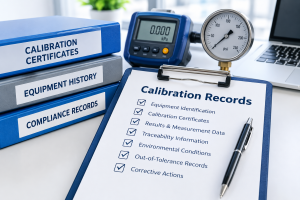
Depending on the service performed and applicable requirements, calibration documentation may include information such as:
- Equipment identification
- Manufacturer
- Model
- Serial number
- Calibration date
- Calibration results
- Measurement points
- Applicable tolerances
- Reference standards
- Calibration procedure
- Environmental conditions where applicable
- As-found data
- As-left data
- Adjustments performed
- Out-of-tolerance conditions
- Calibration technician information
- Next calibration due date when applicable
- Traceability information
We recommend reviewing a sample calibration certificate before establishing a long-term relationship with a new provider.
Documentation should be clear, organized, complete, and easy to associate with the specific instrument calibrated.
Ask for As-Found and As-Left Calibration Data
Two particularly useful pieces of calibration information are as-found and as-left data.
What Is As-Found Calibration Data?
As-found data documents the condition of the torque wrench when it arrives for calibration, before adjustments are made.
This information can help determine whether the wrench was operating within its required tolerance during its previous period of use.
If a wrench is discovered significantly outside tolerance, the organization may need to evaluate how that condition could have affected previous work.
What Is As-Left Calibration Data?
As-left data represents the condition of the torque wrench after calibration and any authorized adjustments have been completed.
Together, these measurements provide valuable information about equipment performance and calibration history.
For organizations with rigorous quality systems, maintaining both sets of data can provide considerably more information than simply receiving a pass/fail statement.
Find Out How Out-of-Tolerance Torque Wrenches Are Handled
One of the most important questions to ask a calibration provider is:
What happens if my torque wrench fails calibration?
A professional calibration provider should have a defined process for identifying and documenting out-of-tolerance equipment.
Depending on the wrench and service agreement, the provider may be able to adjust the tool and recalibrate it. In other situations, repair or replacement may be necessary.
The documentation should clearly indicate the condition discovered during calibration.
This information allows your quality team to determine whether additional investigation is required.
Evaluate the Provider’s Calibration Equipment
Accurate calibration requires appropriate reference standards and calibration equipment.
A provider should maintain calibration systems suitable for the torque ranges and accuracy requirements it services.
Calibration equipment itself must also be properly maintained and calibrated.
This creates the measurement chain necessary to provide meaningful calibration results.
When selecting a torque calibration provider, ask about the equipment used to calibrate your particular torque wrench.
A knowledgeable provider should be able to explain the process without hesitation.
Choose a Provider That Understands Your Industry
Torque wrench calibration requirements can vary depending on how and where the equipment is used.
A torque wrench used for routine facility maintenance may have different quality requirements from equipment supporting a tightly controlled manufacturing process.
At International Process Solutions, we understand the importance of calibration documentation and measurement reliability in industries where equipment performance directly supports quality systems.
Professional calibration services can be especially important for organizations working in:
- Manufacturing
- Pharmaceutical environments
- Biotechnology
- Life sciences
- Research facilities
- Laboratories
- Aerospace
- Automotive operations
- Medical-device manufacturing
- Industrial facilities
- Utilities
- Oil and gas
- Educational and research institutions
The calibration provider should understand that documentation, traceability, equipment identification, and consistent procedures can be critical components of the customer’s quality system.
Compare On-Site and Laboratory Torque Calibration Options
Organizations should also determine whether they need laboratory calibration, on-site calibration, or a combination of both.
Laboratory Torque Wrench Calibration
Laboratory calibration allows equipment to be evaluated in a controlled calibration environment using dedicated reference standards and test equipment.
This may be appropriate when equipment can easily be removed from service and transported.
On-Site Calibration Services
On-site calibration can be particularly valuable for organizations with large equipment inventories or operations where removing equipment creates logistical difficulties.
Benefits can include:
- Reduced equipment transportation
- Less shipping risk
- Simplified equipment coordination
- Reduced disruption
- Centralized calibration events
- Easier scheduling for large equipment inventories
International Process Solutions provides on-site and laboratory calibration solutions for organizations that need flexible calibration support.
Consider Calibration Turnaround Time
Turnaround time can directly affect production and maintenance schedules.
A torque wrench sitting at a calibration laboratory cannot support your operation.
Before choosing a provider, determine:
- Typical turnaround time
- Expedited service availability
- Scheduling requirements
- On-site service availability
- Procedures for large equipment quantities
- How unexpected repairs affect turnaround
- How completed equipment is returned
The lowest quoted calibration price may become expensive if equipment remains unavailable for an extended period.
A dependable calibration provider should balance accuracy, documentation quality, communication, and efficient turnaround.
Do Not Choose a Torque Calibration Company Based on Price Alone
Price matters, but calibration should not be treated as a commodity.
Two calibration quotes that appear similar may include substantially different services.
One provider may include detailed measurement data and traceability documentation, while another may provide only limited information.
When comparing torque wrench calibration quotes, evaluate what is actually included.
Compare:
- Calibration method
- Number of calibration points
- Documentation
- As-found data
- As-left data
- Traceability
- Adjustments
- Repair options
- Turnaround time
- Shipping requirements
- On-site availability
- Accreditation requirements
- Certificate accessibility
- Customer support
The objective should be obtaining reliable calibration and usable documentation, not simply finding the lowest price.
Check Whether the Provider Can Manage Multiple Equipment Types
Many organizations requiring torque wrench calibration also operate dozens or hundreds of other measuring instruments.
Working with multiple calibration vendors can create unnecessary administrative work.
A broader calibration provider may be able to support equipment such as:
- Pressure instruments
- Temperature equipment
- Pipettes
- Balances
- Scales
- Electrical equipment
- Mechanical measurement devices
- Laboratory equipment
- Environmental monitoring instruments
- Process instrumentation
Consolidating calibration services can simplify scheduling, equipment records, vendor management, and documentation.
International Process Solutions provides comprehensive calibration support for organizations managing diverse equipment inventories.
Ask About Calibration Frequency Recommendations
There is no single calibration interval appropriate for every torque wrench.
Calibration frequency should be established according to factors such as:
- Manufacturer recommendations
- Frequency of use
- Application criticality
- Historical calibration results
- Environmental conditions
- Quality-system requirements
- Customer requirements
- Regulatory requirements
- Equipment handling
- Previous out-of-tolerance results
A torque wrench used continuously in production may require a different calibration schedule from one used occasionally for maintenance.
Historical calibration data can also help organizations evaluate whether existing intervals remain appropriate.
When Should a Torque Wrench Be Recalibrated?
In addition to its normal calibration schedule, a torque wrench may need evaluation after certain events.
Consider recalibration when a torque wrench:
- Has been dropped
- Has been overloaded
- Has undergone repair
- Produces questionable results
- Has been improperly stored
- Shows physical damage
- Has experienced unusually heavy use
- Has exceeded its calibration interval
- Has been exposed to conditions that could affect performance
When measurement accuracy is uncertain, continuing to use the wrench without verification can introduce unnecessary risk into the process.
Proper Torque Wrench Handling Between Calibrations
Calibration is only one part of maintaining torque equipment.
Proper handling between calibration events can help preserve performance.
Organizations should follow manufacturer instructions regarding operation and storage. Torque wrenches should generally be protected from impacts, contamination, excessive loads, and environmental conditions outside their intended operating range.
Click-type torque wrenches may also have manufacturer-specific storage recommendations regarding their torque settings.
Operators should never assume that a wrench remains accurate simply because it has not reached its scheduled calibration date.
If equipment is dropped, damaged, overloaded, or begins behaving unexpectedly, it should be evaluated.
Questions to Ask a Torque Wrench Calibration Company
Before selecting your calibration provider, ask:
- Can you calibrate my specific torque wrench type and range?
- What calibration procedure will be used?
- What measurement points will be tested?
- Will I receive as-found and as-left data?
- How is measurement traceability documented?
- What happens if the torque wrench is outside tolerance?
- Can adjustments or repairs be performed?
- What information appears on the calibration certificate?
- What is your typical turnaround time?
- Do you provide on-site calibration services?
- Can you support additional equipment in our calibration program?
- If accredited calibration is required, is the measurement covered by your current accreditation scope?
Clear answers to these questions can reveal significant differences between calibration providers.
Featured Answer: How Often Should Torque Wrenches Be Calibrated?
Torque wrench calibration frequency should be based on manufacturer recommendations, frequency of use, application requirements, historical calibration results, quality-system requirements, and the risk associated with inaccurate torque. Equipment should also be evaluated following events such as drops, overloads, repairs, damage, or questionable performance.
Organizations should establish calibration intervals based on their actual equipment usage and quality requirements rather than relying solely on a universal schedule.
Featured Answer: What Should Be Included on a Torque Wrench Calibration Certificate?
A torque wrench calibration certificate should clearly identify the instrument and document relevant calibration information such as the calibration date, measurement results, reference standards, traceability information, calibration procedure, tolerance information, and as-found or as-left results when applicable. Additional information may be required depending on the organization’s quality system or accreditation requirements.
Complete documentation makes it easier to maintain equipment histories and prepare for quality audits.
Featured Answer: What Happens if a Torque Wrench Fails Calibration?
If a torque wrench fails calibration, the out-of-tolerance condition should be documented and the tool should be evaluated for adjustment, repair, or replacement. Organizations may also need to review work previously completed with the wrench to determine whether the measurement error could have affected product quality or process results.
This is one reason as-found calibration data can be extremely valuable.
Why Companies Choose International Process Solutions for Calibration Services
At International Process Solutions, we recognize that calibration supports far more than individual instruments. It supports the processes, documentation, quality systems, and operational decisions that depend upon those measurements.
We provide calibration solutions designed for organizations that value:
- Accurate measurement
- Professional documentation
- Traceability
- Responsive service
- Reliable turnaround
- Experienced technical support
- On-site calibration capabilities
- Laboratory calibration services
- Comprehensive equipment support
Our goal is to make calibration management easier while providing the documentation and technical service our customers need to operate confidently.
Torque Wrench Calibration for Quality-Controlled Environments
Organizations working under documented quality systems must maintain confidence in the equipment used to make critical measurements.
Torque equipment should therefore be incorporated into a structured calibration program that addresses:
Equipment identification → calibration intervals → documented procedures → measurement results → out-of-tolerance handling → calibration records → equipment history.
This structured approach provides considerably greater control than simply sending tools out for calibration when a sticker expires.
We encourage organizations to maintain a complete equipment inventory and monitor calibration history so potential trends can be identified before they create operational problems.
Choosing the Best Torque Wrench Calibration Service Provider
The right torque wrench calibration provider should become an extension of your quality and maintenance program.
Look beyond the calibration price.
Evaluate the provider’s technical capabilities, measurement traceability, documentation, calibration procedures, turnaround times, service options, industry experience, and ability to handle out-of-tolerance equipment.
Most importantly, choose a company that can clearly explain how your equipment will be calibrated and what documentation you will receive when the service is complete.
At International Process Solutions, we provide professional calibration services for organizations that depend upon accurate instruments and dependable documentation.
Whether your organization needs calibration for individual instruments, multiple torque tools, or a comprehensive equipment calibration program, we can help develop a service approach appropriate for your operational and quality requirements.
Frequently Asked Questions About Torque Wrench Calibration Services
What should I look for in a torque wrench calibration company?
Look for appropriate calibration capabilities, measurement traceability, detailed certificates, qualified personnel, appropriate reference equipment, dependable turnaround times, and experience working with your industry’s quality requirements.
Can a torque wrench become inaccurate even if it still works?
Yes. A torque wrench can continue operating while its actual measurement performance has drifted outside the required tolerance. Calibration verifies its performance against appropriate reference standards.
Should a torque wrench be calibrated after being dropped?
A significant drop or impact can potentially affect a torque wrench’s performance. When accuracy may have been affected, the wrench should be removed from critical service and evaluated before continued use.
Is torque wrench calibration the same as adjustment?
No. Calibration determines how the instrument performs compared with a reference standard. Adjustment changes the instrument to bring its performance within the applicable requirements. Calibration may be performed before and after an adjustment to document as-found and as-left conditions.
Do digital torque wrenches require calibration?
Yes. Digital torque wrenches are measurement instruments and can experience drift or other changes in performance. Their calibration intervals should be established according to manufacturer recommendations, usage, quality requirements, calibration history, and application risk.
Why is calibration traceability important?
Traceability establishes a documented relationship between measurement results and recognized reference standards through an appropriate chain of calibrations. This helps organizations demonstrate the reliability and control of their measurement processes.
Can International Process Solutions help with more than torque equipment?
Yes. International Process Solutions provides comprehensive calibration support for organizations operating a variety of laboratory, manufacturing, process, mechanical, temperature, pressure, and measurement equipment, helping customers simplify equipment calibration and documentation management.
Schedule Torque Wrench Calibration With International Process Solutions
When torque measurements affect product quality, equipment reliability, or process performance, confidence in the wrench matters.
International Process Solutions provides professional calibration services designed to help businesses maintain accurate equipment, traceable records, dependable documentation, and organized calibration programs.
If you are searching for a torque wrench calibration service provider, contact International Process Solutions to discuss your equipment, required measurement ranges, service requirements, turnaround needs, and calibration documentation.
We can help determine the appropriate calibration solution for your torque equipment and support your broader calibration program with responsive, professional service.