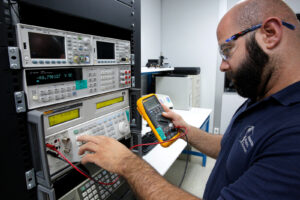
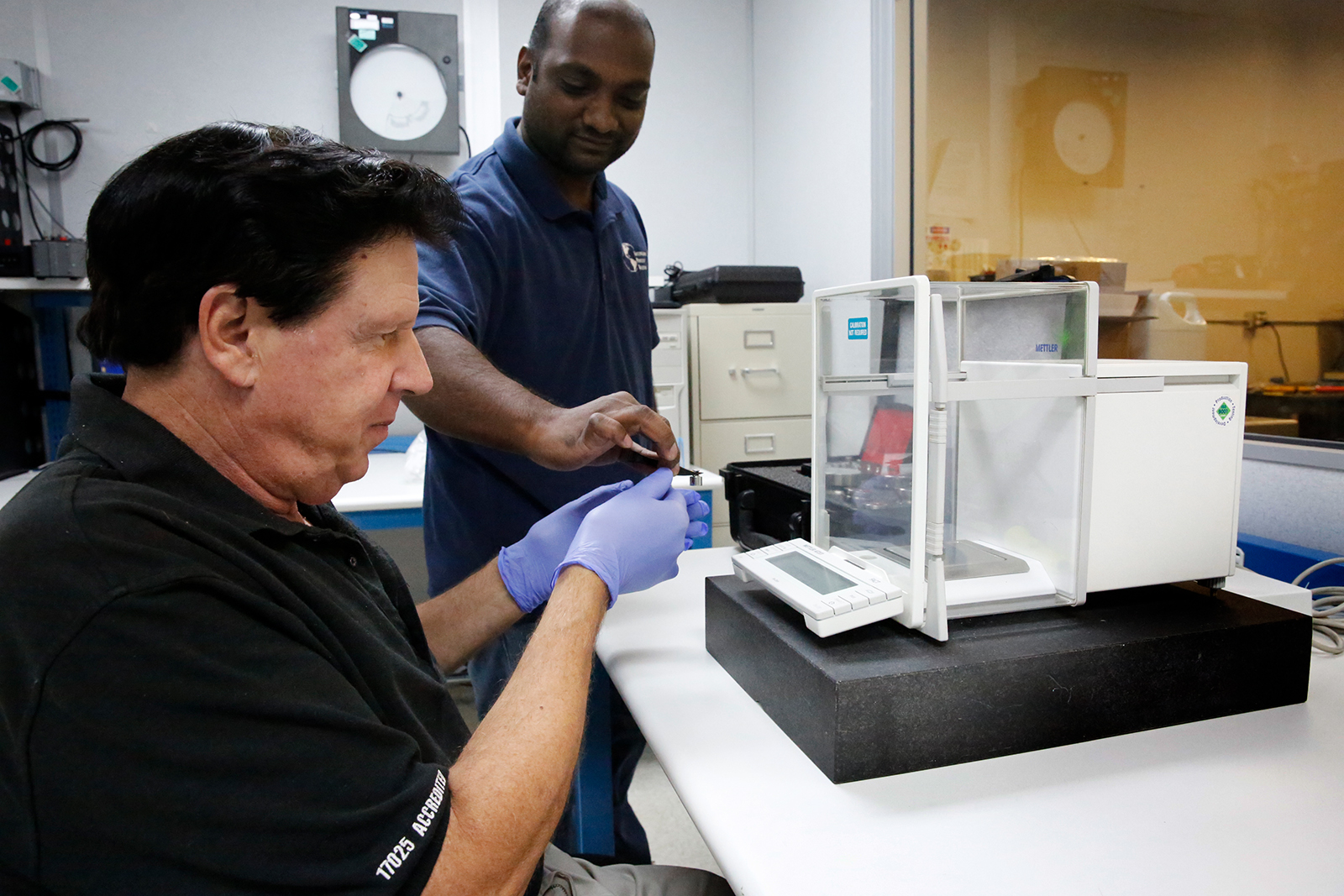
In modern laboratories, centrifuges are foundational instruments that directly influence the accuracy, reliability, and repeatability of test results. At International Process Solutions, we understand that centrifuge performance is not optional—it is mission-critical. Centrifuge calibration ensures that every rotation, every force, and every separation step aligns precisely with validated specifications. Without proper calibration, even the most advanced laboratory processes risk producing compromised data, regulatory findings, and costly rework.
This article explores in depth why centrifuge calibration is essential for accurate lab results, how it impacts regulated and non-regulated environments, and why partnering with an experienced calibration provider safeguards both data integrity and operational excellence.
The Role of Centrifuges in Laboratory Accuracy
Centrifuges are used to separate substances based on density, mass, and centrifugal force, making them indispensable across pharmaceutical, biotechnology, clinical, chemical, food, and environmental laboratories. They support critical processes such as:
- Sample preparation
- Blood component separation
- Cell harvesting
- Protein isolation
- Quality control testing
- Research and development workflows
Because centrifuges directly affect sample integrity, even small deviations in speed (RPM), relative centrifugal force (RCF), or temperature can introduce significant errors. Calibration ensures that the instrument performs exactly as intended, every time it is used.
Why Centrifuge Calibration Directly Impacts Lab Results
Speed and RCF Accuracy
Centrifuges rely on precise rotational speed to generate accurate relative centrifugal force (RCF). If the displayed RPM does not match the actual RPM:
- Samples may be under-processed, leading to incomplete separation
- Samples may be over-processed, causing cell damage or degradation
- Test results may become inconsistent or irreproducible
Calibration verifies that the actual rotational speed aligns with manufacturer specifications, ensuring correct force application across all operating ranges.
Time-Based Precision
Centrifuge run times are often critical to method validation. A miscalibrated timer can:
- Alter separation efficiency
- Affect analyte concentration
- Compromise validated protocols
Through calibration, we confirm that timing mechanisms function accurately, preserving method integrity and consistency.
Temperature Control Validation
For refrigerated centrifuges, temperature accuracy is just as critical as speed. Temperature deviations can impact:
- Enzyme activity
- Protein stability
- Cellular viability
- Chemical reaction rates
Centrifuge calibration ensures temperature sensors and control systems operate within defined tolerances, protecting sensitive samples throughout the spin cycle.
Centrifuge Calibration and Regulatory Compliance
Laboratories operating under regulated standards must demonstrate documented control over all critical instruments. Centrifuge calibration plays a central role in compliance, particularly within:
- GMP (Good Manufacturing Practice)
- GLP (Good Laboratory Practice)
- ISO/IEC 17025
- FDA 21 CFR Part 11
- USP, EP, and JP guidelines
Regulatory bodies expect laboratories to prove that equipment consistently performs as intended. Calibration provides traceable, auditable evidence that centrifuges meet these expectations.
At International Process Solutions, we deliver NIST-traceable calibration services with comprehensive documentation designed to withstand audits and inspections.
Risks of Operating an Uncalibrated Centrifuge
Failure to calibrate centrifuges introduces significant operational and compliance risks:
- Invalid test results requiring repeat testing
- Product batch rejection in manufacturing environments
- Regulatory observations or warning letters
- Loss of data credibility
- Increased downtime and costs
Uncalibrated equipment undermines confidence in laboratory outcomes and can ripple across entire workflows. Calibration is not a corrective measure—it is a preventive safeguard.
Key Parameters Verified During Centrifuge Calibration
Professional centrifuge calibration addresses multiple performance variables to ensure full operational accuracy:
Rotational Speed (RPM)
We verify actual rotor speed against displayed values using calibrated reference instruments.
Relative Centrifugal Force (RCF)
RCF calculations are validated based on rotor radius and measured RPM, ensuring accurate force delivery.
Timer Accuracy
Run-time settings are tested to confirm precise start, duration, and stop functions.
Temperature Accuracy (If Applicable)
Refrigerated units undergo temperature verification at multiple setpoints.
Operational Consistency
Performance repeatability is assessed across cycles to ensure stable operation.
Each parameter is documented with measured values, tolerances, pass/fail status, and traceability information.
How Calibration Enhances Data Integrity and Reproducibility
Accurate lab results depend on repeatable processes. Calibration ensures that centrifuge performance remains consistent across:
- Different operators
- Multiple shifts
- Long-term use
- Variable workloads
By eliminating hidden variability, calibration strengthens data integrity, enabling laboratories to confidently compare results over time and across locations.
Recommended Centrifuge Calibration Frequency
Calibration intervals depend on several factors, including usage intensity, regulatory requirements, and manufacturer recommendations. In general:
- High-use or regulated labs: Calibration every 6–12 months
- Critical applications: More frequent verification may be required
- After repairs or relocation: Immediate recalibration is essential
We help laboratories establish risk-based calibration schedules that balance compliance, accuracy, and operational efficiency.
On-Site vs. Laboratory Centrifuge Calibration
On-Site Calibration
Ideal for laboratories seeking minimal downtime, on-site calibration allows equipment to remain in place while performance is verified.
Laboratory Calibration
In some cases, off-site calibration may be preferred for specialized testing or comprehensive evaluations.
At International Process Solutions, we offer flexible service options tailored to your operational needs, ensuring accuracy without disruption.
Why Choose International Process Solutions for Centrifuge Calibration
We bring precision, experience, and regulatory expertise to every calibration service we perform. Laboratories trust us because we deliver:
- NIST-traceable calibration standards
- Experienced technicians trained in regulated environments
- Detailed, audit-ready calibration certificates
- Fast turnaround times
- Coverage across pharmaceutical, biotech, clinical, and industrial labs
Our approach prioritizes accuracy, compliance, and reliability, helping laboratories maintain confidence in every result they generate.
Supporting Quality Systems and Continuous Improvement
Centrifuge calibration is more than a technical requirement—it supports broader quality management systems by:
- Reinforcing process control
- Reducing variability
- Supporting validation and verification activities
- Strengthening audit readiness
When centrifuges perform correctly, laboratories operate with greater efficiency, fewer deviations, and stronger scientific outcomes.
Calibration as a Cornerstone of Laboratory Excellence
Centrifuges influence nearly every stage of laboratory testing, from sample preparation to final analysis. Centrifuge calibration is essential for accurate lab results because it ensures that speed, force, time, and temperature operate within validated limits. Without calibration, results become uncertain, compliance becomes vulnerable, and quality is compromised.
At International Process Solutions, we partner with laboratories to deliver precise, compliant, and dependable centrifuge calibration services. By maintaining calibrated equipment, laboratories protect their data, their products, and their reputation—every spin, every cycle, every result.