Sustainable water management depends on precision, efficiency, and accountability. As global water resources face increasing pressure, utilities, municipalities, and industrial operators must rely on accurate flow measurement to minimize waste, reduce energy consumption, and protect ecosystems. At International Process Solutions, we recognize ultrasonic flow calibration as a critical tool for advancing environmental stewardship across water systems.
Ultrasonic flow calibration delivers non-invasive accuracy, operational efficiency, and measurable environmental gains that traditional flow measurement methods cannot consistently achieve. By ensuring reliable flow data, organizations can optimize water usage, lower emissions, and support long-term sustainability goals.
Ultrasonic Flow Calibration as a Foundation for Water Conservation
Water conservation begins with accurate measurement. Ultrasonic flow meters, when properly calibrated, provide precise volumetric data without disrupting pipelines or requiring intrusive installation. This accuracy directly reduces unaccounted-for water losses.
Environmental Impact
- Reduced water loss through early detection of leakage and inefficiencies
- Improved allocation of water resources across municipal and industrial systems
- Lower extraction demands on natural water sources
Calibrated ultrasonic flow systems allow operators to identify discrepancies between supply and usage, supporting conservation initiatives and protecting aquifers, rivers, and reservoirs.
Lower Energy Consumption Through Accurate Flow Measurement
Energy and water are inseparably linked. Pumping, treating, and distributing water requires substantial power. Inaccurate flow measurement results in over-pumping, excessive pressure, and inefficient system operation.
Environmental Gains
- Optimized pump performance, reducing electricity consumption
- Decreased greenhouse gas emissions associated with energy production
- Extended equipment life, reducing manufacturing and disposal impacts
Ultrasonic flow calibration ensures that energy usage aligns precisely with actual system demand, minimizing unnecessary power draw and supporting energy efficiency targets.
Non-Invasive Technology Reduces Environmental Disruption
Ultrasonic flow meters operate without contacting the fluid or altering pipe infrastructure. This non-invasive nature provides distinct environmental advantages during calibration and long-term operation.
Sustainability Advantages
- No pipe cutting or fluid discharge, preventing contamination risks
- Reduced material waste, as system components remain intact
- Minimal downtime, avoiding emergency repairs or resource-intensive interventions
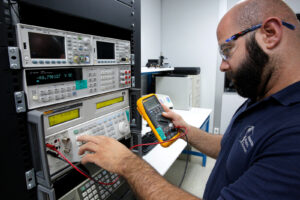
At International Process Solutions, we deploy on-site ultrasonic flow calibration methods that preserve system integrity while maintaining the highest measurement accuracy.
Leak Detection and Loss Prevention in Water Distribution Networks
Unidentified leaks represent a significant source of water waste worldwide. Accurate ultrasonic flow calibration enhances system transparency, enabling operators to detect anomalies quickly.
Environmental Outcomes
- Lower non-revenue water levels
- Reduced soil erosion and groundwater contamination
- Improved infrastructure planning and maintenance
With reliable flow data, municipalities and utilities can proactively address leaks, conserving millions of gallons annually and reducing the environmental footprint of water distribution networks.
Improved Water Quality Monitoring and Compliance
Environmental protection extends beyond water quantity to water quality. Ultrasonic flow calibration supports accurate dosing of treatment chemicals and precise monitoring of effluent discharge.
Environmental Protection Benefits
- Reduced chemical overuse, minimizing downstream ecological impact
- Accurate discharge reporting, protecting aquatic ecosystems
- Consistent compliance with environmental regulations
Calibrated flow measurement ensures that treatment processes operate within designed parameters, safeguarding waterways and surrounding habitats.
Supporting Sustainable Industrial Water Management
Industrial facilities are among the largest consumers of water. Ultrasonic flow calibration enables manufacturers to track usage, recycle process water, and reduce overall demand.
Industrial Environmental Benefits
- Lower freshwater intake
- Increased water reuse and recycling
- Reduced wastewater generation
At International Process Solutions, we support industrial clients in implementing data-driven water efficiency programs anchored by calibrated ultrasonic flow systems.
Reduced Carbon Footprint Across Water Infrastructure
Every inefficiency in water systems translates into increased carbon emissions. Ultrasonic flow calibration contributes directly to emissions reduction through optimized system performance.
Carbon Reduction Contributions
- Lower pumping energy requirements
- Reduced need for emergency maintenance
- Improved long-term infrastructure planning
Accurate flow measurement empowers organizations to align water management strategies with corporate sustainability and carbon reduction commitments.
Enhancing Asset Longevity and Reducing Waste
Infrastructure sustainability depends on extending the useful life of assets. Ultrasonic flow calibration reduces mechanical stress caused by inaccurate flow control.
Environmental Advantages
- Fewer premature equipment replacements
- Reduced raw material consumption
- Lower waste generation
By maintaining precise flow control, systems operate within safe parameters, protecting pipelines, pumps, and valves from unnecessary wear.
Data-Driven Decision Making for Environmental Stewardship
High-quality flow data enables informed decisions that support long-term environmental goals.
Strategic Environmental Benefits
- Accurate forecasting of water demand
- Improved drought response planning
- Optimized capital investment in sustainable infrastructure
Ultrasonic flow calibration transforms raw measurements into actionable environmental intelligence, supporting resilient water systems.
Ultrasonic Flow Calibration in Smart Water Systems
Modern water networks increasingly rely on automation and digital monitoring. Ultrasonic flow meters play a central role in smart water systems.
Sustainability Enhancements
- Real-time monitoring of consumption and losses
- Automated optimization of flow and pressure
- Integration with environmental reporting platforms
Calibrated ultrasonic devices ensure that smart systems deliver accurate data essential for environmental performance tracking.
Regulatory Alignment and Environmental Accountability
Environmental regulations demand accurate reporting of water usage and discharge. Ultrasonic flow calibration ensures data integrity across reporting frameworks.
Environmental Compliance Benefits
- Reliable audit trails
- Transparent environmental reporting
- Reduced risk of non-compliance penalties
International Process Solutions delivers traceable, standards-compliant calibration services that support environmental accountability.
Why International Process Solutions Leads in Ultrasonic Flow Calibration
We combine technical expertise with a commitment to environmental responsibility.
Our Environmental-Focused Capabilities
- ISO 17025–accredited calibration services
- On-site ultrasonic flow calibration for water systems
- High-accuracy reference standards
- Detailed documentation and traceability
Our approach ensures that ultrasonic flow measurement systems operate with precision while advancing sustainability goals.
Building a More Sustainable Water Future
Ultrasonic flow calibration is more than a technical requirement—it is a strategic environmental investment. By improving accuracy, reducing waste, and lowering energy consumption, calibrated ultrasonic flow systems play a vital role in sustainable water management.
At International Process Solutions, we partner with municipalities, utilities, and industrial operators to deliver environmentally responsible calibration solutions that protect resources today and preserve them for future generations.
Precision drives sustainability. Accurate flow measurement enables conservation, efficiency, and accountability across water systems worldwide.