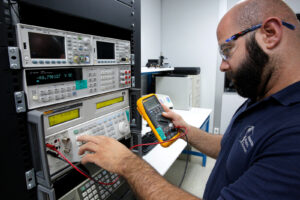

Maintaining precision, reliability, and compliance in regulated industries requires consistent calibration of critical instruments. At International Process Solutions (IPS), we understand that choosing between on-site calibration and in-lab calibration can significantly impact productivity, equipment performance, regulatory compliance, and operational costs. Below, we present an in-depth comparison—designed to help you make the most informed and strategic decision for your facility.
Understanding Calibration in Today’s Regulated Industries
Calibration is more than a routine service—it is the foundation of accurate measurements, quality assurance, and regulatory adherence across sectors including pharmaceuticals, biotechnology, aerospace, medical device manufacturing, food production, and chemical processing. Even minor deviations in measurement instruments can lead to failed batches, compromised data integrity, and non-compliance with agencies like FDA, ISO, GLP, GMP, and NIST.
Facilities often face a critical strategic decision: perform on-site calibration or send instruments out for in-lab calibration. Both options have unique advantages and limitations, depending on workflow, budget, urgency, and regulatory requirements.
On-Site Calibration: Advantages and Limitations
What Is On-Site Calibration?
On-site calibration involves IPS technicians traveling directly to your facility to perform calibration within your operating environment. This option has become increasingly popular for fast-paced production environments with heavy equipment, complex instrumentation, or strict uptime requirements.
Advantages of On-Site Calibration
1. Minimal Downtime and Workflow Disruption
On-site service eliminates the need to ship equipment off-site, preventing production delays. Your team retains full access to instruments, reducing workflow interruptions and improving continuity.
2. ISO, FDA, and GMP Compliance in Real Operating Conditions
Calibrating instruments in their actual environment allows our team to account for factors such as vibration, humidity, air quality, and temperature swings. This ensures results are aligned with real-use conditions, improving accuracy and compliance during audits.
3. Ideal for Large, Fixed, or Sensitive Equipment
Certain instruments are not easily or safely transportable, including:
- Environmental chambers
- Autoclaves
- Large balances and scales
- HVAC and cleanroom monitoring systems
- Pressure and temperature control systems
On-site calibration prevents damage during transport and ensures seamless service.
4. Faster Turnaround Times
With no packing, shipping, or receiving delays, on-site calibration offers significantly faster completion—critical for facilities with aggressive production schedules.
5. Reduced Risk of Instrument Damage
Transporting delicate instruments can increase the risk of shock, vibration, or environmental exposure. On-site service eliminates those risks entirely.
Limitations of On-Site Calibration
1. Limited Access to Specialized Equipment
Some calibrations require sophisticated master standards or advanced testing benches that are only available in controlled laboratory environments.
2. Space Requirements
On-site service may require designated workspace, stable power supply, and environmental control, which not all facilities can provide.
3. Potential for Environmental Variability
External noise, temperature changes, or airflow disruptions can impact calibration precision—especially for sensitive or highly regulated instruments.
4. Scheduling Constraints
Because on-site calibration must accommodate both your schedule and technician availability, last-minute requests may be harder to fulfill during heavy demand seasons.
In-Lab Calibration: Advantages and Limitations
What Is In-Lab Calibration?
In-lab calibration is performed at International Process Solutions’ state-of-the-art laboratory, where instruments are tested under strictly controlled environmental conditions using advanced, highly sensitive reference standards.
Advantages of In-Lab Calibration
1. Maximum Precision and Traceability
In-lab calibration ensures unrivaled accuracy because the environment is optimized for measurement precision. IPS laboratories maintain:
- Temperature and humidity-controlled rooms
- Anti-vibration platforms
- Class-leading reference standards
- Advanced calibration benches
This results in tighter tolerances, improved traceability, and compliance with the highest-quality standards.
2. Access to Specialized Testing Equipment
Many advanced calibrations—such as high-accuracy torque, complex electrical parameters, or micro-pressure testing—require equipment only available in a laboratory environment.
3. Full Diagnostic Capabilities
Labs provide technicians the ability to perform in-depth function checks, adjustments, and multi-point diagnostics. This can extend instrument lifespan and uncover hidden performance issues.
4. Ideal for Sensitive, High-Precision, and Small Instruments
In-lab calibration is the best option for instruments such as:
- Digital multimeters
- Pressure gauges
- Pipettes
- Torque tools
- Thermometers and thermal sensors
- Analytical balances
These instruments benefit greatly from controlled environmental conditions.
5. Enhanced Documentation and Certification
In-lab services typically include detailed reports, complete traceability, and calibration certificates aligned with industry and regulatory expectations.
Limitations of In-Lab Calibration
1. Equipment Downtime
Sending instruments out for calibration requires packing, shipping, service time, and return transit. This may temporarily interrupt production or testing workflows.
2. Risk During Transport
Although rare, shipping may expose instruments to:
- Shock and vibration
- Temperature fluctuations
- Improper handling
IPS uses secure packing protocols, but transport risk cannot be fully eliminated.
3. Backup Equipment Required
To maintain productivity during off-site service, facilities often require spare units—resulting in additional long-term investment.
4. Not Suitable for Large or Fixed Equipment
Equipment that is permanently installed or too delicate to move must be calibrated on-site.
Side-by-Side Comparison: On-Site vs. In-Lab Calibration
| Factor | On-Site Calibration | In-Lab Calibration |
|---|---|---|
| Accuracy | High | Highest (controlled environment) |
| Turnaround Time | Fast | Medium (shipping + lab time) |
| Cost | Typically higher | Typically lower |
| Downtime | Minimal | Requires temporary downtime |
| Best For | Large, fixed, or fragile equipment; fast-paced facilities | Small, high-precision instruments; advanced testing |
| Environmental Control | Limited | Optimal |
| Regulatory Compliance | Strong (real-world conditions) | Highest (strict conditions + reporting) |
How International Process Solutions Helps You Choose the Right Option
At IPS, we tailor our calibration approach based on the unique needs of your operation. Our team evaluates:
- Instrument type and sensitivity
- Regulatory environment (FDA, ISO, NIST, GMP, GLP)
- Tolerance requirements
- Production workflow and downtime limits
- Budget and long-term service goals
Whether you choose on-site or in-lab calibration, IPS delivers:
- NIST-traceable results
- Certified technicians
- Detailed calibration documentation
- Flexible scheduling
- Rapid turnaround times
- Exceptional service reliability
Our mission is to ensure your equipment operates with uncompromising accuracy—protecting your product quality, compliance status, and reputation.
Which Calibration Method Is Best for Your Facility?
Choose On-Site Calibration if you:
- Need immediate turnaround
- Cannot remove large or integrated equipment
- Operate under tight production schedules
- Require calibration in actual working conditions
Choose In-Lab Calibration if you:
- Need the highest possible accuracy
- Are working with small, sensitive, or high-precision instruments
- Require advanced diagnostics or adjustments
- Have instruments that can easily be shipped or transported
International Process Solutions: Your Trusted Calibration Partner
At International Process Solutions, we offer both on-site and in-lab calibration services backed by advanced technology, industry-leading expertise, and a commitment to precision. Whether your goal is compliance, improved accuracy, operational efficiency, or streamlined workflows, our team delivers tailored solutions that exceed expectations.
For facilities seeking consistent, reliable, and fully traceable results, IPS stands as the premier partner for all calibration and validation needs.