
In highly regulated industries, precision, accuracy, and traceability are not optional—they are mandatory requirements that ensure product quality, operational safety, and legal compliance. At International Process Solutions, we understand that calibration is one of the most critical elements of maintaining audit readiness and meeting regulatory standards. Proper calibration practices provide documented proof that instruments are performing within acceptable tolerances and producing reliable measurements.
Organizations operating in sectors such as pharmaceuticals, biotechnology, medical devices, aerospace, manufacturing, and food production depend on precise instrumentation for daily operations. When calibration is properly implemented and maintained, it becomes a powerful tool that supports successful regulatory audits, consistent compliance, and operational integrity.
The Role of Calibration in Regulatory Compliance
Calibration ensures that measurement instruments operate accurately according to recognized standards. Every device used to measure temperature, pressure, electrical output, flow, mass, or other variables must produce consistent results that align with industry benchmarks.
At International Process Solutions, we perform calibration services that align with ISO standards and regulatory frameworks used across multiple industries. These standards require organizations to demonstrate that their instruments are regularly tested, verified, and documented.
Regulatory bodies often require:
- Traceability to national or international standards
- Documented calibration procedures
- Defined calibration intervals
- Proof of measurement uncertainty
- Historical calibration records
When equipment is calibrated properly, companies can provide clear, verifiable documentation during regulatory inspections.
Why Accurate Instrumentation Is Critical During Audits
Audits are designed to confirm that organizations maintain consistent quality control systems. During these inspections, auditors frequently examine measurement devices used throughout production and laboratory environments.
Without accurate calibration records, companies may face:
- Audit observations
- Non-conformance findings
- Regulatory warnings
- Operational shutdowns
- Product recalls
Calibration protects organizations by creating a traceable measurement history. Every calibrated instrument includes documentation showing when it was tested, what standards were used, and whether the device passed tolerance requirements.
At International Process Solutions, we ensure that each calibration event includes complete documentation, certification, and traceability, allowing companies to demonstrate full compliance when auditors request verification.
Calibration Documentation That Strengthens Audit Readiness
One of the most important aspects of calibration is documentation integrity. Regulatory inspectors carefully review calibration certificates and maintenance records to confirm that measurement devices are functioning properly.
A professional calibration program should include:
Detailed Calibration Certificates
Each certificate should contain:
- Instrument identification
- Calibration date
- Technician identification
- Environmental conditions during calibration
- Measurement results
- Pass or fail status
- Traceability information
These records demonstrate that instruments have been verified against recognized standards.
Traceability to National Standards
Traceability is essential for regulatory compliance. Calibration measurements must connect to national or international measurement standards, ensuring consistency across industries.
International Process Solutions provides calibration services that maintain full traceability, ensuring that every measurement result can be linked to recognized reference standards.
Calibration History Records
Historical records help organizations prove that instruments have been consistently maintained over time. These records also help identify trends such as instrument drift or recurring deviations.
Maintaining calibration history is often required for regulated manufacturing environments where measurement consistency is critical.
Supporting Compliance With Industry Regulations
Calibration plays a central role in supporting compliance with numerous regulatory frameworks across multiple industries.
Organizations working within regulated environments must maintain calibrated equipment to comply with requirements such as:
- Quality management standards
- Manufacturing compliance guidelines
- Laboratory accreditation protocols
- Process validation regulations
International Process Solutions helps organizations maintain compliance by offering comprehensive calibration services for laboratory, manufacturing, and field instrumentation.
By maintaining precise instrument performance, organizations can demonstrate that their processes produce reliable, repeatable, and validated results.
Preventing Non-Conformances and Audit Findings
Regulatory audits often focus heavily on measurement systems because inaccurate instruments can compromise product quality.
Improper calibration may lead to:
- Incorrect batch records
- Inconsistent laboratory results
- Failed validation protocols
- Out-of-specification measurements
These issues can trigger non-conformance reports, forcing organizations to conduct investigations and corrective actions.
By implementing a structured calibration program through International Process Solutions, companies minimize the risk of audit findings while maintaining a strong quality management system.
Calibration Intervals and Preventive Compliance
Establishing the correct calibration interval is essential for maintaining instrument accuracy over time. Devices exposed to frequent use, environmental stress, or critical measurement processes require more frequent calibration.
A proper calibration schedule helps organizations maintain:
- Measurement reliability
- Consistent operational performance
- Regulatory compliance
- Equipment longevity
International Process Solutions works with organizations to develop customized calibration schedules tailored to operational needs and regulatory expectations.
Routine calibration ensures that instruments remain within tolerance and helps organizations stay continuously prepared for inspections.
On-Site and Laboratory Calibration Services
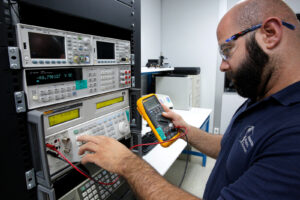
Different environments require different calibration approaches. Some instruments must be calibrated on-site to maintain operational continuity, while others are best calibrated in controlled laboratory conditions.
International Process Solutions offers both:
On-Site Calibration Services
On-site calibration allows critical instruments to be calibrated without removing them from production environments. This approach minimizes downtime and ensures systems remain operational.
Industries benefiting from on-site calibration include:
- Pharmaceutical manufacturing
- Biotechnology production
- Medical device manufacturing
- Aerospace facilities
- Industrial processing plants
Laboratory Calibration Services
Certain instruments require controlled laboratory environments to achieve the highest measurement precision. Laboratory calibration provides enhanced environmental control and access to advanced reference standards.
Our laboratories are equipped to calibrate a wide range of devices including:
- Multimeters
- Pressure gauges
- Torque wrenches
- Pipettes
- Temperature sensors
- Flow meters
- Spectrophotometers
This flexibility ensures organizations maintain full calibration coverage for all measurement equipment.
Improving Process Reliability Through Calibration
Beyond regulatory compliance, calibration also enhances process stability and operational efficiency.
Accurate instrumentation ensures:
- Consistent production results
- Reliable laboratory testing
- Improved product quality
- Reduced equipment failures
- Lower operational risk
International Process Solutions supports organizations by providing precision calibration services that strengthen process control systems.
Reliable measurement data allows teams to make confident operational decisions, improving both productivity and compliance outcomes.
Preparing for Regulatory Inspections With Confidence
Organizations that implement structured calibration programs enter audits with confidence. When calibration systems are well maintained, auditors can quickly verify that measurement devices are properly managed.
Audit readiness includes:
- Clearly labeled instruments
- Updated calibration certificates
- Documented calibration procedures
- Traceable measurement records
- Valid calibration intervals
International Process Solutions helps organizations maintain organized calibration systems that simplify the audit process.
With complete documentation and traceable calibration records, companies can demonstrate that their measurement systems meet regulatory expectations.
Why Companies Trust International Process Solutions
International Process Solutions has built a strong reputation for delivering reliable, accurate, and compliant calibration services to organizations throughout multiple industries.
Our approach emphasizes:
- Precision calibration procedures
- Traceable measurement standards
- Comprehensive documentation
- Flexible on-site and laboratory services
- Regulatory compliance support
By partnering with International Process Solutions, companies gain a trusted calibration provider dedicated to maintaining instrument accuracy, regulatory readiness, and operational excellence.
Strengthening Compliance Through Professional Calibration
Calibration remains one of the most effective strategies for maintaining audit readiness and regulatory compliance. Organizations that prioritize accurate measurement systems protect their operations from compliance risks while ensuring product quality and process reliability.
Through comprehensive calibration services, International Process Solutions helps organizations maintain precise instrumentation, complete documentation, and traceable measurement systems that support successful audits and regulatory inspections.
With proper calibration practices in place, companies can operate confidently knowing their measurement systems meet the highest standards of accuracy, compliance, and reliability.