Calibration is the backbone of accuracy, compliance, safety, and operational efficiency across regulated and industrial environments. From pharmaceutical manufacturing to energy production, the question we are most often asked is simple yet critical: can calibration be performed on-site, or must instruments be sent to a laboratory?
At International Process Solutions, we address this question with clarity, precision, and real-world expertise. The answer is not one-size-fits-all. Instead, it depends on instrument type, industry regulations, tolerance requirements, downtime considerations, and risk exposure. In this comprehensive guide, we outline how on-site calibration and laboratory calibration differ, when each approach is most effective, and how we help organizations make the right decision without compromising quality or compliance.
Understanding On-Site Calibration Services
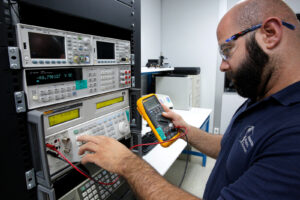
On-site calibration refers to the process of calibrating instruments directly at your facility, using portable, traceable standards and specialized equipment. This approach is widely used in industries where minimizing downtime, preserving validated environments, and maintaining continuous operations are essential.
At International Process Solutions, our on-site calibration teams are equipped to service a wide range of instruments while maintaining full traceability to national and international standards.
Key Advantages of On-Site Calibration
- Reduced Equipment Downtime – Instruments remain in place, avoiding shipping delays.
- No Risk of Transit Damage – Sensitive devices never leave controlled environments.
- Preserved Validation Status – Critical for GMP, ISO, and FDA-regulated facilities.
- Immediate Documentation – Calibration certificates are issued promptly.
- Operational Continuity – Production and testing schedules remain intact.
On-site calibration is particularly effective for large, fixed, or integrated systems where removal is impractical or would require system shutdown.
Common Instruments Ideal for On-Site Calibration
We routinely perform on-site calibration for:
- Pressure gauges and transmitters
- Temperature sensors (RTDs, thermocouples)
- Flow meters
- Torque tools and hydraulic torque wrenches
- Electrical test equipment
- Process control instrumentation
- Weighing and force measurement devices
- Multimeters and loop calibrators
Our technicians arrive fully prepared, ensuring that accuracy, repeatability, and compliance are never compromised.
When Laboratory Calibration Is the Better Choice
While on-site calibration offers significant advantages, some instruments require the controlled conditions, advanced reference standards, and environmental stability of a laboratory setting.
Laboratory calibration is typically recommended when:
- Ultra-tight tolerances are required
- Environmental controls (temperature, humidity, vibration) must be tightly regulated
- Instruments require complex disassembly or repair
- Calibration standards exceed portable capabilities
- Regulatory or audit requirements mandate lab calibration
At International Process Solutions, our ISO-accredited calibration laboratories are designed to meet the most stringent industry requirements.
Instruments Best Suited for Laboratory Calibration
Laboratory calibration is often preferred for:
- High-precision dimensional instruments
- Analytical balances
- Advanced electrical and RF equipment
- Specialized pharmaceutical and biotech instruments
- Reference standards
- Instruments requiring extensive adjustment or repair
By leveraging controlled lab environments, we ensure maximum accuracy, stability, and long-term reliability.
On-Site vs. Laboratory Calibration: A Practical Comparison
| Factor | On-Site Calibration | Laboratory Calibration |
|---|---|---|
| Downtime | Minimal | Moderate to extended |
| Environmental Control | Limited | Highly controlled |
| Portability | Portable standards | Fixed high-accuracy standards |
| Risk of Damage | None from transport | Possible during shipping |
| Compliance | Fully compliant | Fully compliant |
| Best For | Process equipment | High-precision instruments |
Both methods are equally valid when applied correctly. The key lies in choosing the right approach for each instrument.
Regulatory Compliance and Traceability
Regardless of where calibration occurs, compliance remains non-negotiable. International Process Solutions ensures that every calibration—on-site or in-lab—is fully traceable to NIST and international standards.
Our services support compliance with:
- ISO/IEC 17025
- FDA and GMP regulations
- USP and EU GMP requirements
- ISO 9001 quality systems
- Industry-specific regulatory frameworks
Each calibration includes comprehensive documentation, uncertainty reporting where applicable, and clearly defined pass/fail criteria.
Minimizing Risk in Regulated Environments
For pharmaceutical, biotechnology, food processing, and medical device manufacturers, calibration is directly tied to product quality and patient safety. Removing instruments from validated environments can introduce risk, requalification costs, and compliance challenges.
On-site calibration helps mitigate these risks by:
- Maintaining environmental integrity
- Avoiding unnecessary system disconnections
- Supporting continuous validation
- Reducing audit exposure
When laboratory calibration is required, we manage the process with strict chain-of-custody controls to preserve compliance.
Cost Considerations Without Compromise
Cost is often assumed to favor one approach over the other, but the reality is more nuanced. On-site calibration reduces hidden costs such as:
- Production downtime
- Shipping and insurance
- Equipment rental or replacement
- Revalidation efforts
Laboratory calibration, while sometimes higher in direct cost, can be more economical for high-precision or low-volume instruments requiring specialized resources.
At International Process Solutions, we help clients optimize calibration programs by balancing cost, accuracy, and operational impact.
Custom Calibration Strategies for Complex Operations
Many organizations benefit from a hybrid calibration strategy, combining on-site and laboratory services. We design tailored programs that align with:
- Equipment criticality
- Production schedules
- Regulatory requirements
- Risk tolerance
- Budget considerations
This strategic approach ensures maximum uptime without sacrificing measurement integrity.
Why International Process Solutions Is the Trusted Choice
We are more than a calibration provider—we are a measurement assurance partner. Clients choose International Process Solutions for our:
- Highly trained calibration technicians
- ISO-accredited laboratory services
- Advanced portable calibration systems
- Industry-specific expertise
- Rapid response and flexible scheduling
- Uncompromising documentation standards
Our commitment is simple: accurate measurements, reliable compliance, and operational confidence.
Making the Right Calibration Decision
So, can calibration be done on-site, or must instruments be sent to a lab? The answer depends on precision requirements, regulatory context, and operational priorities. Both methods play a vital role in maintaining accurate and compliant measurement systems.
At International Process Solutions, we evaluate each instrument individually and recommend the most effective calibration method to support your operations without disruption.
When accuracy matters, compliance is critical, and downtime is costly, we deliver calibration solutions that perform—wherever they are needed.