Explore gravimetric vs. photometric pipette calibration methods, manual vs. automated systems, and on-site vs. off-site calibration benefits. Keep your lab compliant with IPS.
If your lab’s data doesn’t add up, your pipettes might be the silent culprit.
Even small deviations in liquid volume—barely noticeable to the naked eye—can lead to inaccurate results, failed experiments, or costly regulatory issues. Whether you’re in biotechnology, pharmaceuticals, or clinical testing, pipette calibration isn’t optional—it’s essential.
So, what’s the best way to calibrate pipettes?
The two main pipette calibration methods are gravimetric (weight-based) and photometric (absorbance-based).
Gravimetric calibration is the most precise and ISO-compliant, while photometric calibration offers faster throughput and is ideal for multi-channel pipettes.
In this comprehensive guide from International Process Solutions (IPS), we’ll explore gravimetric vs. photometric methods, manual vs. automated calibration, and the pros and cons of on-site vs. off-site calibration—so you can choose the right approach for your lab.
Every pipette—no matter how advanced—loses accuracy over time. Internal components wear down, seals deteriorate, and exposure to temperature or humidity shifts can affect performance. If not routinely checked, even a 1% deviation can dramatically alter results.
Consider the impact:
In clinical labs, inaccurate pipetting could lead to false patient results.
In pharmaceutical manufacturing, incorrect dosing might trigger compliance issues.
In research, one miscalibrated pipette can invalidate months of data.
That’s why regulatory bodies such as ISO 8655, GLP, and FDA 21 CFR Part 11 mandate regular calibration and documentation of all volumetric devices.
Now, let’s examine how it’s done.
The gravimetric method is the most widely accepted and scientifically rigorous approach to pipette calibration.
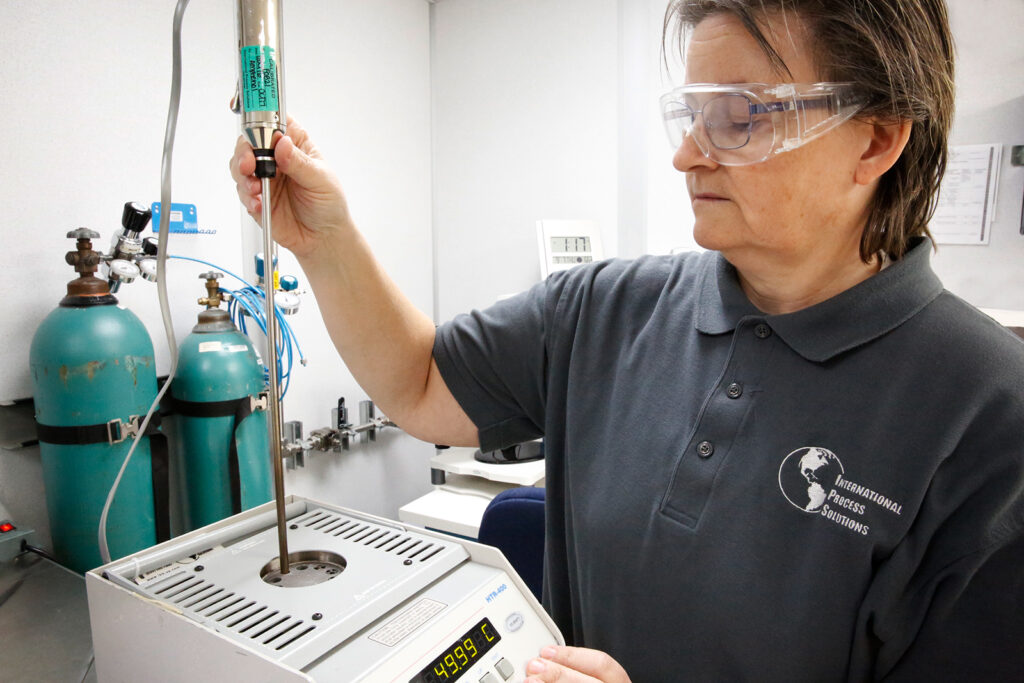
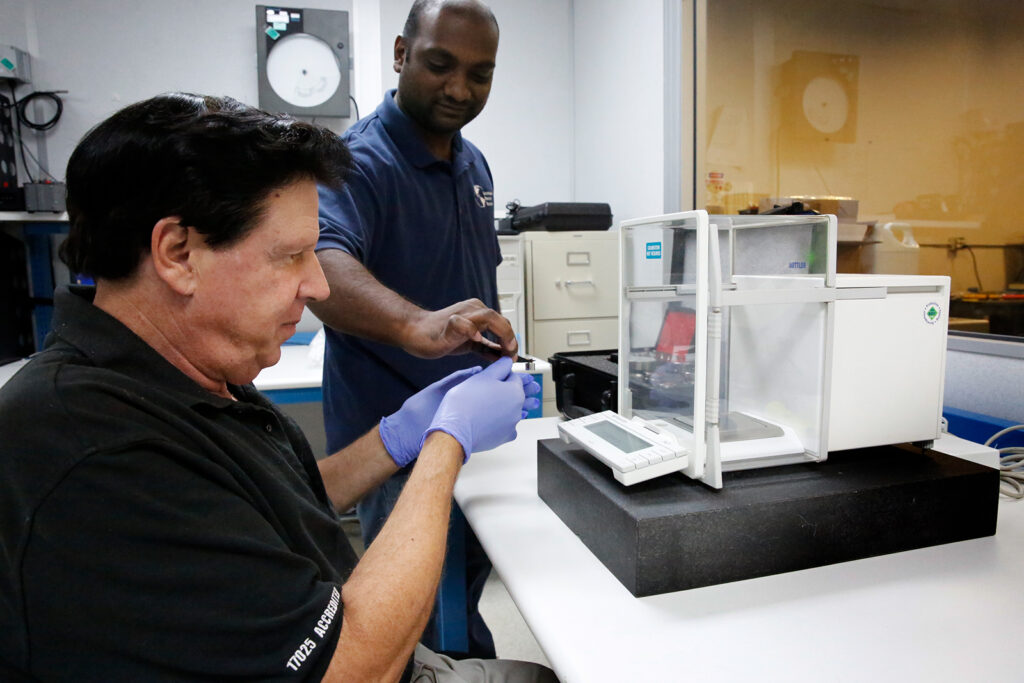
Gravimetric calibration measures the weight of water dispensed by the pipette, then converts that mass to volume using the density of water at a specific temperature. This process relies on precision balances capable of detecting microgram-level differences.
Steps typically include:
Setting the environment (temperature and humidity control).
Dispensing a precise volume of distilled water.
Weighing the water on a calibrated balance.
Converting mass to volume based on water’s density.
Comparing measured results to the pipette’s expected volume.
Highly accurate and traceable: Meets ISO 8655 and NIST standards.
Versatile: Works for single and multi-channel pipettes.
Detailed data output: Ideal for documentation and audits.
Time-intensive: Each pipette requires multiple repetitions.
Sensitive to environmental conditions: Temperature and air drafts can affect results.
Requires skilled technicians.
At International Process Solutions, gravimetric calibration is the preferred method for FDA-regulated labs and pharmaceutical manufacturers, where even the smallest deviation can impact product safety and efficacy. We use environmentally controlled cleanrooms to ensure precise, reproducible results.
The photometric method is a newer, faster alternative to gravimetric calibration—especially useful for multi-channel pipettes and high-throughput laboratories.
This method relies on light absorbance. The pipette dispenses a colored dye solution into a cuvette, and a spectrophotometer or photometer measures the absorbance. The amount of absorbed light correlates directly to the volume dispensed.
Key Steps:
Prepare a known dye concentration.
Dispense sample volumes into cuvettes.
Measure absorbance using a photometer.
Compare results to reference data.
Faster throughput: Can test dozens of pipettes in less time.
Minimal environmental influence: Less sensitive to temperature and humidity.
Ideal for multi-channel pipettes.
Slightly less accurate than gravimetric methods.
Requires photometer calibration.
Not suitable for extremely low-volume pipettes.
For labs with hundreds of pipettes, IPS may use photometric methods to perform rapid screenings before a detailed gravimetric calibration. This hybrid approach saves time while maintaining quality control.
How pipettes are calibrated—manually or through automation—also influences accuracy, consistency, and turnaround time.
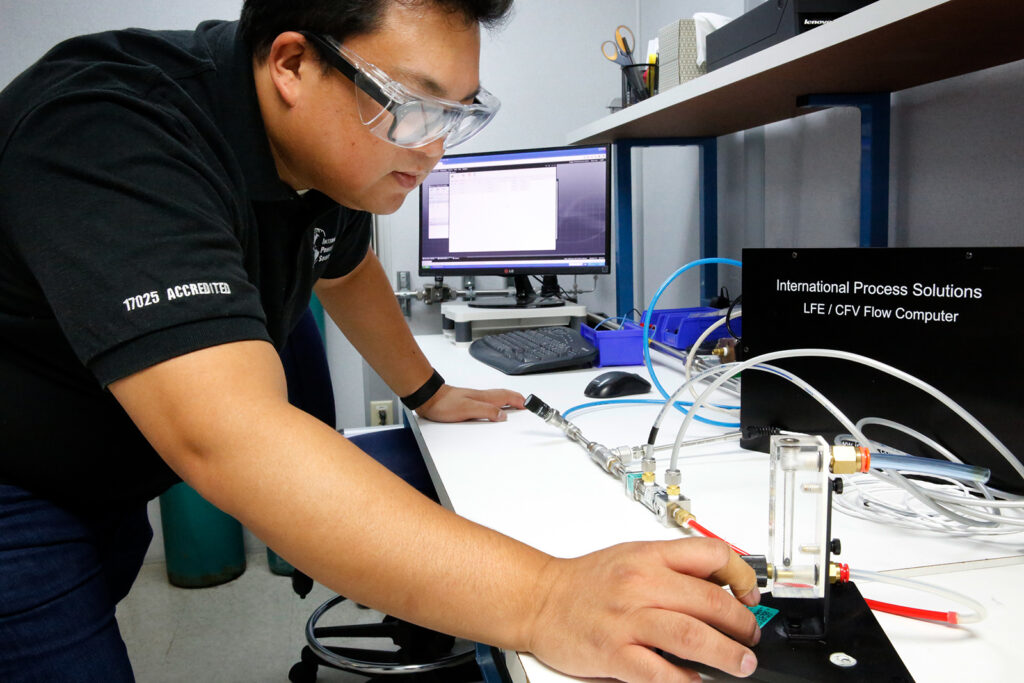
Manual calibration is performed by a trained technician using precision balances and pipette control. Every reading is manually recorded, analyzed, and adjusted if necessary.
Advantages:
Lower equipment costs.
Flexible and accessible for smaller labs.
Allows expert assessment for visual issues (e.g., leaks or residue).
Disadvantages:
Time-consuming.
Potential for human error.
Limited scalability.
Example:
A small university research lab with fewer than 20 pipettes may prefer manual calibration every 6 months for simplicity and cost-effectiveness.
Automated systems use robotics and software to perform calibrations with minimal human involvement. The system dispenses, measures, and records results digitally.
Advantages:
High repeatability and precision.
Reduced human error.
Automatic documentation for compliance.
Ideal for high-volume labs.
Disadvantages:
Higher upfront cost.
Requires software maintenance and validation.
Not always suitable for irregular pipette types.
Example:
Pharmaceutical labs with strict compliance requirements often rely on automated gravimetric systems for consistent, traceable calibrations of hundreds of pipettes.
At International Process Solutions, we use both manual and automated methods, selecting the right approach based on client size, compliance requirements, and lab throughput.
Beyond calibration method and equipment, you must decide where the process will take place—at your facility (on-site) or in a dedicated lab (off-site).
Advantages:
Minimizes downtime: Your pipettes never leave the lab.
No shipping risk: Avoids damage or loss during transit.
Convenient scheduling: Calibrations can happen during off-hours.
Disadvantages:
Environmental conditions (temperature, humidity, air drafts) may affect precision.
Requires space for temporary calibration setup.
Example:
For hospitals or diagnostic centers that can’t afford equipment downtime, IPS technicians bring portable calibration labs directly on-site—ensuring accurate results without workflow disruption.
Advantages:
Controlled environment: Ideal for ISO and FDA compliance.
Access to advanced equipment: Precision balances, climate-controlled chambers, and automated systems.
Comprehensive maintenance: Deep cleaning, repair, and recalibration.
Disadvantages:
Shipping logistics and temporary equipment downtime.
Example:
A biotech manufacturer may ship pipettes to IPS for off-site gravimetric calibration, ensuring traceability to NIST standards and receiving full calibration certificates for audits.
Selecting the best pipette calibration method depends on your industry, workload, and compliance requirements. Here’s a quick comparison:
| Factor | Gravimetric | Photometric | Manual | Automated | On-Site | Off-Site |
|---|---|---|---|---|---|---|
| Accuracy | ★★★★★ | ★★★★☆ | ★★★★☆ | ★★★★★ | ★★★★☆ | ★★★★★ |
| Speed | ★★★☆☆ | ★★★★★ | ★★★☆☆ | ★★★★★ | ★★★★★ | ★★★☆☆ |
| Cost | Moderate | Moderate | Low | High | Moderate | Moderate |
| Ideal For | ISO/FDA labs | High-throughput testing | Small labs | Large-scale operations | Busy facilities | Full-service calibration |
IPS Recommendation:
Most clients benefit from a hybrid approach—using gravimetric calibration for accuracy-critical pipettes, photometric checks for routine maintenance, and automated off-site services for full compliance documentation.
Regardless of method, every calibration must be:
Traceable to national standards (like NIST).
Documented with before-and-after data.
Certified by trained technicians.
At International Process Solutions, every pipette calibration includes:
NIST-traceable reference documentation
Environmental condition records
Detailed pass/fail data
Calibration certificates ready for audits
This ensures your lab meets ISO, FDA, and GLP requirements with zero hassle.
Whether your lab handles pharmaceuticals, clinical samples, or academic research, the integrity of your data depends on one simple factor: how well your pipettes are calibrated.
By understanding the differences between gravimetric and photometric methods, choosing between manual and automated calibration, and selecting on-site or off-site services, you can maintain precision, compliance, and confidence in every result.
At International Process Solutions (IPS), we specialize in pipette calibration, validation, and repair—customized to your lab’s needs. With certified technicians, ISO-compliant procedures, and flexible service options, we help you stay accurate, audit-ready, and efficient.
✅ ISO 8655 & NIST traceable calibrations
✅ On-site or off-site flexibility
✅ Manual and automated precision systems
👉 Get your pipettes calibrated the right way—contact International Process Solutions today!
When you email or call – we respond quickly, thoroughly, and with care. We believe your success is pivotal to our own.
We treat your company with the level of urgency and care we treat our own.
Send your best auditor our way. We will knock their socks off.
When you email or call – we respond quickly, thoroughly, and with care. We believe your success is pivotal to our own.
We treat your company with the level of urgency and care we treat our own.
Send your best auditor our way. We will knock their socks off.
Our clients know and love our flexibility. We work with startups, Fortune 500s, and everyone in-between.
We’re here for you at every stage of your growth, creating the exact solution you need. Reach out now – we’d love to help. Call Today 650-595-7890
Service so good – it will make you look great.
When you email or call – we respond quickly, thoroughly, and with care. We believe your success is pivotal to our own.
We treat your company with the level of urgency and care we treat our own.
Send your best auditor our way. We will knock their socks off.
Email, call, fax, or fill out our form – whatever works best for you. We’re here to serve, and to help. Reach out now – we’d love nothing more than to connect.
Southern California Calibration Services
tel: 310-432-0665
Northern California Calibration Services
tel: 650-595-7890
fax: 650-595-7899
International Process Solutions is a specialized provider of calibration, validation, and maintenance services designed to support high-precision industries such as pharmaceuticals, biotechnology, manufacturing, and laboratory research. Our company focuses on ensuring that critical instruments and equipment operate with maximum accuracy, reliability, and regulatory compliance.